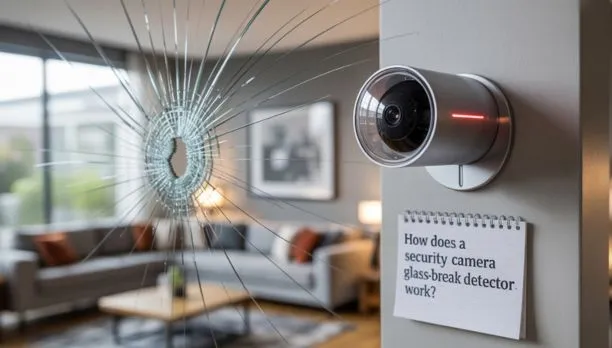
Glass break detectors are smart sensors that listen for the sound of breaking glass and trigger an alarm before an intruder gets inside. They add an early layer of protection, which makes them useful for homes, offices, and shops with large windows or glass doors.
So, How Do Glass Break Detectors Work? They use built-in microphones and sound analysis to detect the unique frequency of shattering glass, then send a signal to your security system within seconds.
What Is a Glass Break Detector?

A glass break detector is a small device designed to detect when glass is shattered. It works as part of a security system and helps protect entry points like windows and doors. If you are asking what is a glass break sensor, think of it as an early warning system. It alerts you before someone even enters your space. At Cam Security Surveillance, we use these sensors to help homeowners and businesses stay protected with faster threat detection.
Unlike motion sensors, which detect movement, glass break detectors focus on sound or vibration. This makes them useful for stopping break-ins at the first step.
Types of Glass Break Detectors
1. Acoustic Glass Break Sensors
These are the most common. They listen for the sound of breaking glass using a microphone.
They analyze sound patterns in real time and trigger an alert when they match a known glass break frequency.
2. Shock or Vibration Sensors
These attach directly to the glass surface. They detect physical vibrations when someone hits or cracks the glass.
They are simple but cover only one window at a time.
3. Dual-Technology Sensors
These combine sound detection and vibration sensing. They are more accurate and reduce false alarms.
Many modern systems use this type because they balance sensitivity and reliability.
How Glass Break Detectors Work
To understand How Do Glass Break Detectors Work?, you need to look at the process step by step. First, the detector listens for a sudden loud noise. This could be the impact of an object hitting glass. Next, it looks for a second sound pattern. This is the high-pitched shatter that follows the initial hit. The device uses a built-in processor to compare these sounds with stored patterns. If both match, the system confirms a real glass break.
Once confirmed, the detector sends a signal to your alarm system. This triggers alerts, sirens, or notifications on your phone. Many systems installed through cctv installation services indianapolis by Cam Security Surveillance use advanced algorithms. These systems improve accuracy and reduce false alerts. So when people ask, do glass break sensors work, the answer is yes. They work best when installed and configured correctly.
Key Features of Modern Glass Break Sensors
Modern sensors come with useful features that improve performance:
- Wide coverage, often up to 20 feet
- 360-degree detection range
- Adjustable sensitivity settings
- Wireless and wired options
- Smart home integration
These features make them flexible for different setups, from small homes to large offices.
What Sounds Do They Detect?
Glass break detectors are trained to detect specific sound patterns. These include:
- Breaking window glass
- Shattering tempered glass
- Cracking laminated glass
Each type of glass creates a unique sound. Advanced sensors can tell the difference between glass breaking and other loud noises.
What Can Trigger False Alarms?
False alarms can happen, but modern systems are built to avoid them.
Common causes include:
- Dropping dishes
- Loud clapping near the sensor
- Thunder or fireworks
- Construction noise
Good sensors use dual-stage detection. They require both the impact sound and the shatter sound. This reduces false alerts.
Proper glass break sensor placement also helps avoid these issues.
Where Should You Install Glass Break Detectors?
Many users ask where to place glass break sensor for the best results.
Here are simple guidelines:
- Place them within 10–20 feet of windows
- Keep them facing the glass, not blocked by walls
- Install them on ceilings or opposite walls
- Avoid placing them near noisy areas like kitchens
Correct glass break sensor placement ensures better coverage and fewer false alarms.
If you have large rooms with multiple windows, one sensor can often cover them all.
Benefits of Using Glass Break Detectors
Glass break detectors offer several clear benefits:
- Detect break-ins before entry
- Cover multiple windows with one device
- Add a strong layer of security
- Work well with alarm systems
- Provide fast alerts
They are a smart addition to any home or business security setup.
Limitations to Consider
While useful, they are not perfect.
- They may not detect slow or quiet glass cutting
- Thick curtains can block sound
- Poor placement reduces effectiveness
This is why combining them with other sensors is a smart move.
Glass Break Detectors vs Motion Sensors
Both serve different roles.
Glass break detectors:
- Detect entry attempts
- Work before someone enters
Motion sensors:
- Detect movement inside
- Trigger after entry
Using both gives better protection. It creates layers that stop intruders early and track movement if they get inside.
Maintenance and Testing
To keep your system reliable, follow these steps:
- Test sensors monthly using test tools
- Clean dust from microphones
- Replace batteries when needed
- Check system connections
Regular checks ensure your detectors stay accurate and responsive.
Do Glass Break Sensors Work in Real Homes?
Yes, they work well when installed properly. Many homeowners use them to protect living rooms, bedrooms, and storefront windows.
Real-world use shows that combining them with alarms and cameras increases overall safety.
Conclusion
Glass break detectors play a key role in modern security systems. They detect threats early and give you time to respond. If you still wonder How Do Glass Break Detectors Work?, remember this simple idea. They listen for the sound of breaking glass, confirm it with smart analysis, and trigger an alarm instantly. When placed correctly and maintained well, they offer strong protection for homes and businesses.
If you want expert help with setup or need a reliable security upgrade, contact us today. Our team at Cam Security Surveillance is ready to help you choose and install the right solution for your property.
FAQs
Do glass break sensors work through curtains?
They can, but thick curtains may reduce sensitivity. Keep sensors positioned carefully.
Can they detect all types of glass?
Most modern sensors detect common glass types like tempered and laminated glass.
How far can they detect breaking glass?
Most cover 10 to 20 feet, depending on the model.
Are they better than window sensors?
They are different. Glass break detectors cover multiple windows, while contact sensors monitor one point.