Picking the wrong camera system is a costly mistake. Wired systems are rock solid but harder to install. Wireless systems are flexible but depend on your Wi-Fi. Both protect your property, but they do it in very different ways. The right choice depends on your building, your budget, and how much you want to deal with cables.
If you are trying to decide between a wired vs wireless security camera system, you are not alone. This is one of the most common questions homeowners and business owners ask us. This guide breaks it all down so you can make a confident decision.
What Is a Wired Security Camera System?
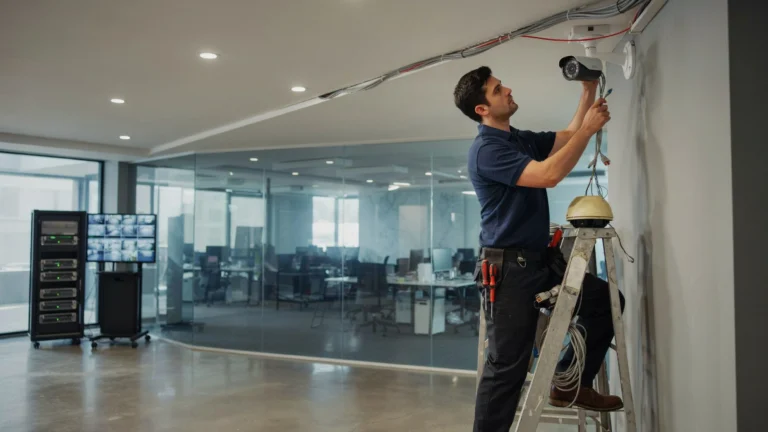
A wired security camera system connects each camera to a central recorder using physical cables. The two most common types are DVR systems, which use coaxial cables with analog cameras, and NVR systems, which use ethernet cables with IP cameras.
The cables do two things at once. They carry the video signal from the camera to the recorder. They also supply power to the camera, so you only need one cable per unit in most NVR setups. This is called Power over Ethernet, or PoE.
Wired systems are common in commercial buildings, warehouses, schools, and larger homes. Once installed, they run without depending on Wi-Fi or a wireless signal.
What Is a Wireless Security Camera System?
A wireless security camera system sends video over Wi-Fi or a cellular network instead of cables. The camera still needs power, either from a wall outlet or a rechargeable battery.
There are two types of wireless cameras. Wi-Fi cameras connect to your home or business router. They need a strong signal to work properly. Battery-powered cameras are fully wire-free. They run on rechargeable batteries and often use motion-activated recording to save power.
Wireless systems are popular for rentals, smaller homes, and properties where running cables is not practical. Setup is fast. You can often install them yourself in under an hour.
Wired vs Wireless Security Camera System: Key Differences
Here is a side-by-side breakdown so you can see exactly where each system stands.
|
Feature |
Wired System |
Wireless System |
|
Installation |
Professional, complex |
Easy, DIY-friendly |
|
Video Quality |
Consistent, high quality |
Depends on Wi-Fi signal |
|
Reliability |
Very high |
Moderate |
|
Power Source |
Cable (PoE or direct) |
Outlet or battery |
|
Hacking Risk |
Low |
Moderate |
|
Flexibility |
Fixed placement |
Easy to reposition |
|
Cost (upfront) |
Higher |
Lower to moderate |
|
Best For |
Large properties, commercial |
Small homes, rentals |
This table covers the basics, but the details matter a lot more when you are making a real purchase decision.
Pros and Cons of Wired Security Camera Systems
Pros:
- Consistent video feed with no signal drops
- Not affected by Wi-Fi interference or outages
- Harder to hack remotely since there is no wireless signal
- Supports more cameras without performance loss
- Long-term reliability with minimal maintenance
Cons:
- Installation is time-consuming and often needs a professional
- Cables limit where you can place cameras
- Harder to expand or move cameras after installation
- Not ideal for renters or temporary setups
Pros and Cons of Wireless Security Camera Systems
Pros:
- Fast and easy to install, often without any tools
- Cameras can be placed almost anywhere
- Easy to move or expand the system
- No need to run cables through walls or ceilings
- Great for renters and temporary setups
Cons:
- Video quality can drop if the Wi-Fi signal is weak
- Battery cameras need regular recharging
- More vulnerable to signal interference and hacking
- Heavy video traffic can slow down your home network
- May drop connection during internet outages
Which Security Camera System Offers Better Video Quality?
Wired systems win on consistency. The cable delivers a stable signal from camera to recorder with no compression or interference. You get clean, reliable footage every time.
Wireless cameras have caught up a lot. Many now shoot in 2K or 4K resolution. But the quality you see in the app depends on your Wi-Fi strength. A weak signal means lower resolution, buffering, or dropped frames.
For critical areas where you need sharp, reliable footage, such as entry points, cash registers, or parking lots, wired is the safer choice. For general coverage in a home or small office, modern wireless cameras do a solid job.
Which System Is More Reliable During Power or Internet Outages?
This is where wired systems have a clear advantage.
Wired cameras keep recording during internet outages because they save footage directly to a local DVR or NVR. As long as the power is on, the system works.
Wireless cameras that rely on cloud storage stop uploading the moment your internet goes down. Battery cameras may still record locally to an SD card, but not all models support this.
Power outages affect both systems equally unless you have a UPS (Uninterruptible Power Supply) backing up your recorder or router. Adding a UPS to a wired NVR setup is a smart move for any serious security system.
Wired vs Wireless Security Camera System for Homeowners
Most homeowners lean toward wireless because it is easier. But easier is not always better.
If you own your home and plan to stay long-term, a wired system is worth the upfront effort. The footage is more reliable, the system is harder to tamper with, and you are not dependent on Wi-Fi.
If you rent, move often, or just need basic coverage for a few entry points, a wireless system makes more sense. You can take it with you when you leave.
For homeowners in Indiana, Cam Security Surveillance offers professional security camera installation Indianapolis for both wired and wireless setups. We assess your property, recommend the right system, and install it properly so you get coverage where it matters most.
One thing many homeowners overlook is placement. A poorly placed camera, wired or wireless, leaves blind spots. A professional eye catches those gaps before installation, not after.
Cost Comparison: Wired vs Wireless Security Camera System
Cost is one of the biggest factors people consider when asking should I get wired or wireless security cameras.
Wired systems cost more upfront. Hardware, cables, and professional installation can run anywhere from $500 to $2,500 or more depending on the number of cameras and property size. But ongoing costs are low. You do not pay monthly fees for local storage.
Wireless systems have a lower entry price. A basic four-camera kit can start at $150 to $400. But many wireless systems charge monthly cloud storage fees ranging from $5 to $30 or more per month. Over three to five years, that adds up.
A wired system that costs $1,500 to install with no monthly fee can actually cost less over five years than a wireless system with a $20 monthly cloud plan.
Always factor in the total cost of ownership, not just the sticker price.
Storage Options for Wired and Wireless Cameras
How your footage is stored affects how long you can keep it and whether you can access it after an incident.
Wired systems store footage on a local DVR or NVR hard drive. You control the storage. You can use drives up to 8TB or more. No monthly fees. Footage stays on your property.
Wireless systems offer three storage options. First, cloud storage through a subscription plan. Second, a local SD card inside the camera. Third, a local NVR or hub that some wireless systems support.
Cloud storage is convenient but comes with a monthly cost and depends on your internet connection. SD cards are affordable but have limited space, often 32GB to 256GB, and can be physically removed or damaged.
For long-term retention and maximum control, local storage on a wired NVR system is the most reliable option.
How to Check Your CCTV Footage Retention Period
Knowing how long your system keeps footage matters, especially if an incident happens days after the fact. For wired DVR and NVR systems, log into your device settings and look for Storage or Record Settings. It will show how many days of footage are saved based on your drive size and camera count.
For wireless cloud cameras, check the app under your subscription or plan details. Most plans list retention clearly, usually 7, 14, or 30 days. If you are not sure, test it manually. Search for footage from 20 days ago. If it is there, you have at least 20 days of retention. If not, your window is shorter than you think.
Motion-only recording and lower resolution settings can extend your retention period without adding more storage.
How to Choose the Right Security Camera System
Still not sure which way to go? Here are the key questions to ask yourself.
Do you own or rent your property? Owners benefit more from wired. Renters should go wireless.
How large is the area you need to cover? Large properties with many cameras work better on wired systems. Small homes or apartments are fine with wireless.
How strong is your Wi-Fi? Weak Wi-Fi makes wireless cameras frustrating. If your signal drops in certain areas, wired is more dependable.
Do you need 24/7 recording? Wired systems handle constant recording better. Battery wireless cameras are not designed for non-stop use.
What is your budget over five years? Add up hardware, installation, and monthly fees before deciding. The cheaper option upfront is not always cheaper long-term.
Do you want professional installation or DIY? Wireless lets you self-install. Wired almost always needs a professional to do it properly.
Professional Security Camera Installation Makes a Difference
Whether you choose wired or wireless, the quality of installation matters as much as the equipment.
Bad camera angles create blind spots. Loose connections cause footage gaps. Incorrect storage settings mean you lose recordings before you ever need them.
At Cam Security Surveillance, we have seen what happens when security systems are installed without proper planning. Cameras pointed at the sky. DVRs with storage set to three days. Wireless cameras placed too far from the router.
A professional installer looks at your property layout, identifies risk areas, sets up storage correctly, and tests every camera before leaving. That one-time investment protects you for years.
When comparing wired vs wireless security cameras pros and cons 2025 and 2026, the technology gap between the two is narrowing. But installation quality remains the biggest factor in whether your system actually works when you need it.
Conclusion
Both systems have real value. The question is not which one is better overall. The question is which one is better for your specific situation.
Wired systems offer stability, reliability, and long-term value. Wireless systems offer flexibility, easy setup, and lower upfront cost. Security camera systems wireless vs wired serve different needs, and the right answer depends on your property, your habits, and your budget.
If you are still asking what is better, a wireless or wired security camera for your home or business, the honest answer is to talk to someone who has installed both. Contact us at Cam Security Surveillance and we will help you figure out exactly what your property needs.
FAQs
Should I get a wired or wireless security camera for my home?
It depends on whether you own or rent, your Wi-Fi strength, and the size of your property. Owners with large homes benefit from wired. Renters and small properties are well served by wireless.
Are wired security cameras harder to hack?
Yes. Wired cameras do not broadcast a wireless signal, which makes them much harder to intercept remotely. Wireless cameras can be vulnerable if your Wi-Fi password is weak or your firmware is outdated.
Do wireless security cameras work without the internet?
Some do. Battery cameras with local SD card storage can record without the internet. But cloud-based wireless cameras stop uploading footage the moment your internet goes down.
How long do wired security cameras last?
A well-installed wired system can last 10 years or more. The cameras, cables, and DVR or NVR recorder are built for long-term use. Wireless cameras typically have a lifespan of 3 to 5 years before batteries or hardware degrade.
Can I mix wired and wireless cameras in one system?
Yes, with the right setup. Some NVR systems support both wired IP cameras and wireless cameras on the same network. Cam Security Surveillance can design a hybrid system if that fits your needs.
What is the main downside of wireless security cameras?
Dependence on Wi-Fi is the biggest weakness. A weak signal, router outage, or network congestion can all affect performance. Wired systems do not have this problem.
Is a wired or wireless system better for a business?
For most businesses, wired is the better choice. It handles more cameras, records consistently, and does not rely on a Wi-Fi signal that employees and customers are also using.