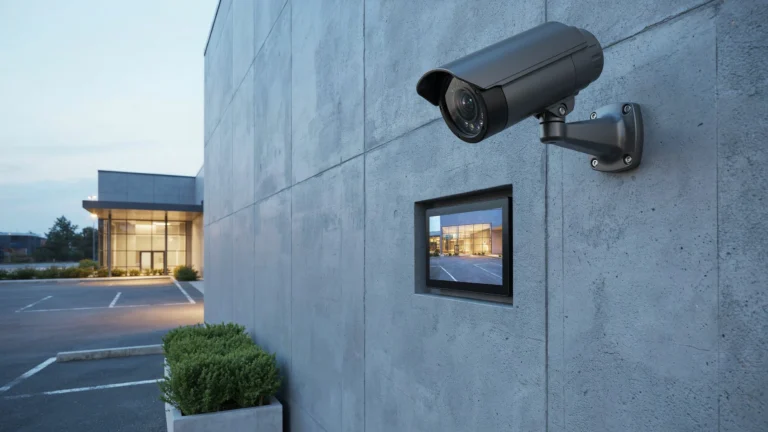
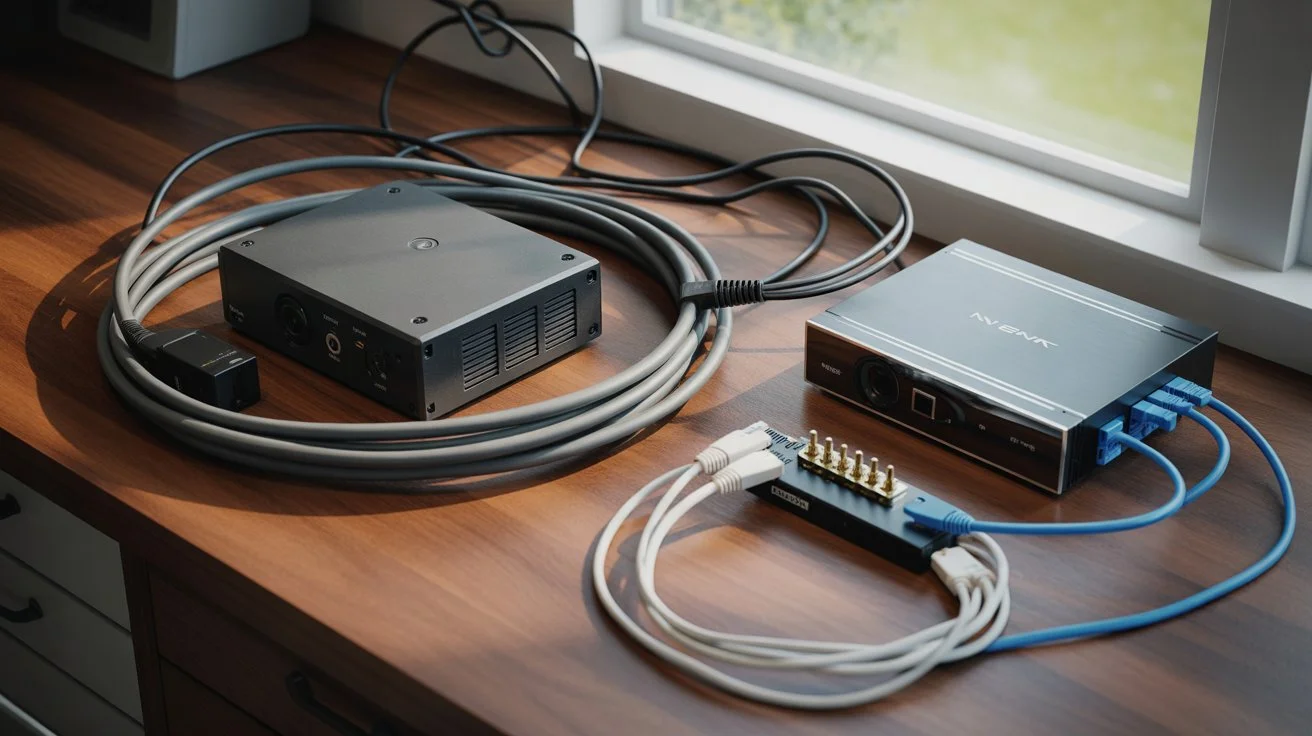
Trying to pick between an NVR and a DVR for your home or office? Here’s the short answer: NVR systems record digital video from network cameras, while DVR systems record analog video sent through coaxial cables to a separate recorder. NVRs give you sharper footage and simpler wiring in most cases.
The NVR vs DVR choice comes down to your budget, your current wiring, and the level of video quality you need. At Cam Security Surveillance, we’ll explain the differences between both systems and help you choose the right security solution with confidence, whether you’re protecting your home or business..
Pros and Cons of DVR Systems
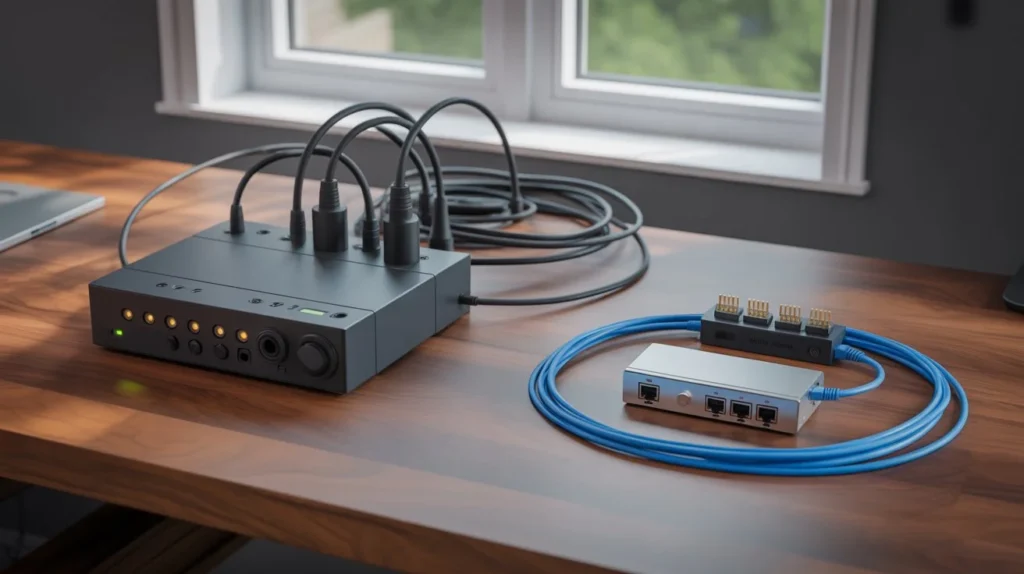
A DVR, or Digital Video Recorder, works with analog cameras. These cameras send raw video signals through coaxial cables to the recorder, which converts the signal into a digital file you can store and review.
Pros of DVR systems:
- Lower upfront cost than most NVR setups
- Works well with older analog camera wiring already in place
- Simple to install if your building has coaxial cable
- Reliable and widely used, so parts and support are easy to find
Cons of DVR systems:
- Lower video resolution compared to network cameras
- Cameras need a direct wired connection to the recorder
- Audio usually requires a separate cable run
- Harder to scale up once you outgrow your current camera count
DVR systems still make sense for property owners who already have coaxial wiring installed. Replacing that wiring for a new system can cost more than the cameras themselves. If your current setup works and you don’t need 4K detail, a DVR upgrade might be the smarter move financially.
What Is an NVR System?
An NVR, or Network Video Recorder, works with IP (internet protocol) cameras. Each camera processes its own video and audio, then sends that digital data over a network cable or Wi-Fi to the recorder.
Because the video is already processed at the camera, NVR systems usually deliver higher resolution footage. Many IP cameras record in 4K or higher, capturing details like license plates and faces from farther away.
NVR systems also support Power over Ethernet, or PoE. One cable carries both power and video data to each camera, so you skip the need for a separate power outlet near every unit.
Setup takes a bit more planning than a DVR, since you need a solid network connection and enough bandwidth for multiple high resolution streams. Once it’s running, most people find NVR systems easier to expand over time.
NVR vs DVR: Key Differences

This is where the NVR vs DVR comparison gets clear. Both systems record and store video, but they process it in completely different ways.
Camera type: DVR systems need analog cameras. NVR systems need IP cameras that connect through a network.
Video quality: NVR cameras typically capture sharper, higher resolution footage. DVR cameras top out at lower resolutions unless you invest in newer HD-analog models.
Wiring: DVR cameras need coaxial cable for video and a separate power line. NVR cameras can run on a single Ethernet cable using PoE.
Processing: With a DVR, the recorder handles all the video processing. With an NVR, each camera processes its own footage before sending it along.
Audio: DVR audio usually needs an extra wire. NVR cameras can send audio and video together over the same connection.
Cost: DVR and NVR systems both range in price, but NVR setups with 4K cameras tend to cost more upfront. DVR systems are often cheaper to start with, especially if you reuse existing wiring.
Scalability: Adding more cameras to an NVR system is usually simple, since everything runs on your existing network. Expanding a DVR system often means running new coaxial cable throughout the property.
When people search for dvr vs nvr, they usually want to know which one records better video with less hassle. In most new installations today, NVR wins on quality and flexibility. DVR still holds value for budget-conscious upgrades on existing wiring, which is why the NVR vs DVR decision often comes down to what you already have installed.
Remote Viewing and Smart Features
Both DVR and NVR systems can connect to an app on your phone, but the experience often differs. NVR systems, paired with modern IP cameras, tend to offer smoother remote viewing, especially at night.
Smart features are also more common on NVR setups. These include motion zone alerts, person and vehicle detection, and facial recognition on higher end models. Some systems let you set custom alert zones so you only get notified about activity that actually matters, like someone walking up your driveway.
DVR systems can still connect remotely, and many modern DVRs support smartphone apps too. But remote playback quality usually reflects the lower resolution of analog cameras. If smart alerts and detailed remote viewing matter most, an NVR setup will likely serve you better.
Which Is Better for Home Security?
There’s no single right answer. It depends on your property, your budget, and what you already have installed.
Choose a DVR if you already have coaxial wiring, want a lower upfront cost, or only need basic coverage for a small property. Choose an NVR if you’re starting fresh, want the sharpest video, or plan to add more cameras down the road.
For most new home installations in 2026, NVR systems tend to be the better long-term investment. Video quality keeps improving, and a network-based system makes it easier to add cameras and smart sensors later. But if your current DVR works fine on your existing wiring, there’s no rush to replace it.
Common Mistakes to Avoid When Choosing a Recording System
Many homeowners make the same mistakes when picking between DVR and NVR systems. Here’s what to watch for:
- Buying based on camera count alone. More cameras won’t help if the recorder can’t handle the storage or bandwidth.
- Ignoring storage capacity. Higher resolution footage eats up storage fast. Check your hard drive size before you buy.
- Skipping the network check. NVR systems depend on solid bandwidth. A weak network leads to choppy or delayed footage.
- Mixing camera types incorrectly. Analog cameras won’t work with a pure NVR, and IP cameras won’t work with a basic DVR without a converter.
- Choosing the cheapest option without research. A rock-bottom price often means weak processors or short-lived hardware.
Avoiding these mistakes saves you money and frustration down the road, whether you land on a DVR or NVR system.
How Cam Security Surveillance Helps You Choose the Right System
At Cam Security Surveillance, we help property owners compare NVR vs DVR options based on their actual wiring, budget, and coverage needs, instead of pushing one system for every customer. Our team walks through your property, checks your existing setup, and recommends a system that fits your goals.
If you’re searching for a security systems installation in Indianapolis, our technicians handle everything from camera placement to network setup, so your footage stays clear and your system runs the way it should. We also support future upgrades, so switching from a DVR to an NVR later on doesn’t mean starting from scratch.
Whether you need a simple four-camera DVR setup for a small shop or a full NVR system with 4K coverage for a large property, our team can match you with the right hardware and get it installed correctly the first time.
Conclusion
The difference between NVR and DVR comes down to how each system handles video: NVR processes footage at the camera and sends digital data over a network, while DVR sends raw analog signals to a central recorder. NVR systems generally offer sharper video, easier scaling, and smarter features. DVR systems remain a solid, budget-friendly choice for properties with existing coaxial wiring.
There’s no universal winner in the DVR and NVR comparison. Your property, your budget, and your long-term plans should guide the decision. When in doubt, get an assessment from a professional installer who can evaluate your property and recommend the right system for your needs. Contact us today to schedule a consultation and find the best security solution for your home or business.
FAQs
What does NVR mean on security cameras?
NVR stands for Network Video Recorder. It’s a device that records digital video from IP cameras connected over a network, either through Wi-Fi or an Ethernet cable.
Is NVR better than DVR?
NVR systems typically offer higher resolution, easier installation with PoE cables, and simpler expansion. DVR systems can still be the better choice if you already have coaxial wiring and want a lower upfront cost.
Can I use DVR cameras with an NVR system?
Not directly. Analog cameras built for a DVR won’t connect to a pure NVR without a converter box, since the two systems process video signals differently.
Do NVR systems need the internet to work?
No. NVR systems record locally to a hard drive and only need internet access if you want remote viewing on your phone or tablet.
How long do DVR and NVR systems store footage?
Storage time depends on your hard drive size, camera resolution, and how many cameras you’re running. Most systems store anywhere from a few days to several weeks of footage before older recordings get overwritten.
What is the main difference between NVR and DVR?
The main difference between NVR and DVR is how they process video. NVR cameras process footage on their own and send digital data over a network. DVR cameras send raw analog signals to a central recorder for processing.