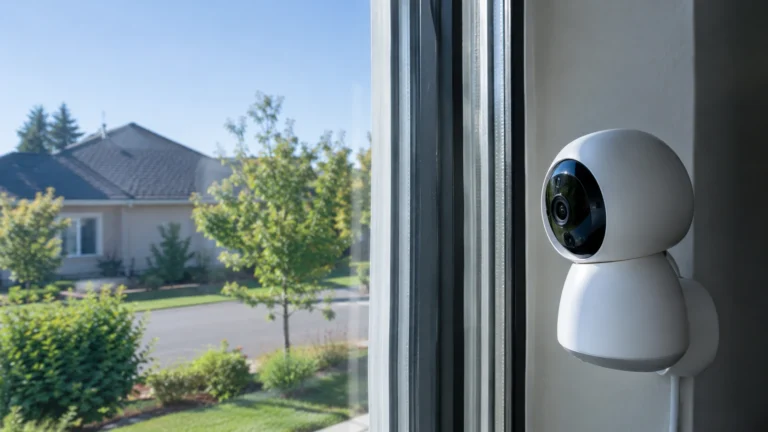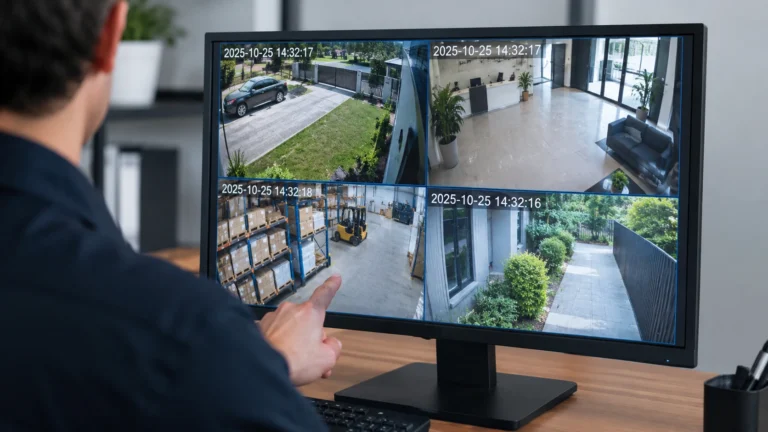
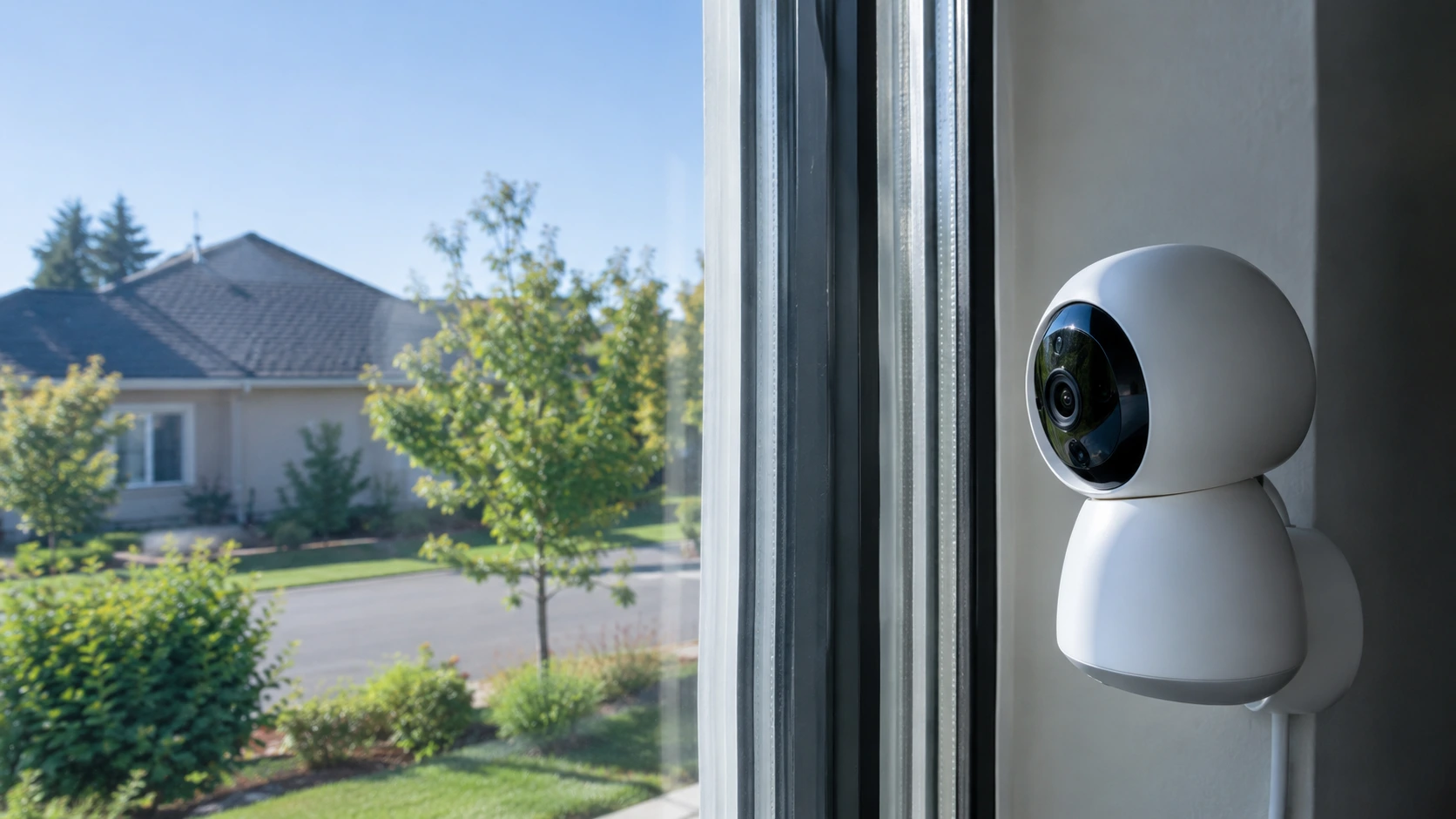
Yes, security cameras are able to use a window. However, it’s not ideal. During the day, glass doesn’t cause as many issues, as most indoor cameras can record a decent image through regular glass. At night, things aren’t so simple. The vast majority of complaints boil down to reflections, glare, and overexposure, which are all caused by infrared.
Below we tell you what occurs if the camera is aimed towards the outdoors from within, since the photo during the night time is failed and may be solved.
Why People Mount Cameras Behind Glass
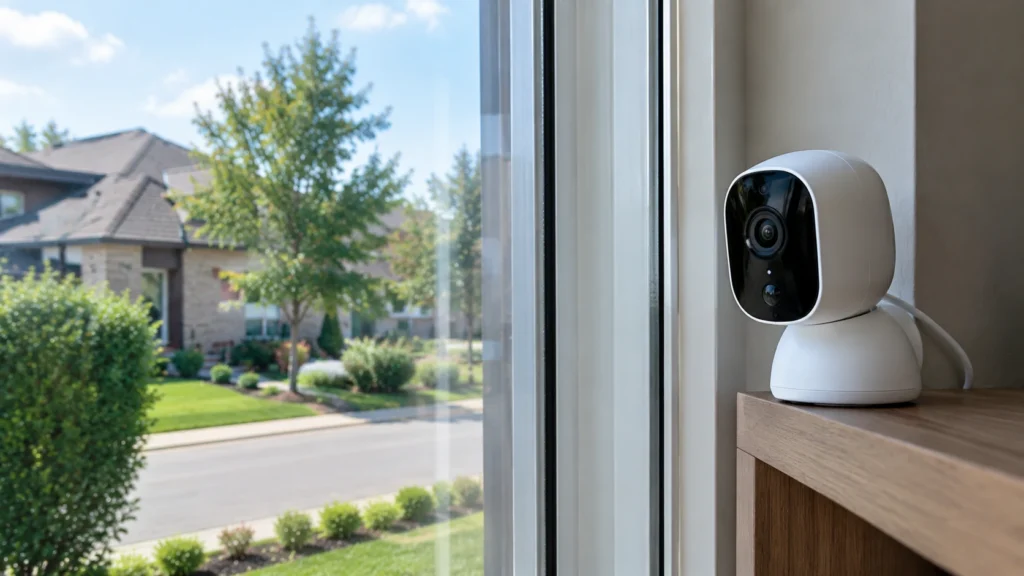
Reasons to have the camera indoors:
- Protects the camera from the weather. Rain, snow, dust, and heat can all wear out a camera. At least indoors, it’s protected from all these things.
- Lower cost. Indoor units tend to cost less than weather-resistant units.
- Simple Power & Wi-Fi. Usually within reach: a plug and a powerful signal.
- Reduced theft & sabotage. A glass-fronted camera is more difficult to access, obscure, or steal.
- Rules for rent. No drilling into exterior walls, no problem with the windowsill.
This is the most common mount on an outdoor surveillance camera and is frequently used for apartment buildings, businesses, and even residential homes that want to monitor their driveway or street.
Do Security Cameras Work Through Window Glass During the Day?
Usually, no; the glass of a a single pane is very transparent and can completely transmit all visible light. The effect can be similar to no window in that area of the room.
Things That Can Still Degrade the Quality
- Dirty glass, dust, and fingerprints make for fuzzy photos. Get both sides of the window squeaky clean.
- Reflective or tinted film. Window tint reduces the amount of light and may cast a color or increase the darkness of the image.
- High-V and double-pane glass. Windows built to save energy often have thin coats and additional panes that result in mild reflections or a haze.
- Sun glare. Punctuated bursts of bright sunlight hitting the glass can cause hot spots in the frame.
If daytimes are all you need, then you should be fairly happy with just about any decent camera that you can stick behind a nice clean window.
The Real Problem: Night Vision Through Glass
This is where the majority of folks get stuck. Once you understand this, it becomes extremely simple to correct.
As cameras improve they would be capable of capturing video in the dark using very tiny IR LEDs that illuminate the scene in light invisible to the naked eye. The camera sensor detects it and creates a black and white image.
Glass is reflective at that spectrum. So when the IR LEDs from the camera shoot through a window, some of that light simply reflects back off of the glass and into the lens:
- A pale white fog or circle of light in the picture.
- Blurry scene with outside objects nearly blurred away
- The image of the camera body or the room behind it.
- Hot spots that blind the sensor and block anything beyond the glass
We’ve gotten many questions about the effectiveness of security camera night vision through glass and if the footage captured would be clear enough. Here’s a quick rundown: if you just press your camera up against the glass and expect the footage to come out crystal clear, you’re in for a disappointment.
Infrared Reflection on Window Security Cameras: How to Fix It
Standard infrared reflection on window security cameras: simple solutions. Here are some ideas, not necessarily in order of importance:
- If you see this feature in the app, turn off the built-in IR LEDs. Turning this off will prevent any IR bouncing back at the lens.
- When the IR is disabled, the camera needs to see with a different light source, such as. Your porch light, a floodlight, or a street light. Some newer camera models will still give decent color night footage if there is some ambient light.
- Press the lens firmly onto the glass. The small gap still causes the reflection. On the next best thing, flush the lens against the window.
- A rubber gasket, foam ring, or even a cardboard or black felt hood in front of the lens may also help keep light from leaking in from the side of the glass.
- A small tilt will move the reflections away from the glass. Just not too much tilt or the shot will go wonky.
- External IR LED illuminator mounted outside. The outside placement provides scene illumination with no direct glass illumination.
- Select the appropriate camera for the task. Some models include a low-light or ‘starlight’ sensor; they have an IR cut-off control that is still effective behind glass.
- Reduce lighting. Turn lights on/off in the house or place them near the window so that they do not get reflected on the glass during nighttime.
1st step: a decently lit outdoor environment – that’s all you need.
Motion Detection Behind a Window
Some cameras have a pixel-based motion detector that looks for changes between frames of video. While this type is capable of working through glass, reflections, passing headlights, insects and rain may cause false notifications.
Cameras with a PIR sensor work a bit differently. PIR (passive infrared) responds to heat and glass prevents most of it from passing through to our camera. Therefore, PIR-based motion detection generally won’t work through a window and you should expect to miss events if the camera uses it. Find out which type your camera uses before purchasing.
Reduce false alarms by setting activity zones on the app and adjusting sensitivity. Do not aim at busy roads or swinging trees.
Audio and Wi-Fi Considerations
Video. Due to the physical barriers of windows, the camera’s audio and two-way talk features may not be powerful enough. If your main focus is listening to your exterior, you probably shouldn’t use a camera covered by glass.
Wi-Fi. Very thick or deep-colored glass, such as some tinted and metal-coated glass, may slightly impair a Wi-Fi signal, but the camera is fitted inside, so connection to the router should not be a problem.
Tips for Choosing and Placing a Camera Behind Glass
If you want to observe security cameras via window glass, then the following points will save you time:
- Opt for a camera that has a button to turn off IR or a camera with color night vision.
- Watch for a Wide Dynamic Range (WDR/HDR) function that allows the camera to see dark and light sections at the same time.
- Favor 2K resolution or better: You’ll still be able to zoom in for details once you’ve lost a little bit of sharpness through the glass.
- A tiny, flat-on-the-window or suction-mounted camera that is flush-mounted to your window.
- Mount as close to the glass as possible and clean both sides regularly.
- Test during the night before you decide on your position. The trouble with daytime testing is that you don’t see the IR.
Quick Pros and Cons
Advantages
Protects from weather, less expensive, easier to set up, more difficult to tamper with.
Cons
Night vision glare, potential for reflections, somewhat weaker audio, PIR sensors that may not function properly, and the image quality is only marginally lower than a dedicated outdoor security camera.
When You Should Use an Outdoor Camera Instead
For solid night footage, license plates, and being able to listen in on what is happening out front, you want the outdoor camera. It also eliminates the presence of glass. An indoor camera mounted in a window is fine for occasional monitoring, like keeping an eye on a package spot, watching the yard, or monitoring a driveway during acceptable light.
Final Thoughts
So, do security cameras work through a window? Yes, they work even better during the day. At night, you just have to switch off the IR, add outside lights, and tighten the lens against the glass to prevent IR glare. A few minor modifications are all that’s needed to ensure that an indoor camera pointing out will provide reliable surveillance at a fraction of the price.
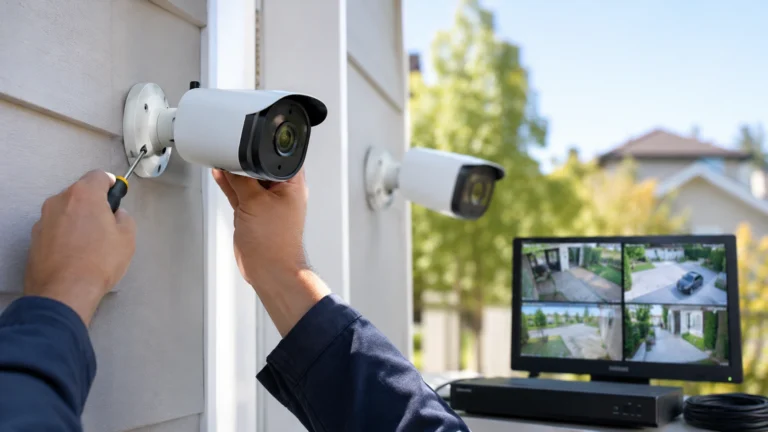
Cam Security Surveillance lets us help your home or business get started with the right cameras for your place. Whether you want a window setup or a full outdoor system, our team offers professional security camera installation Indianapolis to get it done right. Contact us today, or head to camsecuritysurveillance.com for camera guides, product advice,, and setup support.
FAQs
Do security cameras work through a window?
Yup. Daytime images are pretty good, although the blurring at night due to infrared reflection is a problem that you can usually sort out as suggested above.
Why does my camera look blurry or white at night in front of glass?
The camera’s IR is bouncing off the window into the lens. Turn off IR and turn on outside lights.
Can any indoor camera be pointed outside?
Most can, but switchable IR models, decent low-light sensor cameras, and flush-mount models will do the best.
Does double-pane or tinted glass make it worse?
Yes. More layers and coatings mean more reflections and less light. Be sure to test your rig thoroughly.
Will the motion alerts continue?
Pixel-based motion detection does. PIRs generally do not.