These days, security cameras are ubiquitous. Streets, stores, offices, and homes are all covered. However, it’s not always obvious who is permitted to view such live feeds. Many install cameras without considering the regulations pertaining to their monitoring.
Can you see live CCTV, then? In a nutshell, yes, but only in certain circumstances. It matters where you are, why you are there, and how you obtain consent. If you do any of these things incorrectly, you can run into major legal issues.
What Does “Watching Live CCTV” Mean?
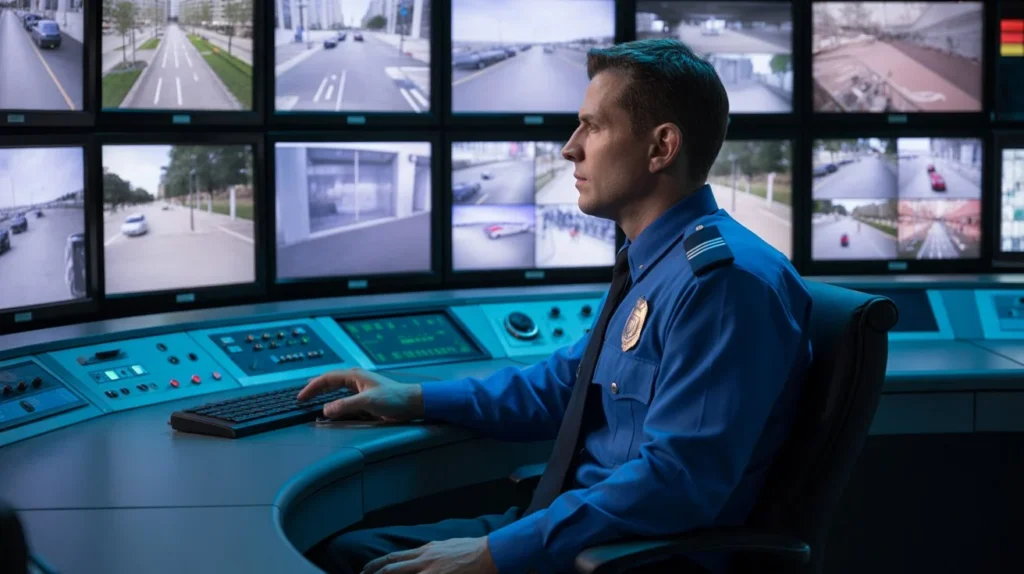
Watching live CCTV means viewing a real-time video feed from a security camera as events happen. It is different from reviewing recorded footage. Live monitoring means someone is actively watching what a camera sees right now.
This can happen in several ways:
- A security guard watching monitors in a control room
- A homeowner checking a camera app on their phone
- A business owner viewing multiple store cameras remotely
- A local authority watching street cameras in real time
At Cam Security Surveillance, we often get asked about this during our security camera installation Indianapolis consultations. Clients want to know not just how to set up their system, but what they are legally allowed to do with it once it is running.
The most effective use of any CCTV system is live monitoring. It enables prompt action. However, that authority entails accountability. Live viewing is treated differently under the law than merely storing video, and this distinction is very important.
Is It Legal to Watch Live CCTV?
Yes, it is legal in most cases. But the legality depends on three main factors:
- Where the camera is placed
- Who is being recorded
- What the footage is used for
Watching live feeds from cameras on their own property is legal for private individuals. Companies are able to keep an eye on their property. City surveillance systems can be run by public authorities. However, none of these groups have unrestricted rights. Is it legal to keep an eye on CCTV cameras in public areas like parking lots or apartment hallways? Yes, but appropriate signage and, in certain situations, written notice to those using the space are usually required.
People should have a reasonable expectation that they may be watched, according to the fundamental tenet of US law. This calls for unambiguous signage, a defined objective, and the prohibition of observing in private areas like restrooms or changing rooms.
Laws That Affect Live CCTV Monitoring
The United States has no single federal CCTV law. Rules come from a mix of federal statutes, state laws, and local ordinances. Here is what you need to know.
Federal Law
At the federal level, live surveillance camera laws fall mainly under the Electronic Communications Privacy Act (ECPA). This law restricts the interception of communications but generally allows video-only surveillance in places where people do not have a reasonable expectation of privacy.
The Fourth Amendment protects people from unreasonable government searches. This applies to law enforcement using cameras, not private citizens or businesses.
State Laws
State laws vary widely. Some key examples:
California has some of the strictest rules. The California Consumer Privacy Act (CCPA) and Penal Code Section 647(j) make it illegal to watch or record people in private spaces without consent. Businesses collecting visual data from customers have added obligations.
Texas prohibits surveillance in spaces where people have a reasonable expectation of privacy under the Texas Penal Code Section 21.15. Violations can result in criminal charges.
Illinois has the Biometric Information Privacy Act (BIPA), which applies when cameras capture facial recognition data. It requires written consent and strict data handling rules.
Indiana, where our team at Cam Security Surveillance operates, follows general US privacy principles. Indiana Code Title 35 covers criminal surveillance offenses. Placing cameras in private spaces without consent is a criminal act. Public and semi-public surveillance with proper notice is allowed.
Florida requires all parties to consent to recordings that capture audio alongside video under its wiretapping statute.
The core rule across every state: is live CCTV monitoring legal depends on purpose, notice, and whether the monitored space is public or private.
Can Employers Watch Employees on Live CCTV?
This is one of the most common questions we hear. And the answer is: yes, but within limits.
Employers have a legitimate interest in protecting their property, preventing theft, and ensuring safety. Live CCTV monitoring in workplaces is generally allowed under US law. But it must be:
- Disclosed to employees in advance
- Limited to work areas, not private spaces like restrooms or break rooms
- Proportionate to the actual business need
Surveillance that might be interpreted as tracking union activity is restricted by the National Labour Relations Act (NLRA). Federal labour law may be broken by using cameras to observe workers organising or debating working conditions. The majority of states mandate that companies notify workers about monitoring. Some people demand that this be done in writing. Employers in Indiana are strongly encouraged to sign acknowledgement forms and include camera monitoring rules into employee handbooks.
It is rarely lawful to monitor employees covertly. There are a few specific exceptions, such as ongoing theft investigations, but even in those cases, getting legal counsel beforehand is highly advised. Access to feeds must be restricted in accordance with laws governing live security camera monitoring in workplaces. It shouldn’t be possible for every manager to constantly monitor every camera.
Can Landlords Watch Live CCTV?
Landlords can install cameras in common areas of rental properties. Think hallways, parking lots, lobbies, and building entrances. These are not private spaces, so monitoring them is generally legal across the US.
What landlords cannot do:
- Place cameras inside individual units or apartments
- Watch bathrooms, bedrooms, or any area where tenants expect privacy
- Use footage to harass or intimidate tenants
Tenants have a right to quiet enjoyment of their home. A landlord secretly installing a camera inside a rented unit would violate privacy laws in every US state and could face criminal charges.
In Indiana, landlords must also comply with the Indiana Landlord-Tenant Act. Entering or monitoring a tenant’s private space without proper notice or consent can result in legal liability.
If you are a landlord considering CCTV, always notify tenants in writing before installation. Post clear signs in all monitored common areas. And make sure any live monitoring is for security purposes only.
Is Remote CCTV Monitoring Legal?
Remote monitoring means watching your cameras from a different location, typically through an app or web portal. This is increasingly common for both homeowners and businesses across the US. Are you allowed to watch live CCTV remotely? Yes, as long as the cameras themselves are legally placed and you are the authorized person to access that feed.
For businesses using third-party remote monitoring services, the legal picture gets more complex. When a security company watches your cameras on your behalf, a written service agreement should clearly define who can access footage, how it is stored, and when it is deleted.
Key requirements for lawful remote monitoring in the US:
- Secure, encrypted access to camera feeds
- Access limited to authorized personnel only
- Clear internal policies on how footage is used or shared
- Data retention limits applied to any recordings made
Remote access also increases cybersecurity risk. Unsecured camera systems have been hacked, exposing live feeds publicly. That is both a safety risk and a potential legal liability if sensitive footage is exposed.
Do You Need Permission to Watch Live CCTV?
It depends on context.
On your own private property: No formal government permission is needed in most US states. You can watch cameras covering your home, yard, or vehicle without registration.
In a business: You do not need to register with a government body in most states. But you do need a clear written policy explaining the purpose of monitoring, who can access feeds, and how footage is stored and deleted.
In public or semi-public spaces: Businesses with cameras that capture areas beyond their own property, like a public sidewalk, should post visible signage. Some cities have local ordinances that apply.
For shared or communal properties: If cameras cover areas used by others, those people have a right to be informed. A clearly visible sign is the minimum standard. For larger properties or apartment complexes, written notice to residents is best practice.
The short answer: if you own the property and the cameras only cover your own space, you generally do not need permission. If cameras capture other people in shared or public spaces, you likely have legal obligations under state law.
Best Practices for Legal CCTV Monitoring
Whether you are a homeowner or a large business, these practices keep you on the right side of the law.
1. Post clear signage
Signs should be visible before anyone enters a monitored area. They should state that cameras are in operation and who is responsible for the system.
2. Document your purpose
Write down why you use CCTV. Security, crime prevention, and safety are all valid purposes. Keep this on record in case you are ever questioned.
3. Limit access to live feeds
Only people who need to watch the feed should have access. Use passwords, user accounts, and access logs.
4. Set data retention policies
Decide how long recordings are kept and delete them on schedule. Most security professionals recommend 30 days for standard use.
5. Conduct a privacy review before installing
Think through who might be captured by each camera. Make sure no camera points into a space where someone could reasonably expect privacy.
6. Train anyone who monitors cameras
People watching live feeds should know what they can and cannot do with what they see, and who they can share footage with.
7. Secure your system
Change default passwords. Use encrypted connections. Keep firmware updated. An unsecured system is both a legal and a safety risk.
Penalties for Illegal CCTV Monitoring
Ignoring the rules is not just an ethics problem. It can lead to serious consequences under US law.
Federal penalties under the ECPA can include fines and prison time for unlawful interception of communications, including audio-enabled surveillance without consent.
State criminal charges apply when cameras are placed in spaces where people have a reasonable expectation of privacy. In most states, this is classified as voyeurism or criminal surveillance.
- In Texas, illegal surveillance is a state jail felony, punishable by up to 2 years in prison and fines up to $10,000
- In California, violating Penal Code 647(j) can result in up to 1 year in county jail and a $2,500 fine
- In Indiana, criminal surveillance offenses under Title 35 can lead to misdemeanor or felony charges depending on the circumstances
Civil lawsuits are also common. Employees, tenants, or customers who discover they were watched unlawfully can sue for damages. Settlements in workplace privacy cases regularly reach six figures.
Beyond legal costs, illegal monitoring destroys trust. Once people know they were watched without proper notice, that damage is hard to undo.
How Businesses Stay Compliant
Many businesses use CCTV without thinking about compliance until something goes wrong. Here is how to stay ahead of problems.
Appoint a responsible person. Someone should own your CCTV policy. They should review access logs, handle footage requests, and keep policies updated.
Review your system annually. Laws change. Camera placements that were fine two years ago might not meet current standards today, especially in states with evolving privacy laws.
Respond to footage requests properly. Law enforcement can request footage with a valid subpoena or court order. Have a process for handling these requests without handing over more than required.
Use professional installers. A reputable company like Cam Security Surveillance will advise on placement and legal requirements during the installation process. This is especially important if you are asking: are you allowed to watch live CCTV from multiple locations or across a large commercial property.
Keep records. Document when cameras were installed, who has access, and any incidents where footage was used or shared. This protects you if your monitoring practices are ever questioned.
Conclusion
Live CCTV monitoring is legal in the US, but it is not a free pass. Whether you are a homeowner, landlord, or business, the law puts clear limits on where you can place cameras, who can watch them, and how that footage can be used. Are you allowed to watch live CCTV? Yes, if you follow the rules. Know your state laws. Post signage. Limit access. Keep records. And never place cameras where people expect privacy.
Done right, live monitoring is one of the most effective security tools available. Done wrong, it creates legal risk, destroys trust, and can result in criminal charges or costly civil lawsuits.
FAQs
Can I watch my neighbor’s property on CCTV?
No. Cameras should not be deliberately aimed at a neighbor’s home, yard, or windows. This can violate state privacy laws and result in criminal charges or civil claims.
Is it legal to watch employees on CCTV without telling them?
Generally, no. Most US states and federal labor law require employers to inform employees about workplace monitoring. Covert surveillance requires specific legal justification.
Do I need to register my home CCTV system in the US?
No federal or Indiana state registration is required for home cameras that only cover your own property. Always check your local city ordinances, as some municipalities have their own rules.
Can law enforcement watch my CCTV footage without my permission?
Law enforcement typically needs a subpoena, warrant, or court order to access your footage. In emergency situations, police may request voluntary access, but you are not always required to comply without legal process.
How long should I keep live CCTV recordings?
Most security professionals recommend no longer than 30 days for standard security purposes, unless footage relates to a specific reported incident. Check with a local attorney if your business operates in a regulated industry.
Is remote CCTV monitoring legal for small businesses in Indiana?
Yes, provided your cameras are legally placed, employees are notified, and you have proper agreements with any third-party monitoring service you use.
What is the difference between live CCTV and recorded footage legally?
Live monitoring is real-time watching. Both are subject to US privacy laws, but live feeds can raise additional concerns around purpose and who is authorized to watch. Recorded footage also carries storage and data security obligations.