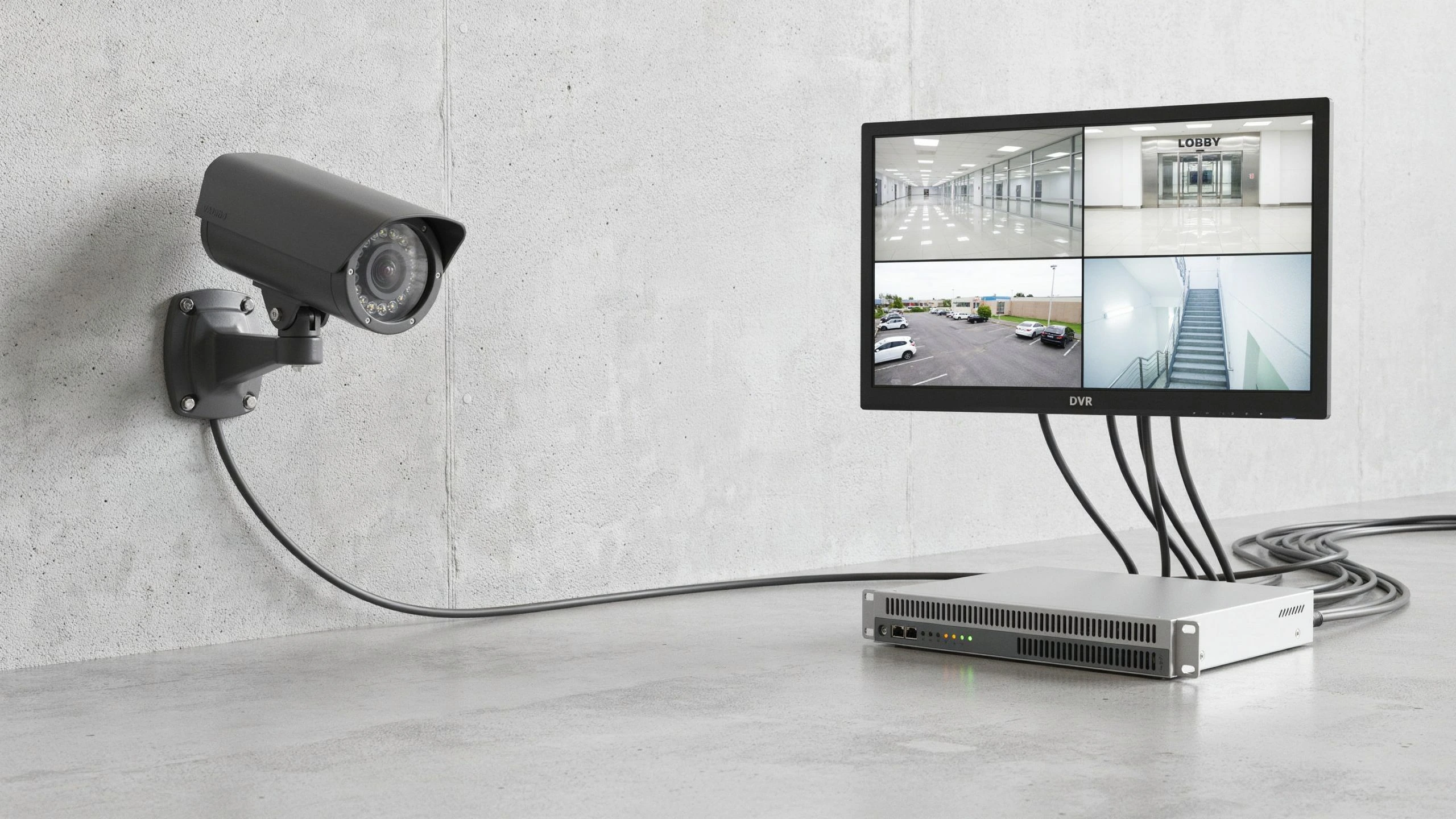
Whether you’re looking for a way to record live footage, check up on your house remotely, or boost home security, you’ve likely heard of CCTV cameras and DVRs. While CCTV and DVR are both part of many surveillance setups, they are not interchangeable devices. CCTV typically refers to a camera-based system for monitoring an area, whereas the DVR, or Digital Video Recorder, is actually the unit which records information from such cameras.
Understanding a CCTV camera vs DVR will assist homeowners, as well as business owners in selecting the optimal surveillance hardware. With a CCTV system with the aid of a DVR you can record live camera footage for later viewing at any time you need. CCTV systems with DVR have been prevalent in houses, offices, businesses, warehouses or any other properties.
What Is CCTV?
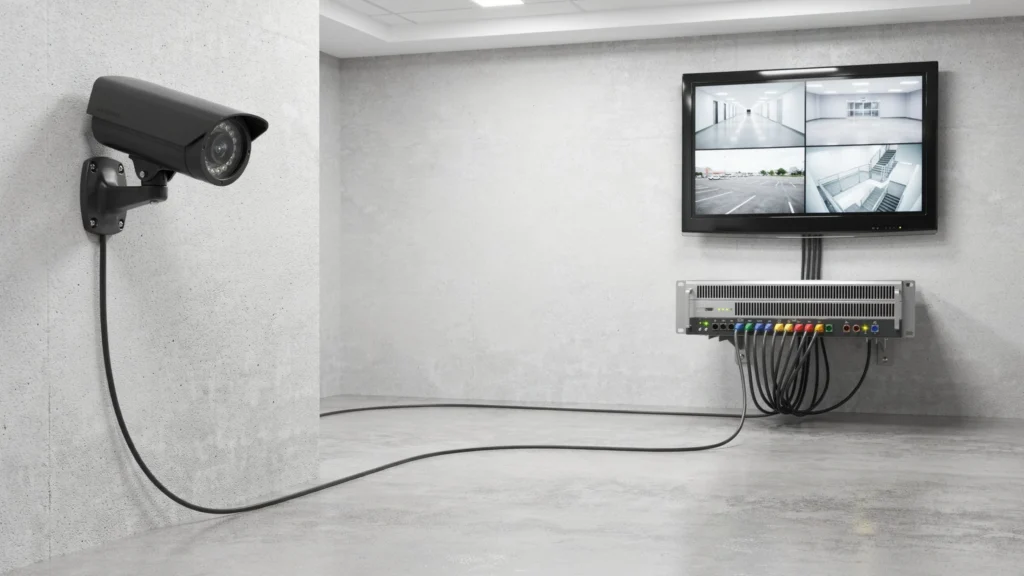
CCTV stands for Closed-Circuit Television. It’s a security system utilizing cameras in order to record footage of a particular area transmitting it to Monitors or other recording devices.
Unlike Television systems broadcasting, they utilize private screens available to selected viewers.
The average security system might comprise of:
- security cameras,
- cables,
- monitors,
- recorder,
- power supplies,
- storage facilities.
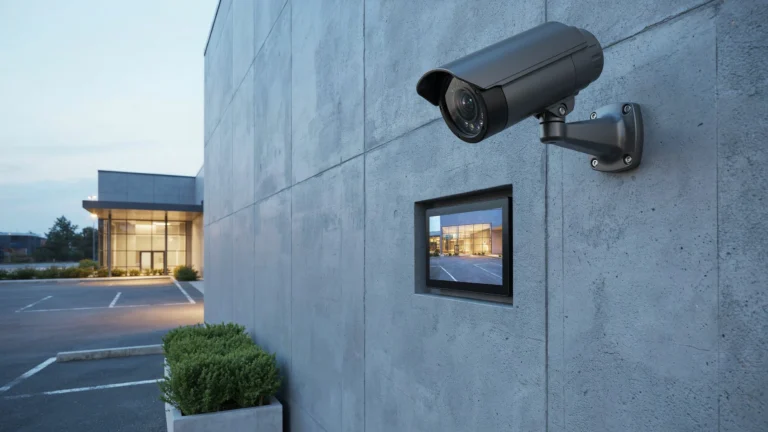
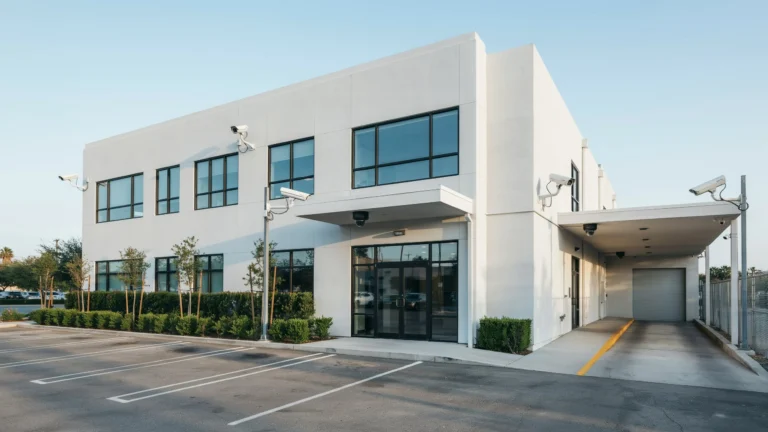
CCTV cameras can be applied both internally or externally, according to the needs.
What Does a CCTV Camera Do?
A CCTV camera is there to watch a given area which can be an entry area, a car-park, a hall-way, an office, or warehouse. A CCTV camera itself might not inherently have long term video-store options, often it will relay an input of video to a peripheral device, like a DVR.
This point is made because an important comparison to make would be a CCTV camera vs the recorder it connects to since both systems operate in distinctly separate tasks.
What Is a DVR?
A DVR (Digital Video Recorder) is a device used to record video from devices that are able to send it to and compatible with DVR machines, such as the vast majority of digital surveillance cameras.
As a recording unit, the DVR typically functions as the center of the recorded video feed for a particular surveillance network.
The system can provide DVR features such as:
- ability to record security cameras,
- retention of video files for the purposes of future playback or retrieval,
- capability of searching of video archives,
- viewing from different cameras remotely,
- scheduling recording times,
- retrieving records based upon specific date/time, etc.
The size of a recorded file/archive relies upon number of security cameras connected, storage size, recording resolution, resolution of streams, and desired amount of recording history needed
CCTV Camera vs DVR: What’s the Difference?
The simplest way to understand the difference is that CCTV is the surveillance system or camera technology, while a DVR is a recording device used to store video footage.
| Feature | CCTV Camera/System | DVR |
| Main purpose | Captures and transmits video | Records and stores video |
| Primary function | Surveillance | Video storage and management |
| Records footage? | Not necessarily by itself | Yes |
| Works with cameras? | Is part of the camera system | Connects to compatible cameras |
| Live viewing | Yes, when connected to a monitor or system | Yes, depending on setup |
| Storage | Usually requires separate equipment | Provides video storage |
A CCTV camera can capture what is happening, while the DVR provides a way to record that footage. Therefore, these aren’t really competing technologies. In many traditional installations, they work together.
How Does a CCTV System With DVR Work?
The working of a CCTV system with DVR is generally simple.
1. Cameras Capture Video
Security cameras are placed at various locations around property or where the user needs the monitoring to take place. Each one is recording continuously, or based on whatever record time has been set in the system, a camera records and captures all video information relevant to that location.
2. Video Travels to the DVR
Cameras send their video signal through the appropriate wiring and connections.
3. DVR Processes the Footage
The camera feed is picked up by the DVR and either converted or encoded and/or processed into a video file that can be saved or recorded.
4. Footage Is Stored
The recorder DVR stores the video feed on the attached DVR system’s hard drive. The size of which then varies for amounts of footage you will receive before being written over.
5. Users Can Review Footage
In the event an incident occurred or there was a break-in you can search recorded video. This gives the DVR its real benefit. You need to go over any event that occurred when no one was able to witness them.
What Is a DVR Security Camera System?
A complete video surveillance solution composed of matched surveillance cameras and a digital video recorder, the DVR security camera system.
Security camera DVR systems like these are frequently found where the property owner seeks both live views and recorded video of activities and events occurring at a location.
Standard security camera DVR security systems often contain:
- A collection of multiple surveillance cameras
- DVR recorder
- A Hard drive is used as storage for recorded video
- Video camera power supplies
- Camera cabling a monitor or tv to view security system video
- Remote camera viewing is possible in some systems.
When Is a DVR System Useful?
A DVR system can be useful for:
- Home
- Retail or small businesses
- Offices
- Warehousing space
- Parking lots
- Restaurants
- Commercial buildings
- Industrial buildings
- facilities
Many security cameras, depending on how many cameras are needed and the property’s size and type may be required for a comprehensive DVR security camera system.
Benefits of a CCTV Recording System
As well as live camera feeds, correctly implemented systems will also allow you to record footage from your cameras, which is invaluable.
Recorded Evidence
Should a crime be committed, or to recall an incident, the recorded evidence will allow property owners to see exactly what has occurred.
Continuous Monitoring
Depending upon the recording configuration chosen, the cameras can monitor a key location twenty-four hours of the day, seven days a week.
Multiple Camera Views
Many D.V.R. Units are capable of viewing footage from several individual cameras simultaneously, allowing access from a single monitor.
Easy Footage Review
There is no need for a user to watch several hours of recorded footage if the individual recorder offers the function, you will often be able to select the correct date and time for viewing, reducing your search time considerably.
Deterrence
Obvious, visible security cameras have been known to deter people, for simply the reason that they know the property is being surveyed.
CCTV and DVR: Which One Do You Need?
CCTV and DVR usually play quite different roles so you may find that you will be going for CCTV (with a DVR).
You are of course more than likely aware that you may not need to choose.
CCTV with a DVR will provide you with a hardwired traditional type surveillance system with recording capacity.
Cameras are of course there to do the surveillance and the DVR takes care of the recording. But it can really depend on the setup of your property, what you require from a security system, where you need cameras, what sort of quality and storage of the recorded footage you need, along with the costs of getting the system up and running.
Consider These Questions Before Choosing a System
Ask yourself:
- How many areas require surveillance?
- Do you require internal, external or a combination of both types of camera to complete the job?
- How long do you require the footage to be recorded for?
- Continuous recording or is the detection mode (recording only when something is happening) sufficient?
- Do you require remote access to viewing facilities?
- What sort of resolution do you require the quality of video at?
- Will the cameras need to record at night time?
- What sort of storage capacity will I require?
Why Professional Installation Matters
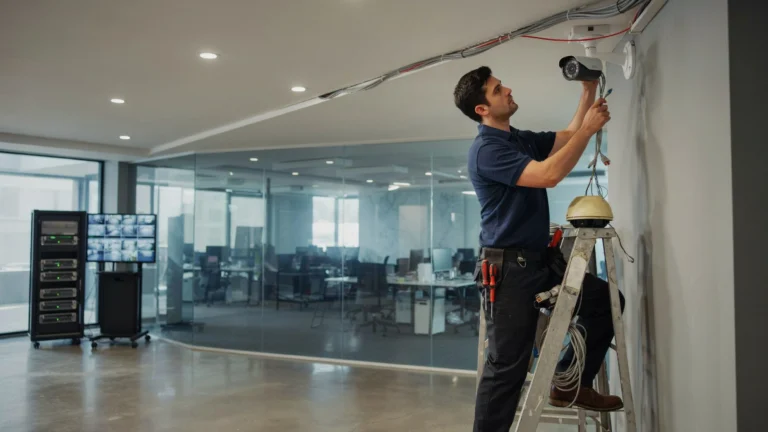
If you are hiring a professional security surveillance company, they can assess your property and recommend the best camera and microphone placement. For reliable coverage and clear audio, professional security camera installation Indianapolis services can help ensure your cameras are positioned correctly and configured for your specific needs.
Here a few reasons why getting it done with a professional installer is beneficial to ensure all of the following:
- All major entryways are covered
- Correct angles are being utilized
- Cables can be done properly
- Recording devices set up properly
- Storage settings are correctly done
- Cameras have adequate coverage rather than obstructed ones
A Cam Security Surveillance can ensure you avoid common mistakes if you will be going through a new install or an upgrade of an existing install system.
Final Thoughts
Understanding what is the difference between CCTV and DVR will make picking the best surveillance equipment more straightforward. CCTV pertains to the surveillance camera framework or set of security cameras, while the DVR is the machine used for recording surveillance footage from capable cameras. In essence, when you consider a CCTV camera vs DVR, they aren’t actually alternatives to picking one over the other. When a camera and DVR are utilized in combination, the camera supplies the feed as well as the DVR saves that feed.
With that being said, having a well establishedDVR security camera system can bring important tranquility as well as reassurance to those who need video clips saved as well as a check of their essential areas. Schedule Professional Install Services For Those Interested In Setting up a safety and security system as well as require a security camera installation or upgrading an existing security camera system, don’t hesitate to stop by Cam Security Surveillance for professional services. Contact us today to schedule your consultation and get a surveillance system built around what your property actually needs.
FAQs
Is a DVR the same thing as a CCTV camera?
No. A CCTV camera captures and transmits video, while a DVR is the separate device that records and stores that video for later viewing.
Can a CCTV camera work without a DVR?
Yes, some CCTV cameras can display live footage on a monitor without a DVR, but without a recorder attached, that footage typically won’t be saved for future review.
How long does a DVR store recorded footage?
It depends on your hard drive size, the number of cameras connected, and your recording resolution. Once storage fills up, most DVRs overwrite the oldest footage automatically.
Do I need a DVR for every camera in my system?
No. A single DVR can usually connect to and record footage from multiple cameras at once, depending on how many channels the unit supports.
Is CCTV with DVR better than a cloud-based camera system?
It depends on your needs. DVR systems store footage locally and don’t rely on internet access, while cloud systems offer remote storage but require a stable connection and often a subscription.
Can I upgrade an existing CCTV system by adding a DVR later?
In many cases, yes, as long as your cameras are compatible with the DVR you choose. A professional installer can confirm compatibility before you buy.