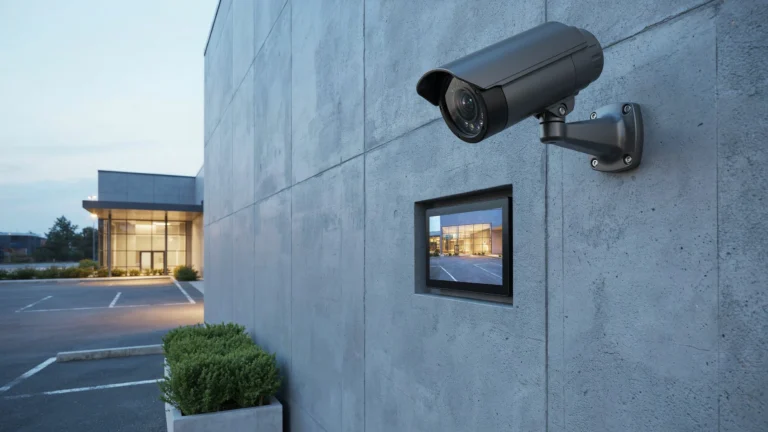
Your camera catches a clear picture of your yard at 2 a.m. with no porch light on. How? Small infrared LEDs around the lens send out light your eyes can’t see. The sensor inside picks it up and turns it into a black and white image you can view on your phone.
That’s the short answer to what is an infrared security camera and how does it work. Now let’s break down every part of it, so you know exactly what you’re buying and why it matters.
What Is an Infrared Security Camera?
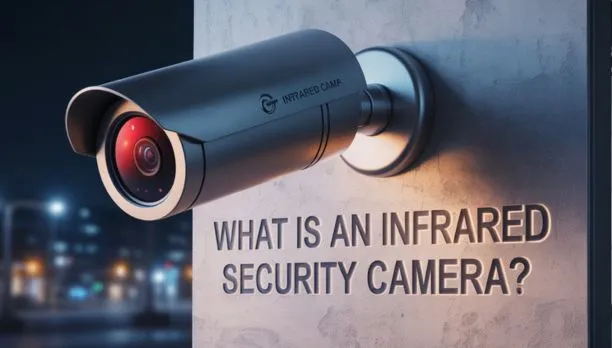
An infrared security camera is a camera built with small LED lights around the lens. These lights give off infrared light, a type of light that sits just outside what the human eye can see. The camera’s sensor picks up this light and turns it into a visible image, even in full darkness.
Most people just call this ir security camera technology, since “IR” is short for infrared. You’ll also hear it labeled as infrared cctv, which is common in commercial and retail settings. The core idea stays the same across brands: use light waves outside human vision to capture a usable picture at night.
Regular cameras need visible light to form an image. Without it, your footage turns black. An infrared camera solves that problem by creating its own light source, one your eyes never notice but the camera reads clearly.
How Does an Infrared Security Camera Work?
Here’s the part most buyers skip past, but it’s worth understanding.
Infrared LEDs sit in a ring around the camera lens. Once the built-in light sensor detects low light or full darkness, these LEDs turn on automatically. They send out infrared light across the area the camera covers.
That light bounces off objects, people, or vehicles in the frame and returns to the camera’s sensor. The sensor reads the reflected light and builds an image from it, usually in black and white or grayscale. Color drops out at night because the sensor is reading light wavelengths, not color data.
This whole process answers the question a lot of people search for directly: what is an infrared security camera and how does it work in real conditions. It works by lighting a scene invisibly, then reading the reflection, all within a fraction of a second.
Some newer models add a feature called smart IR. It adjusts the LED brightness based on distance, so close objects don’t appear as a white blur. This fixes a common complaint with older, cheaper units.
Types of Infrared Security Cameras
Not every infrared camera works the same way. Here are the main types you’ll come across:
- Standard IR bullet cameras – Long, cylindrical cameras common for outdoor use. Good range, easy to mount.
- IR dome cameras – Rounded housing, often used indoors or on ceilings. Harder to tell which direction they’re pointed.
- PTZ (pan-tilt-zoom) IR cameras – Move and zoom while still using infrared light for night coverage.
- Dual-light cameras – Combine infrared with a white light or spotlight for color night vision.
- Infrared surveillance system setups – Multi-camera networks used in businesses, warehouses, and gated properties, all tied into one recorder.
Each type fits a different property size and budget. A single-family home rarely needs PTZ coverage, while a warehouse often does.
Key Features of Infrared Security Cameras
When comparing models, these features actually matter:
- IR range – How far the infrared light reaches before the image turns dark.
- Number of LEDs – More LEDs usually mean wider, more even night coverage.
- Smart IR or auto-adjust – Prevents washed-out images at close range.
- Resolution – Higher resolution means clearer night footage, not just daytime footage.
- Weatherproof rating – Look for an IP66 or higher rating for outdoor units.
- Motion-activated recording – Saves storage and battery life by recording only when needed.
Advantages of Infrared Security Cameras
There’s a reason infrared has become the standard for home and business security.
First, it works without any external light source. You don’t need street lamps, porch lights, or floodlights for the camera to function well.
Second, it’s discreet. The infrared light is invisible to people, so it doesn’t alert anyone that they’re being recorded, which helps with catching real activity instead of staged behavior.
Third, it’s affordable. Compared to thermal cameras, infrared units cost far less while still giving solid night coverage for most homes and small businesses.
Fourth, it pairs well with motion detection. Since the camera can see clearly at night, motion alerts stay accurate instead of triggering false alarms from shadows or shifting light.
Limitations of Infrared Security Cameras
No system is perfect, and it’s worth knowing the downsides before you buy.
Infrared footage is black and white at night. You lose color detail, which can matter if you need to describe clothing or vehicle color to police.
Glass and reflective surfaces can bounce the IR light straight back into the lens, creating a bright white glare. This is common when a camera faces a window or a shiny wall.
Range is limited compared to what people expect. A camera rated for 100 feet of night vision might only produce a clear, usable image up to 60 or 70 feet, depending on the environment.
Weather also plays a role. Fog, heavy rain, and snow can scatter infrared light and reduce clarity.
Infrared Cameras vs Thermal Cameras
People often mix these two up, so here’s the difference in plain terms.
Infrared cameras use invisible light and need that light to reflect off a surface to form an image. Thermal cameras work differently. They detect heat given off by objects and people, not light. This means thermal cameras can “see” in total darkness, smoke, or heavy fog, since heat still radiates even when light can’t get through.
Thermal cameras cost significantly more and are typically used for perimeter security on large properties or industrial sites. Infrared cameras cover the needs of most homes, apartments, and small businesses at a fraction of the price.
Where Are Infrared Security Cameras Commonly Used?
You’ll find infrared cameras in more places than you might expect:
- Homes and apartment entryways
- Retail stores and warehouses, often as part of a larger infrared cctv network
- Parking lots and garages
- Schools and office buildings
- Farms and rural properties with long driveways
- Banks and ATMs
Basically, anywhere someone needs reliable footage after dark, infrared is the go-to choice.
How Far Can Infrared Security Cameras See at Night?
Range depends on the number and strength of the LEDs, plus the camera’s resolution. Budget cameras typically reach 30 to 50 feet. Mid-range models often cover 60 to 100 feet. High-end units, especially those built for commercial infrared surveillance system setups, can reach 150 feet or more.
Keep in mind that manufacturer numbers are often tested in ideal, controlled conditions. Real-world range is usually shorter once you factor in weather, obstacles, and ambient light pollution from nearby streetlights.
How to Choose the Best Infrared Security Camera
Start with your coverage area. Measure the actual distance the camera needs to see clearly, not just the general direction.
Check the IR range listed by the manufacturer, then mentally reduce it by about 20 percent for real-world use.
Look at the resolution next. A 4MP or higher camera will give you much clearer footage for identifying faces or license plates at night.
Confirm the weatherproof rating if the camera goes outside. IP66 or higher handles rain and dust well.
Finally, check if the camera supports smart IR or auto light adjustment. This one feature makes a bigger difference in image quality than most people expect.
Installation Tips for Maximum Night Vision Performance
Placement matters as much as the camera itself. Avoid pointing an infrared camera directly at glass, mirrors, or reflective metal. The IR light will bounce back and wash out the image.
Mount the camera at a slight downward angle, roughly 15 to 30 degrees, to reduce glare from wet pavement or car headlights.
Keep the lens clean. Dust and spiderwebs sit close to the lens and reflect IR light straight back, creating bright spots that ruin footage.
Avoid placing two infrared cameras facing each other. Their IR beams can interfere and wash out both images.
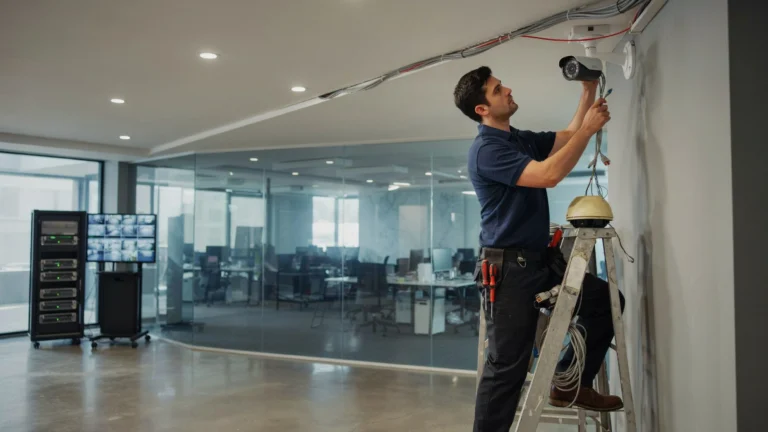
If you’re in Indiana and want this done right the first time, a professional security camera installation Indianapolis team can position each camera for the widest, clearest night coverage based on your property layout. At Cam Security Surveillance, we handle placement, angle, and lighting checks as part of every install, so you’re not left guessing after the equipment goes up.
Common Myths About Infrared Security Cameras
Myth: Infrared cameras record in full color at night. False. Night footage from standard IR cameras is black and white. Only dual-light models with a separate white light can capture color at night.
Myth: More LEDs always mean better range. Not necessarily. LED quality and camera sensor sensitivity matter just as much as the LED count.
Myth: Infrared cameras can see through walls. No camera does this. Infrared light doesn’t pass through solid objects any more than visible light does.
Myth: Thermal and infrared are the same thing. They’re not. As covered earlier, thermal detects heat, while infrared detects reflected light.
Conclusion
So, what is an infrared security camera and how does it work in simple terms? It’s a camera that uses invisible LED light to see clearly after dark, then converts that reflected light into a usable image on your screen. It’s affordable, reliable, and covers the vast majority of home and business security needs without the higher cost of thermal technology.
If you understand your coverage area, check the IR range honestly, and install the camera at the right angle, you’ll get dependable night footage for years. That combination of the right camera and the right setup is what actually keeps a property safe after the sun goes down. If you’re ready to upgrade your security, Cam Security Surveillance is here to help. Contact us today for expert guidance and professional installation tailored to your home or business.
FAQs
What does IR mean in a camera?
IR stands for infrared. It refers to the invisible light LEDs use to light up a scene in the dark, which the camera sensor then reads to build an image.
Do infrared cameras work in complete darkness?
Yes. As long as the infrared LEDs are functioning and within range, the camera can capture footage even with zero visible light.
Can infrared cameras see through fog or rain?
Not well. Heavy fog, rain, and snow scatter infrared light, which reduces image clarity and range.
Is infrared harmful to eyes or health?
No. The infrared light used in security cameras is low-power and not harmful to humans or pets.
How long do infrared LEDs last on a security camera?
Most IR LEDs last several years under normal use, though heavy daily use can shorten that lifespan slightly over time.