
Imagine a storm knocks out your power at 2 AM. Your home goes dark. No lights, no Wi-Fi, and you start wondering about your security cameras. Are they still watching? That is a fair question. Most people install cameras and never think about this until it actually happens.
So, does CCTV work when there is no electricity? The short answer is: it depends on your system. Standard CCTV cameras stop working the moment power cuts out. But cameras with backup power, battery packs, or solar panels keep running. Let’s break down exactly how it works.
How CCTV Systems Get Power
Most CCTV cameras run on one of three power methods:
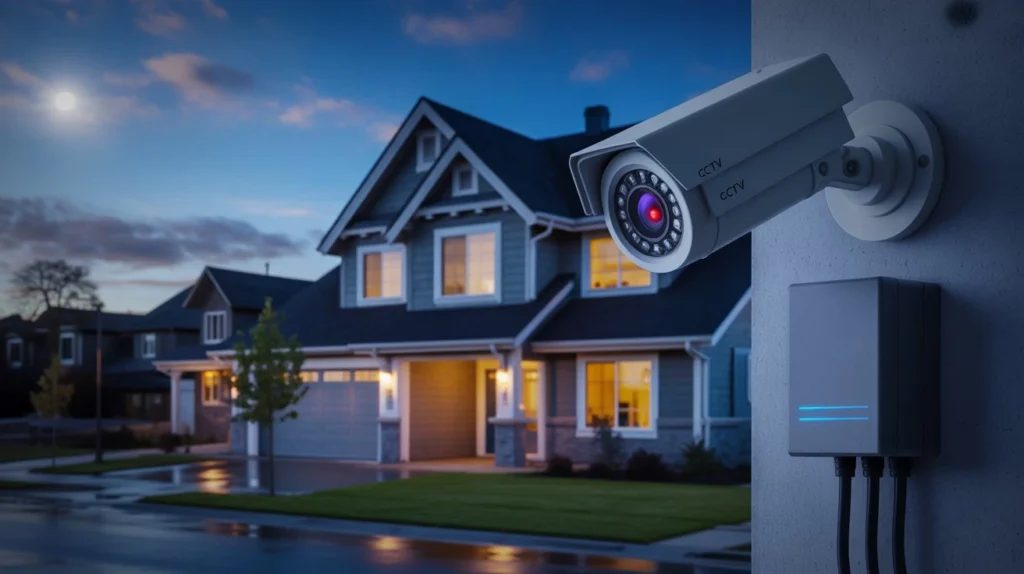
Direct AC Power: The camera plugs into your wall outlet. This is the most common setup for indoor and outdoor wired cameras. No outlet power means no camera.
Power over Ethernet (PoE): These cameras get power through the same ethernet cable that carries video data. The camera connects to a PoE switch or NVR. If that device loses power, the camera goes down too.
Battery or Solar Power: These cameras carry their own energy source. They keep working even when your home or office has no electricity. This is the most reliable option during outages.
Knowing your camera’s power source is the first step to understanding what happens when the lights go out.
Does CCTV Work During a Power Outage?
Here is the honest truth. A standard wired CCTV camera with no backup power will shut off completely during a power outage. It will not record. It will not send alerts. It is essentially blind.
But not all systems are the same. Some cameras and DVR/NVR systems are connected to a UPS (Uninterruptible Power Supply) or a battery backup unit. Those systems keep running for hours, sometimes longer, depending on the battery size.
Wireless cameras with built-in batteries also stay active. They run on their internal charge and will keep recording or sending footage to cloud storage as long as your mobile network or a backup Wi-Fi source is available.
If you live in an area with frequent outages, this matters a lot. At Cam Security Surveillance, we often advise clients to assess their power risk before choosing a camera system. Our team handling security camera installation Indianapolis regularly recommends backup power planning as part of every install.
The bottom line: does CCTV work when there is no electricity? Only if it has its own power source or a backup system in place.
Types of CCTV Backup Power Solutions
There are four main ways to keep your cameras running during a blackout.
1. UPS (Uninterruptible Power Supply)
A UPS is a battery box that sits between your power outlet and your DVR or NVR. When electricity cuts out, the UPS kicks in automatically. Most units provide 2 to 8 hours of backup depending on the load. This is great for wired systems.
2. Battery-Powered Cameras
These cameras have rechargeable batteries built in. They work completely off-grid. The downside is that batteries need regular charging and may last only a few days to a few weeks depending on motion activity.
3. Solar-Powered Cameras
Solar cameras charge throughout the day and store energy in a battery panel. They are excellent for outdoor use in areas with consistent sunlight. They can run indefinitely as long as they get enough sun.
4. Generator Backup
Some commercial properties use whole-building generators. When the main power fails, the generator kicks in and powers everything, including the CCTV system. This is the most robust but also the most expensive option.
Each solution has a cost and a use case. Choosing the right one depends on your location, budget, and how long your outages typically last.
What Happens to Recorded Footage During Power Failure?
This is where things get a bit nuanced.
If your camera runs on a DVR or NVR and that device loses power, recording stops immediately. Any footage not yet saved to the hard drive may be lost. Most modern NVRs write footage in real time, so you usually will not lose what was already recorded. But the gap in coverage during the outage is gone forever.
For cloud-connected cameras, footage uploads continuously. If your internet is also down during the outage, that footage may be saved locally on the camera (if it has an SD card slot) and uploaded later once connectivity returns.
Key tip: Always check if your camera supports local SD card storage. This acts as a fallback when both power and internet fail at the same time.
Some advanced systems use a feature called “power-loss protection.” This means the device does a safe shutdown and protects existing footage even when power cuts suddenly.
Internet and CCTV During Electricity Loss
Your router needs electricity too. If the power goes out and your router shuts down, Wi-Fi cameras lose their connection. They may stop uploading to the cloud. They may stop sending you phone alerts. Even if the camera itself is battery-powered, it becomes an isolated device.
There are a few workarounds:
- Mobile Hotspot: Some cameras can switch to a mobile data connection if Wi-Fi drops. This requires a camera with 4G/LTE support or a connected hub.
- UPS for Your Router: Plugging your router into a small UPS keeps your Wi-Fi alive for a few hours during an outage.
- Cellular-Connected Cameras: These cameras bypass Wi-Fi entirely and use a SIM card. They work as long as the cellular tower is up.
For critical security needs, a cellular camera paired with a battery backup is one of the most reliable combinations available today.
How Long Can CCTV Stay Active Without Electricity?
It depends on the backup source.
| Power Source | Estimated Runtime |
| Small UPS (500VA) | 2–4 hours |
| Large UPS (1500VA) | 6–10 hours |
| Built-in camera battery | 2–7 days (with motion detection) |
| Solar + battery panel | Indefinite (with sunlight) |
| Generator | As long as fuel lasts |
Motion-triggered cameras last much longer than continuous recording cameras. If your camera only activates when something moves, the battery drains much slower.
For continuous 24/7 recording without power, you need either a large battery bank, solar power, or a generator.
Signs Your CCTV System Needs Power Backup
Not sure if your setup is at risk? Watch for these signs:
- Your area has frequent weather-related outages
- Your cameras have gone offline unexpectedly before
- You have no UPS connected to your DVR/NVR
- Your cameras are wired with no battery option
- You have noticed gaps in your camera timeline history
- Your system has no local SD card storage
If two or more of these apply to you, it is time to add a backup power plan.
Best CCTV Options for Areas With Frequent Power Cuts
If you are in a region where power cuts happen often, certain cameras and setups work much better than others.
Solar-Powered Outdoor Cameras These are built for reliability. Brands like Reolink, Eufy, and Ring offer solar models that stay charged all day. They are ideal for driveways, gates, and garden areas.
4G/LTE Cameras These cameras do not need Wi-Fi at all. They connect through a cellular network. Perfect for remote properties, construction sites, or areas with unreliable internet.
PoE Cameras with a UPS-Backed NVR If you prefer a wired system, connect your NVR or DVR to a quality UPS unit. Your cameras will stay on as long as the UPS has charge.
Battery Cameras with Local Storage Options like Arlo Pro series store footage locally on an SD card and run on long-life batteries. They keep working even when everything else goes down.
The best setup combines battery or solar power with local storage and optional cloud backup. That way, you have coverage no matter what.
Tips to Keep CCTV Running During Blackouts
Here are practical steps you can take right now:
- Add a UPS to your NVR or DVR. This is the cheapest and fastest fix for wired systems.
- Switch to solar cameras for outdoor zones. They pay for themselves in reliability.
- Enable SD card recording. Even if cloud access fails, local footage stays safe.
- Use a UPS on your router. This keeps Wi-Fi alive so cloud cameras can still upload.
- Test your backup system. Unplug your power once a month to see what stays on.
- Check battery levels on wireless cameras regularly. A dead battery during an outage defeats the purpose.
- Consider a cellular backup camera for one critical zone like your front door or main entrance.
Small changes can make a big difference in how well your system holds up when it counts.
Common Myths About CCTV and Power Outages
Myth 1: “All wireless cameras work during outages.” False. Most wireless cameras still need electricity to run. Only battery or solar-powered wireless cameras work without it.
Myth 2: “My DVR stores footage even without power.” Not true. If the DVR loses power, recording stops. You will have a gap in footage during the outage period.
Myth 3: “Cloud cameras are always safe during power cuts.” Cloud upload requires both camera power and an internet connection. If either goes down, cloud storage stops too.
Myth 4: “A small UPS can power a whole CCTV system for days.” No. A typical home UPS provides a few hours at most. Larger systems need bigger battery banks or generator support.
Myth 5: “Solar cameras work perfectly at night during outages.” Solar cameras use stored battery charge at night. If the battery is depleted and there was no sunlight that day, they may go offline.
Understanding these myths helps you build a system that actually works when you need it.
Conclusion
Does CCTV work when there is no electricity? Not automatically. Standard wired systems go dark the moment power fails. But with the right planning, whether that is a UPS, battery cameras, solar power, or a generator backup, your cameras can keep running through any outage.
The best systems combine multiple layers: local SD storage, backup power, and ideally a cellular connection for critical zones. Do not wait for a blackout to find out your cameras stopped working. Build a system that works when it matters most.
If you need help choosing the right setup, Cam Security Surveillance offers professional guidance and installation services tailored to your specific needs. Contact us today to discuss the best CCTV solution for your home or business and keep your property protected at all times.
FAQs
Does CCTV work when there is no electricity if it is wireless?
Only if it has a built-in rechargeable battery or is solar-powered. Standard plug-in wireless cameras will not work.
Will my CCTV footage be deleted during a power cut?
Already saved footage on the hard drive is usually safe. You will just have a gap in recording during the outage.
How long does a UPS keep cameras running?
A standard home UPS can power a camera system for 2 to 8 hours depending on the battery size and number of cameras.
What type of CCTV camera is best for areas with frequent power cuts?
Solar-powered cameras with built-in batteries and local SD card storage are the most reliable option.
Can I monitor my cameras during a power outage on my phone?
Only if your camera is battery-powered and your internet is still working. If both power and internet are down, remote access is cut off.
Do solar CCTV cameras work at night?
Yes. They charge during the day and run on stored battery power at night.
What is the cheapest fix to keep my wired CCTV running during outages?
Adding a UPS (Uninterruptible Power Supply) to your DVR or NVR is the most affordable and easiest solution.