Yes. You can install security cameras without existing wiring. Battery-powered cameras, solar-powered cameras, and certain Wi-Fi cameras all work without a wired path, and they still give you live view, motion detection, and remote access from your smartphone.
A wire-free setup doesn’t mean your camera needs nothing to run, though. It will still need Wi-Fi, a battery, solar power, or another power source, so choose the option that best fits your property. If you’re planning a security camera installation in Indianapolis and your home or business doesn’t have existing camera wiring, these options can make the job much simpler.
How Can Security Cameras Work Without Existing Wiring?
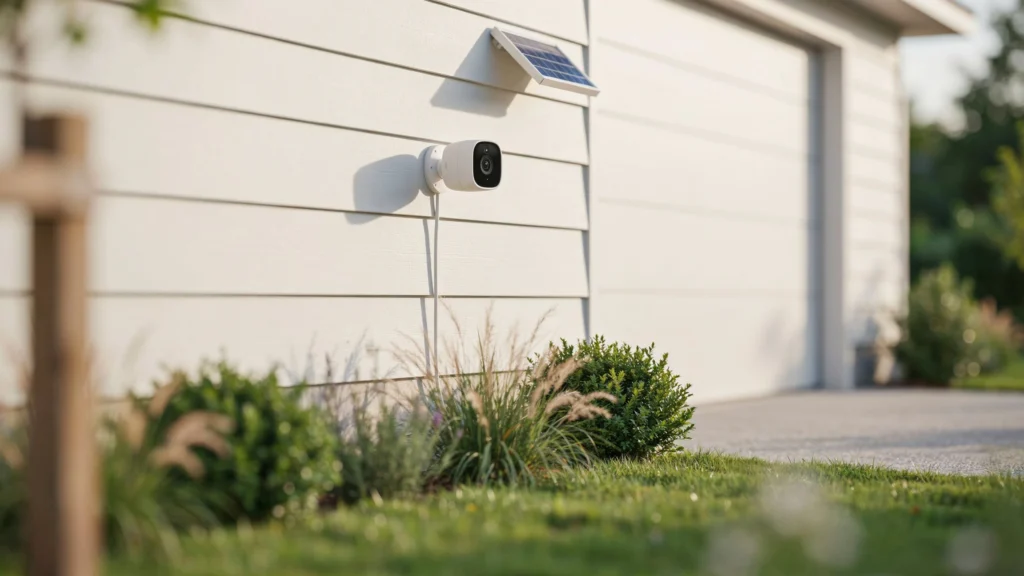
The biggest difference between traditional and modern security cameras is how they connect. Most older cameras need a power cable, and some need both a power cable and an Ethernet cable. Wireless cameras send data over Wi-Fi, and battery-powered cameras run without a constant power connection.
For example, battery-powered camera kits need no wiring for power, and some models support solar panel accessories to keep them charged.
Security cameras without wiring are a good fit for:
- Homes without existing camera wiring
- Rental properties
- Garages and sheds
- Outdoor areas where running cable is difficult
- Temporary security monitoring
- Locations where you want flexible camera placement
What Types of Cameras Can Be Installed Without Wiring?
Battery-Powered Security Cameras
Battery-powered cameras are among the easiest to install when there’s no existing wiring. They run on a rechargeable or replaceable battery, so you don’t need to run a power cable to the mounting location.
The main thing to plan for is charging or replacing the battery. Depending on the weather, camera type, and settings, you’ll need to recharge or swap batteries over the life of the camera.
Solar-Powered Security Cameras
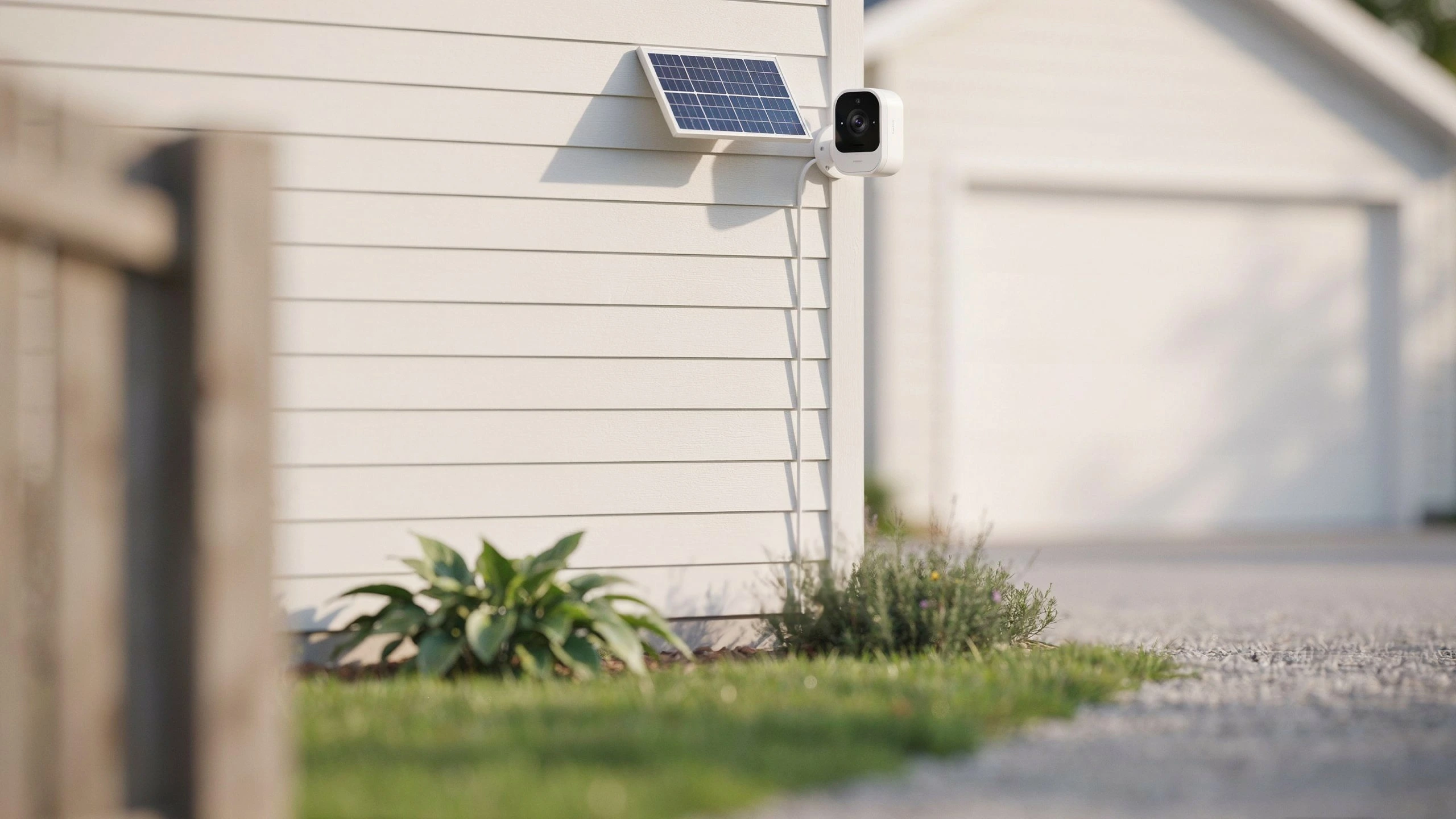
Solar-powered cameras work well outdoors, as long as the mounting location gets enough sunlight.
Many battery-powered cameras are compatible with solar panels, which help keep the battery charged and reduce how often you need to recharge it manually.
Solar cameras are ideal for:
- Driveways
- Garden areas
- Gates
- Detached garages
- Large outdoor spaces
Make sure the solar panel is placed where it gets enough light to keep the system running.
Wi-Fi Security Cameras
Wi-Fi cameras send video over your wireless network instead of through an Ethernet cable to your router. However, “Wi-Fi” doesn’t always mean wire-free. Many Wi-Fi cameras still need to be plugged into a power outlet.
Before buying, check both the camera’s power setup and its network connection options.
How Does Wireless Security Camera Installation Work?
A typical wireless installation involves mounting the camera, powering it with its battery or another supported method, and connecting it to Wi-Fi.
The general process includes:
- Choose the camera location.
- Check that the Wi-Fi signal is strong enough at that spot.
- Fully charge the battery if the camera is battery-powered.
- Mount the camera.
- Download the manufacturer’s app.
- Use the app to connect the camera to Wi-Fi.
- Adjust the camera angle and motion detection settings.
- Test live view and notifications.
For example, Ring recommends fully charging the battery on battery-powered cameras before setup and uses its app to connect the camera to Wi-Fi.
What Are the Benefits of a No-Wire Security Camera Setup?
A no-wire setup makes installation more flexible, especially when running cables through walls or ceilings isn’t practical.
Easier Installation
Since you may not need any new electrical or network cable, installation is often quicker and simpler.
Flexible Placement
Battery cameras aren’t tied to a cable, so you can mount them in spots where a wired camera would be hard to fit or where running cable would be difficult.
Useful for Older Homes
If your home has no security wiring, wireless and battery-powered cameras offer a time-saving alternative to running new cable.
Suitable for Temporary Monitoring
Many wire-free cameras are easy to remove and reposition, making them a great option if you can’t install permanent cameras.
What Are the Disadvantages of Wire-Free Cameras?
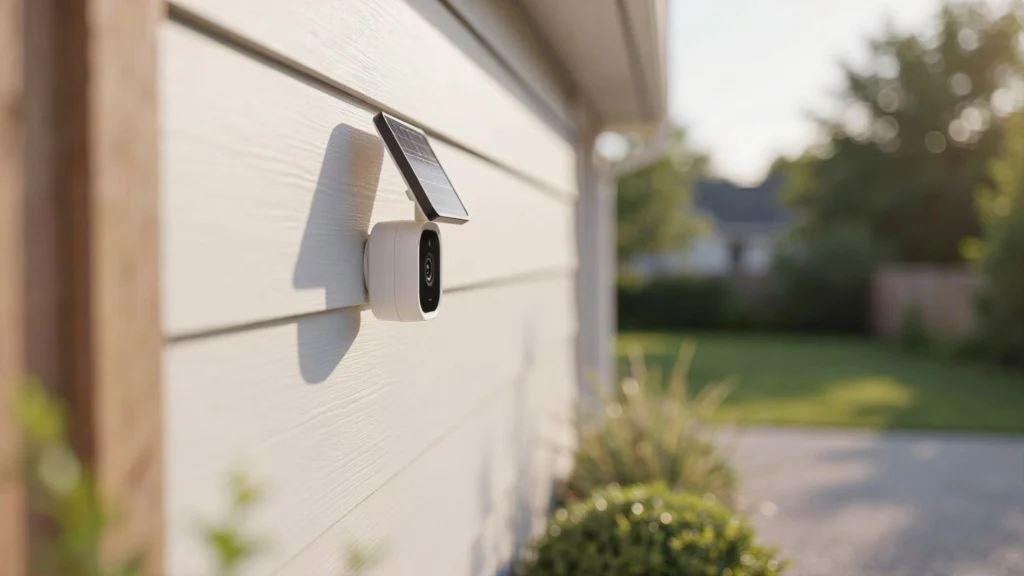
Wireless cameras are convenient, but they aren’t the best answer in every situation.
Battery Maintenance
Battery-powered cameras eventually need charging or new batteries. If the camera is mounted somewhere hard to reach, this can become a hassle.
Wi-Fi Dependence
Wi-Fi cameras usually need a solid wireless connection for features like remote live viewing and notifications. A weak signal can disrupt these features.
Limited Continuous Recording
Many battery-powered cameras are designed to save battery by recording only when motion is detected, rather than recording 24/7.
If you need continuous recording, a system with constant power may be the better choice. Some battery-powered systems can keep recording to local storage when Wi-Fi drops, but remote viewing and notifications may not work without a network connection. Always check the system’s specifications.
Is Wireless CCTV Camera Installation Better Than Wired Installation?
Neither option is automatically better. The right choice depends on your property, camera locations, power availability, recording needs, and budget.
| Feature | Wireless/Battery Camera | Wired Camera |
| Existing wiring required | Usually no | Usually yes |
| Installation | Generally simpler | More involved |
| Camera placement | More flexible | Limited by cable routes |
| Battery charging | May be required | Usually not required |
| Continuous power | Not always | Yes |
| Continuous recording | Depends on model | Generally easier |
| Long-term maintenance | Battery may need attention | Less battery maintenance |
If reliable continuous power and recording are priorities, a wired or PoE system may be more suitable. PoE cameras carry both power and network data over a single Ethernet cable, so you don’t need separate power wiring.
Tips for Installing Security Cameras Without Wiring
Before installing a wireless camera, keep these tips in mind:
- Test the Wi-Fi strength at the exact spot where the camera will go.
- Choose a camera rated for outdoor use if it will be mounted outside.
- Make sure the mounting surface is solid.
- Mount the camera high enough to prevent tampering but low enough to reach for maintenance.
- Avoid spots where walls or large objects will block the signal.
- Decide whether solar charging suits your outdoor environment.
- Review the camera’s storage capacity before you buy.
- Confirm the camera covers the areas you want to monitor.
- Test the camera in different lighting conditions before final installation.
When Should You Choose a Wired Security Camera?
If you need dependable power, several cameras, or large-scale recording, a wired system is worth considering.
For a large home or business, a wired or PoE system that connects multiple cameras to a network video recorder (NVR) can provide a more permanent, reliable setup than battery-operated cameras. That said, battery cameras remain a solid choice if you want a quicker installation. A professional security camera installation in Indianapolis can help you decide which approach fits your property best.
Can You Install Security Cameras Without an Electrician?
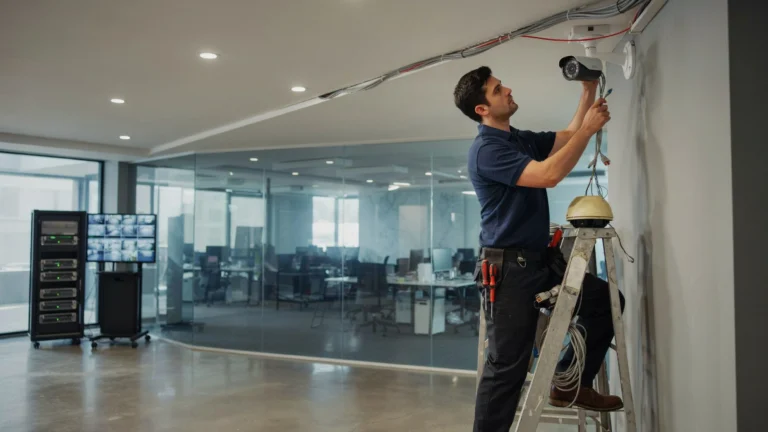
Often, yes. Battery cameras are easy to install, especially on an existing wall mount.
However, an electrician or trained security technician can be a big help if you’re mounting cameras in high or hard-to-reach places, or if your system requires more complex wiring.
Conclusion
Security cameras can absolutely be installed without existing wiring. Battery-powered, solar-supported, and certain Wi-Fi cameras all make it possible. Before choosing, consider power, Wi-Fi reliability, recording needs, and camera placement.
Not sure which option is right for your property? Cam Security Surveillance can help you choose and install the right system so you get full coverage without unnecessary wiring. For expert security camera installation in Indianapolis, contact us today.
Frequently Asked Questions
Can I install a security camera without electricity?
Yes. Battery-powered cameras don’t need to stay plugged in, and solar-powered models use outdoor sunlight to keep their batteries charged.
Do wireless security cameras need Wi-Fi?
Most do, but not all. Some use cellular data instead, and some can record locally to storage without any Wi-Fi connection.
Are wireless cameras completely wire-free?
Not always. Battery and solar cameras can be fully wire-free, but many Wi-Fi cameras still need a power cable plugged into an outlet.
How often do wireless security cameras need charging?
There’s no standard answer. Battery life varies by model, camera settings, weather, and how much activity the camera detects.
Are wireless security cameras good for outdoor use?
Yes, as long as you choose a model designed for outdoor use. Many wireless and solar-powered cameras are built to handle outdoor conditions.