If you are considering enhancing the security of your home or business, you might be wondering, ” Do motion sensor cameras work at night?” The short answer is yes, but it depends on the camera type and technology used.
At any rate, you would never think twice these days about all the security cameras that watch over your home around the clock. They make use of natural light to produce sharp daytime color videos. Some use infrared LEDs, night vision cameras, or flashlights to keep filming at night. Learn How Infrared Cameras Work: Infrared cameras enable you to select cameras in line with your necessities.
Can Motion Detection Cameras See in the Dark?
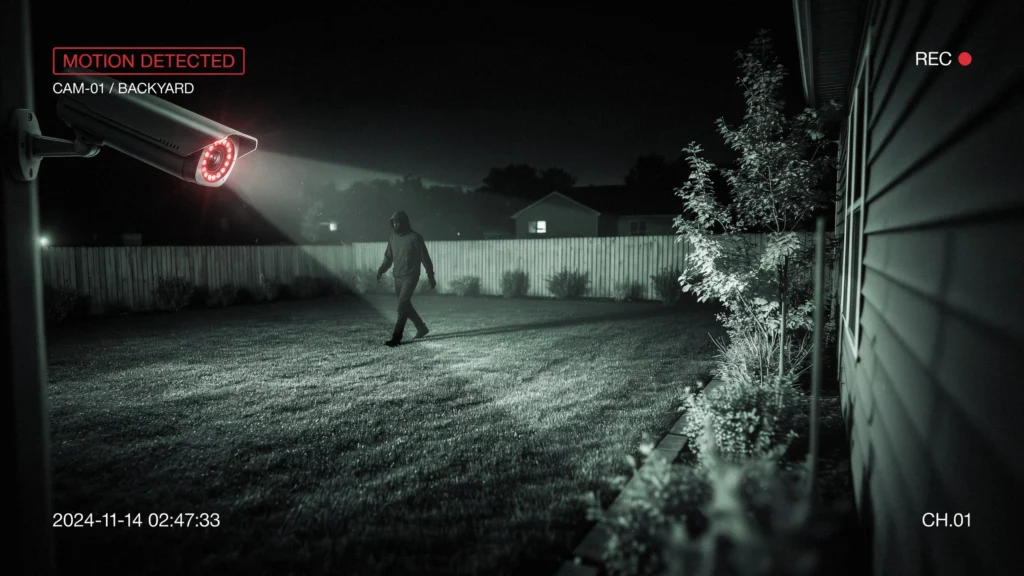
Yes, cameras with motion detection can see in the dark, but not all models perform equally well in low-light conditions. The quality of night vision depends on features like infrared LEDs, sensor size, and image processing. Cam Security Surveillance helps homeowners and businesses choose security cameras that deliver reliable motion detection and clear nighttime footage when it matters most.
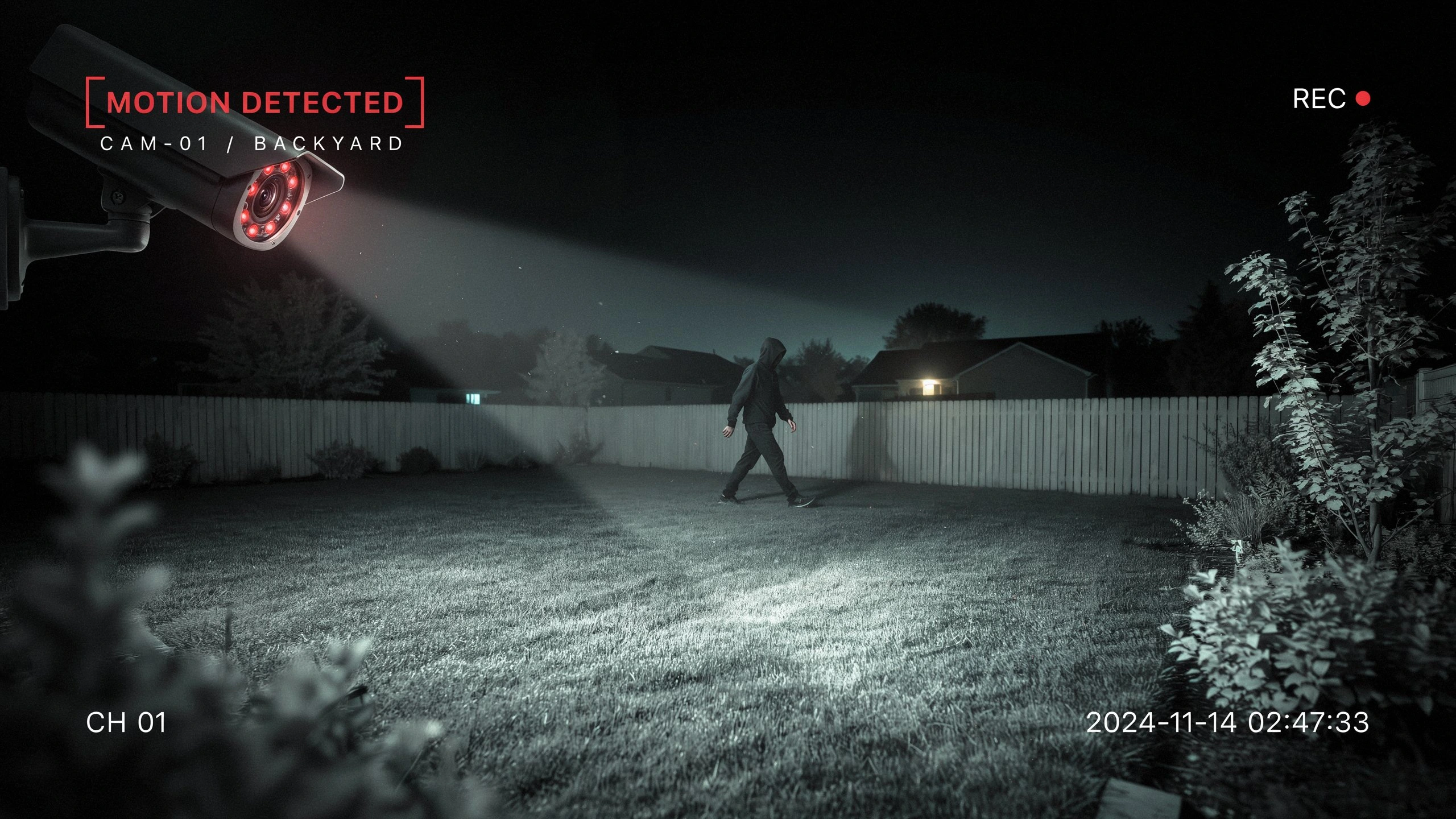
Most security cameras today work with motion detection in conjunction with night vision features. When it detects movement, the camera starts recording or alerts you on your mobile device. Based on the model, you can see a black-and-white infrared image or full-color video during the night.
The ability to “look” in the dark is achieved through special hardware and not through regular visible light. Conventional night vision techniques are:
- Infrared (IR) LEDs
- Light image sensors
- Color night vision
- Built-in spotlights
- AI-based image enhancement.
These advancements have allowed you to have cameras monitoring your home or business 24/7, rain or shine.
How Does Motion Detection Work?
Motion detection cameras are not just recording everything non-stop. They observe differences in their field of vision rather than continuous recording. When motion is detected, the camera can:
- Begin recording video
- Take snapshots
- Turn on floodlights
- Sound alarms
- Send notifications to your smartphone
- Upload footage to cloud storage
High-end cameras can even differentiate between:
- People
- Vehicles
- Animals
- Parcels
- Any movement at all
This minimizes false notifications from insects, trees, and rain.
Motion Detection Camera Night Vision Explained
A camera system for night vision with motion detection is a combination of two different technologies:
1: Motion Detection
It Is What Matters. Motion by itself is useless for your surveillance needs. When Is Motion Detection Useful?
2: Using the camera
Detects motion with the following:
- Passive Infrared (PIR) sensors
- Potentially, it does add an extra layer of motion analysis on the video stream to video motion analysis.
- Artificial intelligence object recognition (AI OR)
3: Night Vision
Once motion is detected, the camera switches to night mode.
Depending on the camera, it may:
- Turn on infrared LEDs
- Activate white spotlights
- Increase sensor sensitivity
- Record full-color footage
Together, these features provide reliable nighttime monitoring.
How Infrared Night Vision Works
Infrared is the most popular technology used in security cameras.
Infrared light is not visible to the naked eye but is visible to the camera.
This is how it works:
- The LEDs emit infrared light, which is not visible.
- The light bounces off the surrounding things.
- The reflected infrared light is captured by the camera sensor.
- The image is displayed in black and white.
That’s why a lot of security cameras output greyscale footage at night.”
Infrared Motion Detection Camera Benefits
An infrared motion detection camera is among the best sellers for home and business security.
1: Longer Recording Distance
Most cameras have the view of:
- 30 feet
- 60 feet
- 100 feet
- More than 150 feet according to the model.
2: Better Security
Motion-activated infrared recording – This feature allows you to record suspicious activities outside your home even before criminals are at your doorstep.
Do Motion Sensor Cameras Work at Night?
Do motion sensor cameras work at night? is among the most frequently asked questions by homeowners, but the answer is actually rather simple.
Yes, motion sensor video cameras do work at night as long as they have night vision capabilities.
The motion sensor doesn’t run on solar power.
Instead, it senses:
- Heat
- Movement
- Pixel shift
- Objects recognized by AI
When motion is detected, the camera captures images in infrared or in low light.
Motion detection is effective even in total darkness!
Advantages such as:
Very Good Visibility !! Infrared-enabled cameras can see in total darkness.
Energy Efficient! IR LEDs require very little power.
Automatic Switching The camera switches from Auto Day/Night Mode (With IR-Cut Filter) Modulation Frequency / Modulation Frequency Day Mode / Night Mode (with IR-Cut Filter).
Types of Motion Detection Used at Night
Not all cameras work the same way.
1: PIR motion detection
Passive Infrared sensors detect body heat. Advantages: Passive Infrared (PIR) sensor detects the motion of body heat:
- Fewer false alarms
- Better battery life
- Excellent nighttime detection.
2: Pixel-Based Motion Detection.
The camera compares frames of videos.
If a sufficient number of pixels change, recording is started. Advantages:
- Detects all motion
Drawbacks:
- Sensitive to the rain
- Sensitive to shadows
- Sensitive to insects and other small creatures”
3: AI Motion Detection
High-end cameras utilize AI.
They can spot:
- Humans
- Vehicles
- Animals domesticated
- The deliveries packages
This eliminates a lot of the needless alerts.
Best Motion Detection Security Camera for Night
The best motion detection security camera for night will vary from person to person, depending on the use case.
Look for these features:
1: High Resolution
Choose:
- 1080p minimum
- 2K preferred
- 4K for the best detail
Higher resolution makes it easier to identify faces and license plates.
2: Active Night Vision Range
Check out cameras that provide:
- 30-50 feet for apartments
- 60-100 feet for homes
- For large properties: 100+ feet
3: AI Motion Detection with more accuracy.
Intelligent detection minimizes false alarms.
It can tell the difference between the following:
- Persons
- Vehicles (including cars, vans and trucks)
- Animals
- Packages
Color Night Vision
If you can see colour in the night, you can definitely capture it on the video! It just gives you better evidence when you have colour footage.”
4: Viewing Angle
A viewing angle of:
- 120°
- 160°
enables broader coverage of spaces.
5: Weather Durability
External cameras must possess:
- IP65
- IP66
- IP67
weather resistance standards.
6: Two-Way Audio
Enables you to speak with visitors or trespassers, or to deter potential intruders.
7: Mobile Notifications
Instant alerts so you can keep an eye on your home remotely.
Where Should You Install Night Vision Cameras?
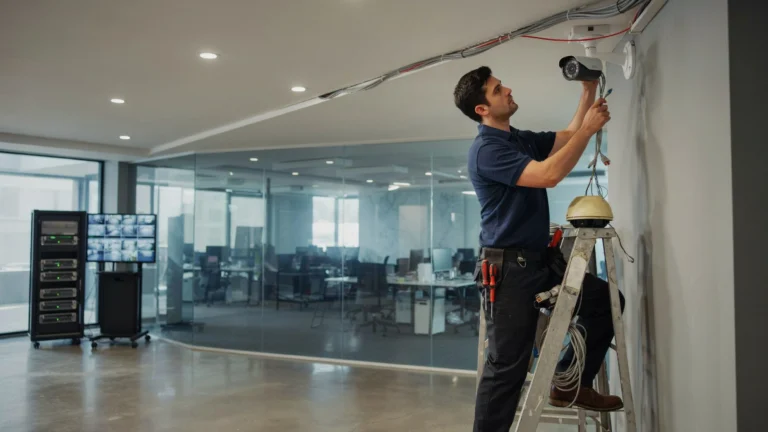
Correct installation is the key to better performance. Professionally installed home security systems Indianapolis provide wider coverage, fewer blind spots, and more reliable motion detection for long-term protection.
Suggested locations are:
- Front door
- Driveway
- Backyard
- Garage
- Side entrances
- Gates
- Walkways
Don’t aim IR cameras at reflective surfaces such as windows, because reflections can degrade the image.
Factors That Affect Night Vision Performance
1: Weather
Performance of cameras is affected by a number of environmental factors.
- Climate
- Heavy rain
- Fog
- Snow
- Dust
These substances can scatter infrared radiation and hide objects.
2: Dirty Lens description
Dust or small spider webs inside the lens will cause blurry photos.
Clean cameras regularly.
3: Bright Lights
Glare may be caused by streetlights or car lights.
Proper camera placement also helps to reduce this problem.
4: Reflection of infrared rays in opaque objects
Things placed too close to the camera will reflect the IR light back into the lens.
Keep the correct distance for installation.
Advantages of Motion Detection Cameras at Night
There are many advantages to using motion detection with night vision.
1: Enhanced Security
The camera watches your premises around the clock.
2: Less Storage Usage
Only records when there is motion.
3: Incident Review Sooner
Instead of having to spend days or weeks watching footage, you just need to study key events now.
4: Instant Alerts
Activity detected? Get notified right away.
5: Deter Crime
Trespassers are deterred by visible security cameras.
6: Limitations to Consider
Tips to Improve Nighttime Camera Performance
Follow these simple rules:
- Place cameras higher than eye level.
- Keep your lenses clean.
- Prune the surrounding bushes and trees.
- Do not have a direct light source.
- Turn on smart AI detection.
- Regularly update the camera firmware.
- Where possible, supplement with additional outdoor lighting.
These adjustments can make a big difference in nighttime footage.
Wired vs Wireless Night Vision Cameras
Both options can work well at night.
Wired Cameras
Pros:
- Stable connection
- Continuous power
- Reliable recording
Cons:
- Slightly more complicated installation
Wireless Cameras
Pros:
- Simpler installation
- Versatile placement
- Mobil Access
Disadvantages:
- Reliant on Wi-Fi quality
- Battery-operated models need to be charged.
Conclusion
So do motion sensor cameras work at night? Absolutely. Using infrared LEDs and high-grade image sensors, today’s security cameras are capable of trustworthy monitoring even at night. Whether you are securing your home, office, or a commercial premise, a motion detection camera with night vision will capture significant events happening in the pitch dark.
If you’ve been wondering whether motion sensor cameras work at night, the answer is yes. A high-quality infrared motion detection camera can detect movement, capture clear video, and send instant alerts when activity is detected. For the best protection, choose a camera with AI motion detection, high-definition video, long-range night vision, and a weather-resistant design. Contact us today to find the right security camera system for your home or business and enjoy reliable protection day and night.
FAQs
Do motion sensor cameras work at night?
Yes. As long as a camera has night vision capabilities (infrared LEDs, light sensors, or built-in spotlights), it can detect motion and record clear footage even in total darkness.
How do motion detection cameras see in the dark?
They use infrared (IR) LEDs to emit light invisible to the human eye. This light bounces off nearby objects, and the camera’s sensor captures the reflection, producing a black-and-white image. Some higher-end models use color night vision or spotlights instead.
What’s the difference between PIR, pixel-based, and AI motion detection?
PIR detects body heat, reducing false alarms and saving battery. Pixel-based detection reacts to image changes but can be triggered by rain, shadows, or insects. AI detection identifies people, vehicles, animals, and packages, delivering more accurate alerts.
How far can night vision cameras detect motion?
It depends on the model: apartment cameras typically cover 30–50 feet, home cameras 60–100 feet, and cameras for larger properties can reach 100+ feet.
What can reduce a night vision camera’s performance?
Several factors can degrade footage quality: heavy rain, fog, snow, or dust scattering infrared light; a dirty or dusty lens; glare from streetlights or car headlights; and nearby objects reflecting IR light back into the lens.