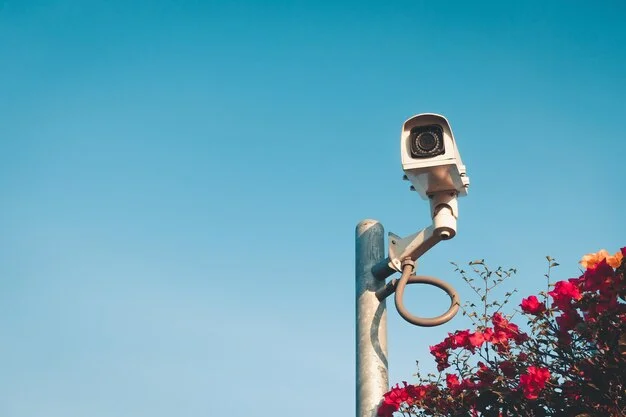
Cheap imported cameras flood the market every year. Many collect your footage and store it on overseas servers. That is a real risk most buyers do not think about until it is too late. American-made cameras are built differently, with stricter data standards, better hardware quality, and actual customer support based in the US.
If you want reliable protection without the data risk, the best outdoor security cameras made in USA are worth every dollar. This article covers what to look for, which brands lead the pack, and how to make the right call for your home or business.
Why Choose Best Outdoor Security Cameras Made in USA
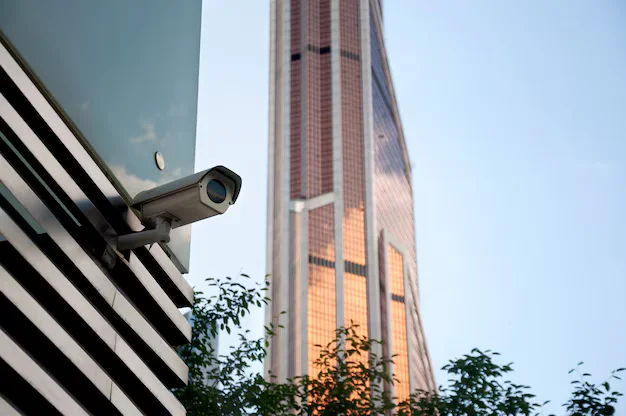
This is not just a patriotism argument. There are real, practical reasons to buy American-made surveillance cameras.
Data privacy is the biggest one. Several foreign-manufactured cameras, including some major brands, have faced bans and federal investigations in the US over data-sharing concerns. The US government has restricted certain overseas brands from federal properties for this exact reason. American-made cameras store data locally or on US-based servers under US privacy law.
Build quality is another factor. US security camera manufacturers design their products for American climates. That means cold winters, humid summers, and everything in between. These cameras go through testing standards that many imported products skip.
Customer support is local. When a camera fails or you need firmware help, you are calling a US-based team. That matters when your security system is on the line.
Long-term supply of parts and firmware updates is more reliable from domestic manufacturers. Some budget imported cameras stop receiving updates after 12 to 18 months.
The us waterproof security cameras market has grown significantly in recent years as consumers and businesses become more aware of these risks. Demand for american made surveillance cameras is higher now than it has been in over a decade.
Key Features to Look for in Outdoor Security Cameras
Before buying any camera, know what specs actually matter for outdoor use.
Weather resistance rating (IP rating). Look for IP66 or IP67. IP66 means protected against strong water jets. IP67 means it can handle temporary submersion. Anything below IP65 is not suited for real outdoor use year-round.
Resolution. 1080p is the minimum for useful footage. 4MP or 4K is better for identification at distance. Higher resolution means larger file sizes, so factor in storage.
Night vision. Check the IR range in feet, not just whether the camera has night vision. Useful outdoor night range starts at 40 feet. Strong IR arrays reach 80 to 150 feet.
Field of view. A wider FOV (100 to 130 degrees) covers more area. A narrower FOV sees further with more detail. Match this to what you are covering.
Local storage vs cloud. Local storage (SD card or NVR) means your footage stays on your property. Cloud storage is convenient but introduces data concerns depending on the provider.
Two-way audio. Useful for front door cameras and business entrances. Not essential for perimeter cameras.
Motion detection accuracy. Look for cameras with AI-based motion detection. These reduce false alerts from trees and passing headlights.
Smart home compatibility. If you use Alexa, Google Home, or Apple HomeKit, check for native support before buying.
Types of Outdoor Security Cameras
Choosing the right type matters as much as choosing the right brand.
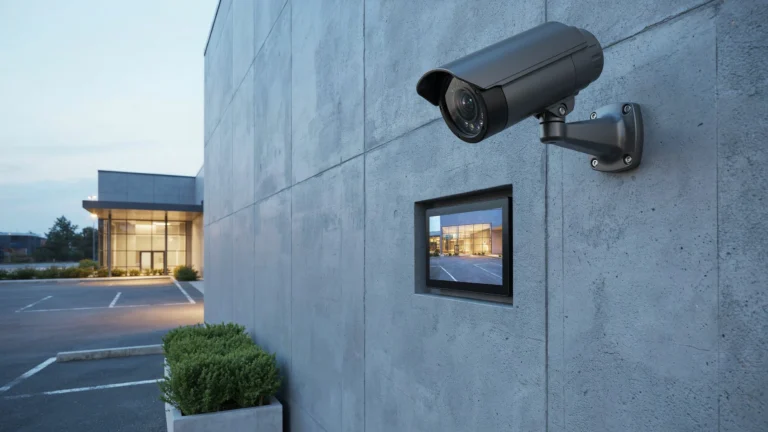
Bullet Cameras Long, cylindrical shape. Built for distance. Best for driveways, parking areas, and long corridors. Most security cameras made in usa in the commercial segment are bullet-style.
Dome Cameras Wide-angle coverage. Lower profile. Harder to tamper with because the lens direction is less obvious. Good for building entrances and covered patios.
PTZ Cameras (Pan-Tilt-Zoom) Can rotate and zoom remotely. Best for large properties where one camera needs to cover multiple zones. Higher cost but versatile.
Floodlight Cameras Combines a motion-activated light with a camera. Excellent for deterrence. The light extends the effective night vision range significantly.
Turret Cameras A newer style that sits in a ball-and-socket housing. Flexible angle adjustment. Growing in popularity among US manufacturers for residential use.
4K UHD Cameras Available across all types above. Best choice when identification at 50 to 80 feet is a priority. Now available at accessible price points from several US brands.
Best Outdoor Security Cameras Made in USA (Overview Section)
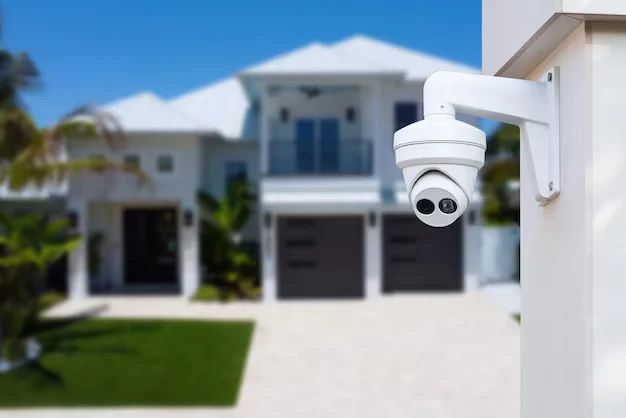
Here is an honest overview of the leading options in the best outdoor security cameras made in the USA category.
Verkada Verkada is a San Mateo-based company. Their cameras are designed and managed in the US. They use cloud-based management with strong enterprise-grade encryption. Best for commercial properties and multi-site businesses. Not the most budget-friendly option, but the data security standards are among the best in the industry.
Hanwha Vision (US operations) Hanwha has significant US manufacturing and R&D operations. Their outdoor cameras are trusted by US government contractors and enterprise clients. Strong IP67 ratings across most models. Excellent low-light performance.
Avigilon (Motorola Solutions) Avigilon is owned by Motorola Solutions, a Chicago-based company. Their cameras use AI-powered video analytics and are manufactured to enterprise standards. Widely used by US law enforcement and large commercial facilities.
Digital Watchdog A Florida-based manufacturer. Digital Watchdog produces a wide range of outdoor cameras including 4K and multi-sensor models. Their products are available through US dealers and integrators. Good mid-range option for businesses and larger homes.
Speco Technologies New York-based manufacturer with a full line of outdoor cameras. Speco is popular among US security integrators. Their intensifier technology delivers strong low-light performance at an accessible price point.
March Networks Focuses on surveillance for regulated industries like banking and transit. US operations with strong compliance credentials. Best for businesses with specific regulatory requirements.
Homeowners and businesses in the Indianapolis area looking to install any of these systems with proper coverage planning can reach out to Cam Security Surveillance for expert CCTV installation services in Indianapolis. Getting the right camera is only half the job. Placement and configuration make the real difference.
Performance Factors That Matter Most
Specs tell part of the story. Real performance comes down to a few things most buyers overlook.
Frame rate. 30 frames per second (fps) is the standard for smooth video. Some budget cameras drop to 15fps at higher resolutions. Fast motion like a running person becomes blurry at 15fps.
Compression format. H.265 compression stores the same quality video in roughly half the space of H.264. This matters for storage costs and bandwidth, especially with multiple cameras.
Wide dynamic range (WDR). This feature balances bright and dark areas in one frame. A camera with strong WDR can clearly capture a face in a shaded doorway even when the background is brightly lit. Essential for entrance cameras.
Latency in live view. Some cameras, especially WiFi models, have 2 to 5 second delays in live streaming. For active monitoring this matters. Check reviews for real-world latency reports.
Operating temperature range. US climates vary. A camera rated for -22°F to 140°F works in Minnesota winters and Texas summers. Check this spec if you are in an extreme climate zone.
Installation Tips for Outdoor Security Cameras
Even a great camera performs poorly if it is installed wrong.
Height matters. Mount between 8 and 10 feet. This captures faces clearly while staying out of easy reach for tampering.
Avoid pointing at the sun. East-facing cameras get morning glare. West-facing cameras get afternoon glare. Angle slightly downward and away from direct sun paths.
Cable protection. Outdoor cables should run through conduit or be rated for direct burial. Exposed cables get chewed by animals and degrade in UV.
Power source planning. Wired PoE (Power over Ethernet) cameras are more reliable than WiFi. A single cable carries both power and video. Less interference, more uptime.
Test night vision before finalizing position. Walk the detection zone at night and review footage. Adjust IR sensitivity if the image is washed out at close range.
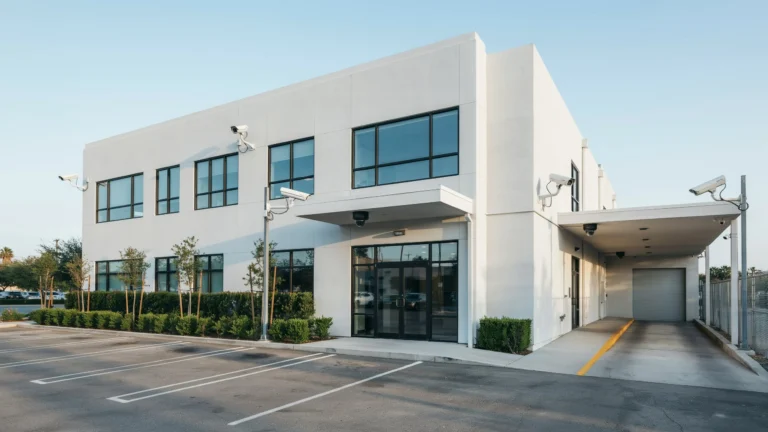
Overlap coverage zones. Two cameras covering the same area from different angles is always more effective than one camera trying to cover everything. This is especially important for corners and entry points.
Privacy and Legal Considerations in the USA
Buying American does not automatically make your setup legal. Placement still matters.
Cameras on your property can record public-facing areas freely. Recording into a neighbor’s private yard or through their windows can violate state privacy laws. Audio recording without consent is restricted in 12 states.
The us waterproof security cameras market includes cameras with two-way audio and wide-angle lenses that can easily capture neighboring properties. Know your local laws before you mount anything.
Post a visible notice if cameras cover shared spaces. This is legally protective and ethically sound. Many states reduce or eliminate civil liability when proper notice is given.
For businesses, there are additional rules around recording employees. Some states require disclosure. Consult a local attorney if you are setting up a commercial system.
Common Mistakes to Avoid When Buying Outdoor Cameras
Buying on price alone. The cheapest camera usually has the weakest IR, lowest frame rate, and shortest support life. A $40 camera that fails in 18 months costs more than a $150 camera that runs for 5 years.
Ignoring the IP rating. A camera without at least IP65 rating will fail in rain, humidity, and temperature swings. Always check this before buying for outdoor use.
Assuming WiFi is reliable enough. WiFi cameras drop connection, suffer interference, and drain router bandwidth. For critical coverage zones, wired PoE cameras are more dependable.
Not planning for storage. Four cameras running 24/7 at 1080p generate roughly 1TB of footage per week. Plan your NVR or cloud storage capacity before you buy.
Buying incompatible systems. Mixing brands often means multiple apps, multiple login systems, and no unified alerts. Pick a system with a single management platform from the start.
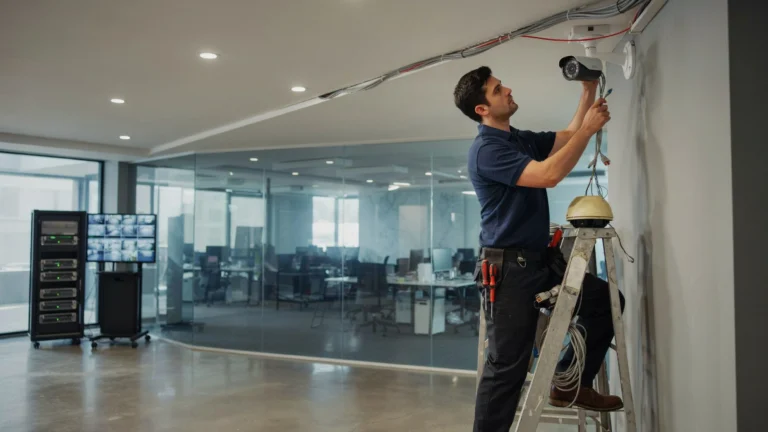
Skipping professional installation. Improper mounting, incorrect angles, and poor cable routing all reduce camera effectiveness significantly. Professional installation pays for itself in better coverage and system reliability.
USA vs Imported Security Cameras: Comparison
| Factor | USA-Made Cameras | Imported Cameras |
| Data storage location | US servers or local | Often overseas servers |
| Privacy compliance | US federal and state law | Varies, often less strict |
| Build quality testing | US standards (UL, FCC) | Variable |
| Customer support | US-based | Overseas, often slow |
| Firmware update lifespan | 5+ years typical | 1 to 2 years common |
| Price range | Mid to high | Budget to mid |
| Government approval | Often approved | Some brands banned federally |
For government facilities, schools, and critical infrastructure, American made surveillance cameras are not optional. They are required. For homeowners and businesses, the choice is a risk calculation. The data risks of cheap imported cameras are real and documented.
Who Should Buy USA-Made Outdoor Security Cameras
Government facilities and contractors. Federal law in many cases requires it. NDAA-compliant cameras come from US or approved manufacturers only.
Businesses handling sensitive data. Law firms, medical practices, financial offices, and tech companies should not have footage routed through overseas servers.
Schools and childcare facilities. Data protection for minors is a legal and ethical priority. US-made systems with local storage are the safest choice.
Homeowners with privacy concerns. If you value knowing exactly where your footage goes, domestic security cameras made in the USA give you that clarity.
Properties in extreme climates. US manufacturers test for American weather conditions. Imported cameras often are not designed for sub-zero winters or high-humidity summers.
Anyone who wants long-term system support. US security camera manufacturers provide consistent firmware updates, replacement parts, and customer service for years longer than most imported brands.
Conclusion
The best outdoor security cameras made in the USA are not just a premium purchase. They are a smarter long-term decision. Better data privacy, stronger build quality, longer support life, and real customer service all come with domestic manufacturing.
Know your coverage needs before you buy. Match the camera type to the job. Check the IP rating, resolution, and IR range. And when you are ready to install, do it right the first time.
Cam Security Surveillance helps homeowners and businesses across Indianapolis choose and install the right American-made camera systems. Contact us for a free consultation and find out exactly what your property needs.
FAQs
Are there security cameras actually manufactured in the USA?
Yes. Brands like Verkada, Avigilon (Motorola Solutions), Digital Watchdog, and Speco Technologies design and manufacture cameras in the US or operate with significant US-based production and engineering.
Why are USA-made security cameras more expensive?
Higher labor costs, stricter component standards, and longer support commitments all contribute to the higher price. The long-term value is typically better due to durability and support.
What does NDAA-compliant mean for security cameras?
The National Defense Authorization Act prohibits certain foreign-manufactured cameras from being used in US government facilities. NDAA-compliant cameras come from approved manufacturers, many of which are US-based.
Are US-made cameras better in extreme weather?
Generally yes. US manufacturers test for the range of American climate conditions. Look for IP66 or IP67 ratings and an operating temperature range suited to your region.
Can I get best outdoor security cameras made in USA for residential use?
Absolutely. Brands like Speco, Digital Watchdog, and several others offer residential-grade outdoor cameras that are domestically made and priced for homeowners.
What is the difference between IP66 and IP67 ratings?
IP66 means the camera is protected against powerful water jets. IP67 means it can survive temporary submersion up to 1 meter. Both are suitable for outdoor use. IP67 adds extra protection in flood-prone areas.
Do American-made cameras work with smart home systems?
Many do. Check for compatibility with Amazon Alexa, Google Home, or Apple HomeKit before purchasing. Not all commercial-grade US cameras support consumer smart home platforms.