An AI indoor camera does more than just notice when something moves. It can recognize people, animals and other activities then send warnings depending on what it sees. This helps cut down on alerts and makes keeping an eye on your home simpler.
The best indoor cameras with intelligence depend on what you need the size of the room your privacy worries, where you want to keep the videos and how much money you have to spend. Some models, like Google Nest Cam Indoor, eufy Indoor Cam S350, Reolink E1 series and TP-Link Tapo cameras have AI abilities and storage choices.
What Are Indoor Cameras with Artificial Intelligence?
Indoor AI cameras use software to analyze what is happening in their video feed. A simple camera might send an alert every time it detects movement.. An AI camera tries to figure out what actually caused that movement. For example a curtain blowing from an air conditioner could set off a motion detector. An AI camera might ignore that. Only pay attention to a person or a pet moving through the scene.
This makes a difference in places where there is a lot of activity. You don’t want to get a dozen alerts just because your dog walked by the camera. You probably only want to know when a person enters the room.
Most home security cameras today offer some form of AI. Many can detect people and pets. Some can follow movement recognize sounds identify faces or search through recorded footage.. The AI features vary a lot from one model to another. Some are built into the camera. Others need cloud services. Require a subscription. Always check the manufacturer’s list of features before you buy. What works today might not be available a months, from now.
Key AI Features to Look for in an Indoor Camera
AI is not a feature. AI shows up in ways and cameras use AI differently.
Person Detection
Person detection can help tell the difference between people moving and other kinds of movement. This is helpful for places like doorways, living rooms, home offices and other areas where a lot is happening.
A notification that shows a person can be more helpful, than a motion alert because you know exactly what caused the message to come through.
Pet Detection
I have found that pet detection can help reduce alerts caused by dogs and cats moving around the home. Pet detection is useful for people who want to check on pets while I have seen some cameras that combine detection, with automatic tracking. The camera can follow a moving pet within its viewing range.
Smart Tracking
Pan-and-tilt cameras can move when they detect activity. Pan-and-tilt cameras help keep a moving person or pet inside the cameras view. For example eufys Indoor Cam S350 uses AI tracking with pan, tilt. Zoom to follow people or pets, around a room.
Facial Recognition
Some AI cameras can recognize faces. This ability can help tell household members apart from strangers. Googles current Nest cameras include the familiar-face feature, as part of its paid Google Home Premium service. Face recognition also brings up privacy issues. Check how face data is kept and handled before turning the feature on.
Activity Zones
Activity zones let you choose the areas that matter most. For example activity zones can help you create a zone, around an entry door than monitoring the entire living room. Activity zones can reduce alerts.
Sound Detection
Some indoor cameras can listen for sounds like a baby crying or other strange noises. This can help in nurseries or rooms where you want to get alerts. Reolinks E1 has the ability to detect person crying-sound using local AI.
Best Indoor Cameras with Artificial Intelligence
There is not one camera that fits every home. The better camera choice depends on the features you actually need.
Google Nest Cam Indoor
Googles current Nest Cam Indoor is a choice for people who are already using Google Home. The current wired third-generation model provides 2K HDR video and intelligent alerts that can recognize people, animals and vehicles. Google also includes Activity Zones and other AI features through the Google Home ecosystem. The familiar-face features can help you recognize people you already know when the service is turned on.
Good for: Google Home users, smart alerts and people who want AI features connected to a smart-home system.
One thing to think about is storage. Google gives event history but longer video history and some extra features might need a subscription
eufy Indoor Cam S350
The eufy Indoor Cam S350 is made for people who want pictures and the ability to track movement. It has a 4K wide-angle camera and a 2K telephoto camera. Gives up to 8x hybrid zoom. The pan-and-tilt system covers an indoor area. The camera also has AI tracking for people and animals. It can follow a person or a pet moving around the room of keeping the subject at the edge of the picture.
Good for: rooms watching pets getting detailed videos and people who need pan-and-tilt tracking.
The camera works with a microSD card for storage but it is important to check the storage limits and the current features, before buying.
Reolink E1 Series
The Reolink E1 series gives another choice for people who want AI features. The E1 has 4MP video, 360-degree horizontal view, person and pet detection and crying-sound detection. Reolink says these detection features use AI technology.
The E1 Zoom includes 4K video, 3x zoom pan-and-tilt coverage, smart tracking and WiFi 6 support on both 2.4 GHz and 5 GHz bands.
Good for: Users who want AI processing, pan-and-tilt coverage and flexible indoor monitoring.
TP-Link Tapo C250
The Tapo C250 is another camera that focuses on AI. The Tapo C250 offers 4K 8MP video, 360-degree horizontal coverage, 116-degree vertical coverage and AI detection for people and pets. The Tapo C250 can also detect baby crying.
The Tapo C250 supports AI auto-zoom tracking and customizable activity zones. The Tapo C250 also offers microSD storage up to 512GB along with cloud storage options.
Good, for: Users who want resolution, pan-and-tilt coverage AI alerts and local storage.
TP-Link Tapo C222 and C220
If you do not need 4K video, the Tapo C222 and C220 are choices that offer lower-resolution options with several AI features. The Tapo C222 provides 2K QHD video, person detection, pet detection, baby-cry detection, motion tracking and customizable activity zones.
The Tapo C220 also delivers 2K video, pan-and-tilt coverage, person detection, pet detection, vehicle detection and sound detection features.
Good for: Buyers who want AI features without focusing only on the highest video resolution.
How AI Makes Indoor Security Cameras More Useful
The main benefit of AI is information. Imagine a camera pointing toward your hallway. A regular motion camera may let you know when your dog walks by when sunlight changes or when someone moves a chair. An AI camera may recognize a person. Send a person alert.
This does not mean AI detection is perfect. Lighting, camera angle, distance, image quality and movement can influence detection. AI also works well for monitoring. A pan-and-tilt camera can track a pet moving from one side of the room to another.
For parents sound detection may add another feature. For example some models can hear a baby crying. Send an alert. The best AI camera is therefore not always the one, with the features. It is the one whose detection features fit the way you plan to use it.
AI Indoor Camera vs. Regular Indoor Security Camera
The main difference is how the camera handles detected activity.
| Feature | Regular Camera | AI Camera |
| Motion alerts | Yes | Yes |
| Person detection | Limited or no | Common |
| Pet detection | Limited or no | Common |
| Smart tracking | Some models | Common on PTZ models |
| Activity zones | Some models | Common |
| Face recognition | Rare | Available on some models |
| Sound detection | Some models | Available on some models |
| Smart notifications | Basic | More detailed |
A regular camera can still be useful. If you only need live video or simple recording, advanced AI may not be necessary. If you receive many unwanted motion alerts, AI detection can provide more useful notifications.
Are AI Indoor Cameras Safe for Privacy?
Indoor cameras need to be placed because they can record private actions. Do not put cameras in bedrooms, bathrooms or any place where people expect to be alone. Check if the camera has a physical privacy shutter or a privacy setting. Some cameras also allow you to cover areas in the picture. The Tapo C250 for example has privacy protection and areas that can be blocked. You should also make sure the camera account is protected with a password and two-factor authentication if it is available.
Look at the cameras cloud storage rules before buying. Find out what information is kept online how long the videos are saved and what features need a subscription. Local AI can also be important for privacy. Reolink says that the E1 uses processing for AI detection while the Tapo C260 newer model uses local processing, for facial recognition.
Where Should You Place an AI Indoor Camera?
Placement affects both security coverage and AI detection.
Good locations can include:
- Main entryways
- Living rooms
- Hallways
- Home offices
- Pet areas
- Stairs
- Areas containing valuable equipment
Keep the lens free from curtains, plants and other objects that might block the view. Do not point the camera toward bright sunlight. Bright light behind a person can make it harder to identify.
For pan-and-tilt cameras leave open space so the camera can move. WiFi strength also matters. A camera, with AI features will still struggle if its wireless connection keeps dropping.
Common Problems with AI Indoor Cameras
AI cameras are still able to give warnings or not catch things that happen. Bad lighting can make it harder for the camera to see. A person who is away, from the camera might also be more difficult to recognize.
Other common problems include:
- Weak WiFi
- Incorrect camera placement
- Too much background movement
- Reflections
- Low light
- Outdated firmware
- Delayed notifications
- Cloud service interruptions
- Limited subscription features
Keep the camera firmware up to date. Also keep the mobile app updated. Test the camera at times of day. A camera that works well in daylight may behave differently at night. You might see changes, in image quality, focus or brightness. Always check how the camera performs in light. This helps make sure it works properly when you need it most.
When to Consider Professional Security Camera Installation
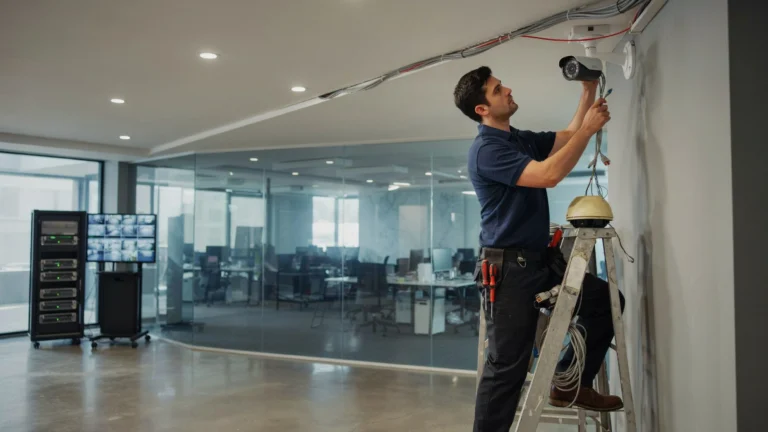
One indoor camera is often easy to set up yourself. Larger systems can require more planning. Professional help can be useful when you need several cameras, difficult mounting, better WiFi coverage, local recording, or integration with an existing security system.
If you are looking for security camera installation Indianapolis, Cam Security Surveillance can help with camera placement, installation, setup, and system testing. Professional installation can also help you avoid placing cameras where walls, furniture, lighting, or weak WiFi reduce their usefulness.
Before installation, Cam Security Surveillance can discuss where you need coverage and what you want the cameras to detect. This helps match the equipment to your property instead of choosing features you may never use.
Conclusion
Indoor cameras with Artificial Intelligence are not defined by one feature or one brand. The best choice depends on your room what you want to see the AI detection you need how you want to store the footage your privacy worries and how much you want to spend. Google Nest works with Google Home. Eufy’s Indoor Cam S350 gives 4K video. Tracks people, with AI. Reolink lets you use AI locally and TP-Link Tapo has indoor models that detect people, pets and sounds.
Before you buy, look at the AI features you will actually use. Check storage costs, privacy controls, WiFi strength, night vision quality, and the camera’s viewing range. A good indoor camera should give you useful information without flooding your phone with needless alerts. If you need help choosing or installing the right system, contact us today for professional security camera installation and support.
FAQs
What is the best AI security camera for use?
The right choice depends on your needs. Google Nest, eufy Reolink and TP-Link Tapo all offer cameras with different AI detection, storage, tracking and smart-home features.
Are AI security cameras worth it?
They can be useful if you want a person, pet, sound or smart motion detection. These features can reduce alerts compared with basic motion detection.
Can AI indoor cameras detect people and pets?
Yes. Many current models can detect people and pets. Some can also detect vehicles, baby crying or other sounds. Available features vary by camera model.
Do AI indoor cameras need WiFi?
Most WiFi indoor cameras need a network connection for viewing and remote alerts. Some cameras can also store footage locally on a microSD card.
Do AI cameras require a subscription?
Not always. Some cameras offer storage and AI detection without a monthly plan. Other brands reserve features or longer video history for paid services.
Can AI security cameras recognize faces?
Some models support recognition or familiar-face alerts. Check where the face data is processed and stored before enabling this feature.
Are AI cameras safe for privacy?
They can be used responsibly when placed away from areas and secured with strong account settings. Privacy modes, block zones, storage and local AI processing can provide additional control.
Can AI indoor cameras track movement?
Yes. Some pan-and-tilt cameras can automatically follow people or pets when movement is detected. Tracking range and accuracy depend on the camera.
What is the best AI camera for pets?
A camera with detection, automatic tracking, wide coverage and two-way audio can work well for pet monitoring. Models such, as eufy Indoor Cam S350. Reolink E1 offer AI-based features.