You just bought a battery-powered security camera. You set it up, feel good about it, and then wonder: how often do I actually need to charge this? It is a question most people ask after installation, not before. The answer is not the same for every camera, and the range can surprise you.
So, how long does a CCTV battery last? Most battery-powered CCTV cameras last between 1 and 6 months on a single charge. But that number shifts based on camera brand, recording settings, temperature, and how often motion triggers the camera. Let’s look at everything that affects battery life so you can plan better.
What Is a CCTV Camera Battery?
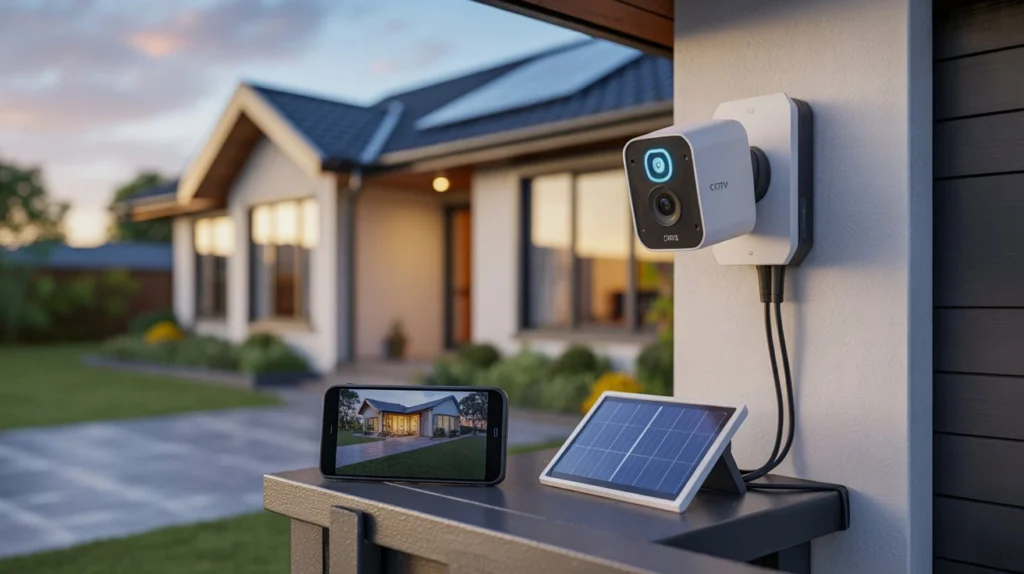
A CCTV camera battery is the internal or external rechargeable power source that keeps a camera running without a wired connection. Most use lithium-ion batteries, the same type found in smartphones and laptops.
These batteries store charge and release it slowly over time. The camera draws power when it is recording, detecting motion, sending alerts, or streaming video. The more tasks the camera does, the faster the battery drains.
Some cameras have removable battery packs. Others have sealed internal batteries that you charge via USB or a solar panel. High-capacity batteries are measured in milliamp hours (mAh). A camera with a 6,000mAh battery will typically outlast one with a 2,600mAh battery under the same conditions.
How Long Does a CCTV Battery Last?
This is the core question from Cam Security Surveillance, and the honest answer is: it varies a lot.
Here is a general breakdown by use case:
| Camera Type | Battery Life Estimate |
| Low-traffic indoor use | 4–6 months |
| Moderate outdoor use | 2–4 months |
| High-traffic outdoor area | 2–6 weeks |
| Continuous recording mode | 3–10 days |
| Motion-only recording | 1–6 months |
Motion-activated cameras last far longer because they only wake up when something triggers them. Continuous recording drains the battery within days.
How long does a CCTV battery last in cold weather? Significantly less. Lithium batteries lose capacity in low temperatures. A camera rated for 3 months in mild weather may only last 4 to 6 weeks in freezing conditions.
The brand matters too. Premium cameras like Arlo and Eufy have better power management chips that extend runtime. Budget cameras often drain faster even with similar battery sizes.
Factors That Affect CCTV Battery Life
Several things determine how quickly your camera battery drains.
Recording Mode
Continuous recording is the biggest drain. Motion-only recording is far more efficient. If your camera records 24/7, expect the battery to last days, not months.
Resolution and Video Quality
Higher resolution means more data to process, and that takes more power. A camera recording at 4K uses significantly more battery than one recording at 1080p.
Night Vision
Infrared LEDs that power night vision draw extra current. Cameras with active night vision running all night will drain faster than daytime-only cameras.
Wi-Fi Connectivity
Constantly searching for a Wi-Fi signal or uploading footage to the cloud uses power. Cameras with weak Wi-Fi signals work harder to maintain a connection, which drains the battery faster.
Motion Frequency
A camera in a busy area (near a road, at a front door) triggers dozens of times per day. Each trigger uses battery. A camera in a quiet garden may trigger only a few times per week.
Temperature
Cold reduces battery capacity. Hot environments above 35°C can degrade the battery over time. Ideal operating temperature for most lithium batteries is between 0°C and 30°C.
Notification and Alert Settings
Every push alert, cloud upload, and live stream request pulls from the battery. Reducing unnecessary alerts helps the battery last longer.
How Long Do Popular CCTV Brands Last?
Real-world battery performance by brand gives a clearer picture than specs alone.
Arlo Pro 4 / Arlo Pro 5 Arlo cameras use a 2,600mAh battery and typically last 3 to 6 months with moderate use and motion-only recording. They have excellent power management and low-power standby modes.
Eufy Security Cam 2 Pro Eufy cameras come with a larger 13,400mAh battery. Eufy claims up to 180 days per charge, and real-world users report 3 to 5 months with standard settings. One of the longest-lasting options on the market.
Ring Spotlight Cam Battery Ring’s battery cameras use a 6,040mAh removable pack. Most users report 1 to 3 months depending on motion activity. High-traffic areas see faster drain.
Reolink Argus Series Reolink Argus cameras typically last 2 to 6 months on a charge. They support solar charging, which can make them nearly indefinite in sunny locations.
Blink Outdoor Blink uses two AA lithium batteries rather than a built-in rechargeable. They claim up to 2 years per set, though heavy use can cut that to 6 to 12 months.
How to Extend CCTV Battery Life
You do not have to accept a short battery life. These practical steps make a real difference.
- Use Motion-Only Recording Turn off continuous recording. Set the camera to only activate when it detects movement. This single change can extend battery life by weeks or even months.
- Adjust Motion Sensitivity If your camera triggers on passing cars or blowing leaves constantly, lower the sensitivity. Fewer false triggers means less battery use.
- Lower Video Resolution Drop from 4K to 1080p if you do not need ultra-high detail. The battery savings are significant with minimal visual loss for most users.
- Reduce Night Vision Range If your camera has adjustable infrared range, set it to only cover the area you need. Running full-range night vision all night drains the battery fast.
- Add a Solar Panel Most major battery camera brands offer solar panel accessories. A small panel paired with decent sunlight keeps the battery topped up indefinitely.
- Place the Camera Close to Your Router A stronger Wi-Fi signal means the camera does not strain to maintain connection. Less signal hunting equals less battery drain.
- Turn Off Unnecessary Features Color night vision, two-way audio on standby, and constant cloud sync all use power. Disable anything you do not actively use.
What Happens When a CCTV Battery Dies?
When a battery-powered camera runs out of charge, it stops recording completely. No alerts, no live view, no footage. You essentially have a blind spot until the camera is recharged.
Most modern cameras send a low battery notification to your phone before they die. This gives you a window to recharge before coverage is lost. If you miss that alert or ignore it, the camera goes dark without warning.
If you rely on battery cameras for home security, a dead battery during a break-in or incident means no footage and no evidence. That is a real risk worth taking seriously.
Some cameras with SD card storage will cache a small amount of footage locally even at low battery, but this is not guaranteed across all models.
Signs Your CCTV Battery Needs Replacement
Over time, rechargeable batteries lose their ability to hold a full charge. This is called battery degradation. Here are the signs to watch for:
- The camera drains much faster than it used to, even on the same settings
- You are charging the camera every few weeks when it used to last months
- The camera dies suddenly without a low-battery warning
- The battery gets warm to the touch while charging
- Your app shows a battery percentage that jumps around or drops fast
If you notice two or more of these signs, the battery is likely past its useful life. Most CCTV camera batteries last 2 to 3 years before needing replacement.
At Cam Security Surveillance, we see this often during system check-ups. If you have aging cameras or need a full review of your setup, our team specializing in security camera installation Indianapolis can assess whether your batteries or your entire system need an upgrade.
Best CCTV Cameras With Long Battery Life
If battery longevity is a priority, these models stand out.
Eufy SoloCam S340 — Solar-powered with a large internal battery. Essentially maintenance-free in sunny climates.
Arlo Ultra 2 — Premium battery management with 3 to 6 month charge life. Supports solar charging.
Reolink Argus 3 Pro — Built-in solar panel compatibility, color night vision, and excellent battery efficiency.
Blink Outdoor 4 — Replaceable AA batteries that last up to 2 years in low-traffic areas. No charging needed.
Eufy Cam 3 — One of the most efficient cameras available, with up to 6 months per charge in real-world use.
Battery-Powered vs Wired CCTV Cameras
Choosing between battery and wired depends on your setup and priorities.
| Feature | Battery CCTV | Wired CCTV |
| Installation | No drilling, flexible placement | Requires wiring and drilling |
| Power reliability | Needs charging or solar | Always on with stable power |
| Recording continuity | Gaps possible if battery dies | Continuous 24/7 recording |
| Maintenance | Battery charging/replacement | Minimal after setup |
| Best for | Renters, remote spots, flexibility | Permanent setups, businesses |
Wired cameras win for reliability. Battery cameras win for flexibility. Many homeowners use both: wired for main entry points and battery cameras for hard-to-reach spots.
Are Battery CCTV Cameras Good for Businesses?
For most businesses, battery cameras are not ideal as the primary solution. Here is why.
Businesses need 24/7 continuous recording. A battery camera set to continuous mode dies within days. Staff would need to constantly monitor charge levels. Any lapse in coverage creates legal and insurance liability.
That said, battery cameras work well as supplementary cameras for businesses. A retail store might use wired cameras at registers and doors, with battery cameras in stockrooms or loading areas where running cables is difficult.
For full commercial security coverage, wired PoE systems or hybrid setups with backup power are the better choice.
Best CCTV Options for Areas With Frequent Power Cuts
If your area loses power regularly, battery cameras become a smart backup layer rather than a standalone system.
Best combinations for unreliable power areas:
- Solar cameras with local SD storage: Records independently, charges automatically, no grid dependency.
- Battery cameras with cellular connectivity: Bypasses Wi-Fi completely. Keeps uploading footage via mobile data even when the power is out.
- Wired system with UPS: Keeps your main camera system running for several hours after a power cut.
- Hybrid setup: Wired cameras on UPS for main coverage, battery cameras for critical spots as backup.
The key is not relying on a single power source. Layering your system means if one fails, something else stays active.
Common Myths About CCTV Batteries
Myth 1: “Battery cameras record continuously like wired ones.” Most battery cameras default to motion-only recording. Continuous recording drains them within days.
Myth 2: “A higher mAh battery always means longer life.” Battery capacity matters, but so does power management. A 6,000mAh camera with poor efficiency can drain faster than a 3,000mAh camera with smart power software.
Myth 3: “You can leave a battery camera for years without maintenance.” Even the best cameras need recharging every few months. And after 2 to 3 years, battery degradation requires replacement.
Myth 4: “Solar panels eliminate battery concerns completely.” Solar panels help a lot, but cloudy days and low sunlight reduce charging. A solar camera can still die in extended overcast conditions if the battery was already low.
Myth 5: “Cold weather only slightly affects battery life.” Cold weather can reduce battery capacity by 20 to 40 percent. In freezing temperatures, a camera rated for 3 months may only last 5 to 7 weeks.
Conclusion
How long does a CCTV battery last? For most cameras with standard motion detection settings, you can expect 1 to 6 months per charge. High-traffic areas, continuous recording, cold temperatures, and heavy night vision all shorten that window.
The good news is that most of these factors are within your control. Adjusting settings, adding a solar panel, and placing cameras near a strong Wi-Fi signal can all significantly extend battery life. Choose the right camera for your environment, and you will spend less time charging and more time protected.
If you need help choosing or upgrading your system, Cam Security Surveillance is here to help. Contact us today for expert guidance and professional installation support tailored to your security needs.
FAQs
How long does a CCTV battery last on a full charge?
Most battery cameras last 1 to 6 months depending on motion frequency, resolution, and temperature.
How long does a CCTV battery last in cold weather?
Cold can reduce battery life by 20 to 40 percent. A camera that lasts 3 months in summer may last only 5 to 7 weeks in winter.
How often should I charge my CCTV battery?
With standard motion-only settings, most cameras need charging every 1 to 4 months. High-traffic areas may need monthly charging.
Can I replace the battery in my CCTV camera?
Some cameras like Ring and Blink use removable batteries. Others have sealed internal batteries and need professional service or full replacement.
Does a solar panel extend CCTV battery life indefinitely?
In sunny climates, yes. In cloudy or northern regions, solar charging helps but may not fully replace natural drain during low-light periods.
How do I know when my CCTV battery is dying permanently?
If it charges much faster than before and drains within days, the battery cells are degrading. Time to replace it.
What drains a CCTV battery the fastest?
Continuous recording, 4K resolution, frequent motion triggers, active night vision, and poor Wi-Fi signal are the biggest battery drains.