Security cameras have come a long way. Today, you’re not just choosing between “cheap” and “expensive.” You’re choosing resolution, and that choice matters more than most people think. If you’re comparing options and wondering whether a mid-range camera can truly protect your property, you’ve landed in the right place.
So, is 4MP CCTV good? Yes, it is. For most homes and small businesses, 4MP delivers sharp, detailed footage without pushing your storage or budget to the limit. It sits in a sweet spot between basic 1080p cameras and high-end 4K systems.
What Does 4MP Mean in CCTV Cameras?
MP stands for megapixels. One megapixel equals one million pixels.
A 4MP camera captures footage at 2560 x 1440 pixels. That is also known as QHD or 2.5K resolution.
Compare that to:
- 1080p (2MP): 1920 x 1080 pixels
- 4MP: 2560 x 1440 pixels
- 4K (8MP): 3840 x 2160 pixels
More pixels means more detail. A 4MP camera captures roughly twice the detail of a standard 1080p camera. That means clearer faces, sharper license plates, and better overall footage quality.
4MP offers better image quality than 1080p without the heavy storage and bandwidth demands of 4K. That is why many customers choose Cam Security Surveillance for reliable and balanced security coverage.
Benefits of 4MP CCTV Cameras
Here is why so many installers and property owners recommend 4MP cameras:
- Sharper image quality You can zoom into footage after an incident and still read a license plate or identify a face. That is something 1080p cameras often struggle with.
- Wider field of view Because there are more pixels, 4MP cameras can cover larger areas without losing clarity. This means you may need fewer cameras to monitor the same space.
- Better low-light performance Most 4MP cameras today come with improved sensors. Many include color night vision or infrared night vision that holds up well in dark environments.
- Affordable pricing 4MP cameras cost only slightly more than 1080p models. The price difference is small, but the image quality jump is significant.
- Compatible with most NVR and DVR systems These cameras work with most modern recording equipment. You don’t need to replace your entire setup to upgrade from 1080p.
- Reduced bandwidth compared to 4K Streaming and storing 4MP footage uses far less data than 4K while still delivering great image quality.
- Future-ready As display technology improves, having higher-resolution footage means your recordings will still look clear on newer monitors and playback devices.
Is 4MP CCTV Good for Home Security?
Yes, 4MP CCTV is an excellent choice for home security. Here is why it makes sense for residential use. Most home security incidents happen at entry points like front doors, driveways, and backyard gates. A 4MP camera covers these areas with enough detail to identify people, vehicles, and activities. You can clearly make out clothing colors, facial features, and vehicle details even when zooming in on recorded footage.
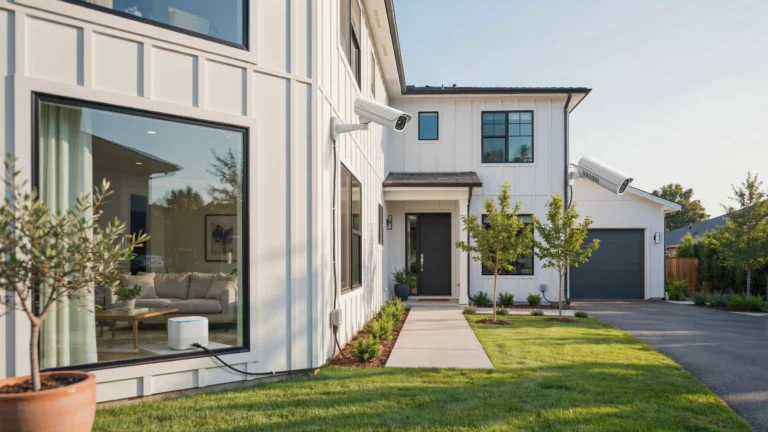
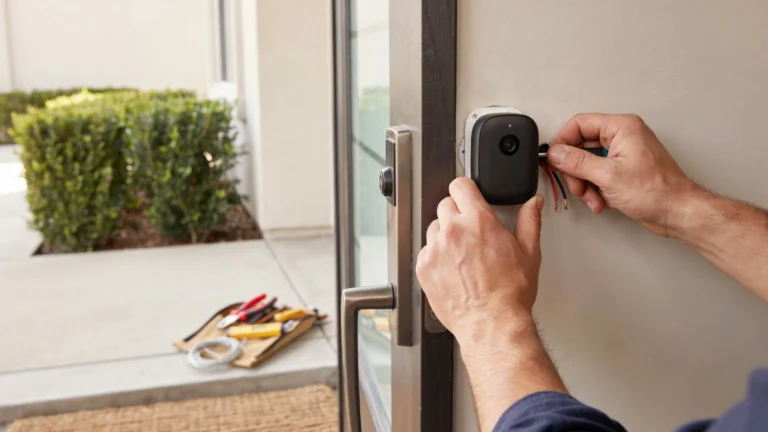
For homeowners in Indianapolis, professional CCTV installation services Indianapolis from Cam Security Surveillance include 4MP camera setups designed around your property layout. A good installer won’t just mount cameras randomly. They’ll analyze your blind spots, lighting conditions, and entry points before recommending the right placement.
4MP cameras also work well inside the home. Whether you want to monitor a front hallway, garage, or baby’s room, the resolution is sharp enough for clear identification without being overkill. One more advantage for homes: most 4MP cameras support H.265 compression. This means your footage files are smaller, so you can store more days of recording without buying expensive hard drives.
Is 4MP CCTV Good for Businesses?
Absolutely. In fact, 4MP cameras are among the most popular choices for small to medium-sized businesses. Retail stores benefit greatly from the wider field of view. One 4MP camera can cover what might require two 1080p cameras. That cuts installation costs while improving coverage. Office buildings use 4MP cameras to monitor entrances, lobbies, parking lots, and server rooms. The resolution is good enough to identify employees and visitors without ambiguity.
Warehouses and industrial spaces also use 4MP cameras. These environments often have large, open areas with high ceilings. The extra resolution helps capture activity across bigger spaces. For businesses with multiple locations, 4MP cameras integrate well with cloud-based NVR systems. Remote monitoring is straightforward, and footage quality remains high enough for insurance claims and legal purposes.
If you are running a restaurant, gas station, or small shop, 4MP cameras give you the evidence quality you need without the storage and bandwidth demands of 4K systems.
4MP vs 1080p CCTV Cameras
This is one of the most common comparisons people make when buying security cameras.
| Feature | 1080p (2MP) | 4MP |
| Resolution | 1920 x 1080 | 2560 x 1440 |
| Detail quality | Good | Very good |
| Storage use | Lower | Moderate |
| Price difference | Lower | Slightly higher |
| Zoom clarity | Pixelates quickly | Holds detail better |
| Coverage area | Smaller | Larger |
The jump from 1080p to 4MP is more noticeable than most people expect. Side by side, the 4MP image looks significantly crisper, especially when you zoom in. If you’re installing cameras primarily for facial identification or license plate capture, 4MP is the minimum you should consider. For general area monitoring where fine detail isn’t critical, 1080p can still do the job.
That said, the price gap between 1080p and 4MP cameras has narrowed. Paying a small premium for noticeably better footage is worth it in most cases.
4MP vs 4K Security Cameras
On the other end of the scale, how does 4MP compare to 4K?
| Feature | 4MP | 4K (8MP) |
| Resolution | 2560 x 1440 | 3840 x 2160 |
| Image detail | Very good | Exceptional |
| Storage needed | Moderate | High |
| Bandwidth use | Moderate | High |
| Price | Affordable | Higher |
| Best for | Homes, small businesses | Large facilities, high-risk sites |
4K cameras deliver outstanding detail. But they come with real costs. Storage requirements roughly double compared to 4MP. Your network needs to handle more data. And the cameras themselves cost more. For most homes and small businesses, the extra detail from 4K doesn’t justify those extra costs. The improvement in daily usable footage is smaller than the jump from 1080p to 4MP.
However, if you’re monitoring large parking lots, casino floors, banks, or government facilities, 4K is worth the investment. High-security environments need the best available detail.
For the average property owner, is 4MP CCTV good enough compared to 4K? In most cases, yes. The image quality is strong, the costs are manageable, and the footage quality satisfies most legal and insurance requirements.
Storage Requirements for 4MP Cameras
One practical concern many buyers overlook is storage.
A single 4MP camera recording continuously at 15 frames per second will use roughly 20 to 30 GB of storage per day. At 25fps, that rises to around 35 to 50 GB per day.
Here’s a rough guide for total storage needs:
| Cameras | Days of Recording | Storage Needed |
| 4 cameras | 7 days | ~1 TB |
| 4 cameras | 30 days | ~4 TB |
| 8 cameras | 7 days | ~2 TB |
| 8 cameras | 30 days | ~8 TB |
These numbers drop significantly when you use motion-triggered recording instead of continuous recording. Most modern NVR systems support this feature. H.265 compression also reduces file sizes by up to 50% compared to older H.264 compression. If your 4MP camera supports H.265, your storage needs drop considerably.
When planning your system, always buy more storage than you think you need. Running out of storage space mid-month means overwritten footage when you need it most.
Internet Speed Requirements for 4MP CCTV
If you want to view your cameras remotely, your internet speed matters. For local viewing inside your home or office, speed is not a concern. Everything runs through your local network.
For remote viewing through a mobile app or web browser, each 4MP camera stream uses approximately 4 to 8 Mbps of upload bandwidth.
Here’s a quick guide:
| Number of Cameras (Remote View) | Upload Speed Needed |
| 1 to 2 cameras | 10 Mbps |
| 3 to 4 cameras | 20 Mbps |
| 5 to 8 cameras | 40 Mbps |
Most home broadband connections handle this without problems. If you have a slower connection, consider enabling sub-stream mode in your camera settings. This reduces the stream quality for remote viewing while keeping full-quality recordings stored locally.
Cloud-based systems handle the bandwidth management for you, but they require a subscription. Local NVR systems give you more control and don’t charge monthly fees.
Best Places to Install 4MP CCTV Cameras
Placement is just as important as resolution. A high-quality camera in the wrong spot gives you useless footage.
Front door: The most critical spot. Install the camera at head height, roughly 8 to 10 feet above the ground, angled to capture faces clearly.
Driveway and garage: Capture incoming vehicles and license plates. Position the camera so it catches plates from 10 to 20 feet away for best results.
Backyard and side entrances: Burglars often target less visible entry points. Cover gates, fences, and rear doors.
Interior hallways and common areas: For businesses, monitor high-traffic areas and entry corridors.
Parking lots: 4MP’s wider field of view is particularly useful here. One camera can monitor a large section of a parking area.
POS (Point of Sale) areas: Retail businesses benefit from cameras positioned above cash registers. 4MP resolution is sharp enough to capture transaction details clearly.
Avoid pointing cameras directly into sunlight or bright light sources. Backlighting washes out the image regardless of resolution.
Common Problems with 4MP Cameras
No camera is perfect. Here are some common issues to watch for:
- Poor low-light performance on budget models Not all 4MP cameras have quality sensors. Cheaper models can produce grainy footage at night even with IR enabled. Always check the camera’s lux rating before buying.
- Compression artifacts Heavy compression can degrade footage quality. Use H.265 where possible and avoid overly aggressive compression settings.
- Lens fogging outdoor cameras can develop moisture inside the lens over time. Choose cameras with an IP66 or IP67 weatherproof rating to prevent this.
- Network drops during remote viewing Unstable Wi-Fi connections interrupt live streams. For critical camera positions, use wired PoE (Power over Ethernet) connections instead of Wi-Fi.
- Compatibility issues Not all 4MP cameras work with all NVR systems. Check compatibility before purchasing, especially if you’re mixing brands.
- Mismatched frame rates Some budget cameras advertise 4MP resolution but record at low frame rates like 10fps. Footage at 10fps looks choppy and can miss key moments. Look for cameras that record at 20 to 30fps.
How to Choose the Right 4MP CCTV Camera
With so many options on the market, here’s what to focus on:
Sensor quality: Look for cameras with a large CMOS sensor (1/2.7 inch or larger). Bigger sensors perform better in low light.
Night vision type: Color night vision cameras use ambient light to produce full-color footage in the dark. IR cameras produce black and white but work in complete darkness. Choose based on your lighting conditions.
Compression format: Always choose H.265 over H.264. It saves storage space without sacrificing quality.
Weatherproof rating: For outdoor use, look for IP66 or higher. This protects against heavy rain and dust.
Frame rate: 25fps or 30fps is ideal. Avoid cameras that only offer 10fps or 15fps as a maximum.
Lens type: Fixed lenses are simpler and more reliable. Varifocal lenses let you adjust the field of view but cost more. For most residential installations, a 2.8mm or 4mm fixed lens works well.
Smart features: Many 4MP cameras now include AI-powered features like person detection, vehicle detection, and line crossing alerts. These reduce false alarms compared to basic motion detection.
Brand reliability: Stick to established brands. Hikvision, Dahua, Reolink, and Amcrest are widely used and have good track records for reliability and firmware support.
Are 4MP CCTV Cameras Worth It?
Yes, 4MP cameras are worth it for the vast majority of buyers.
The image quality is a genuine step up from 1080p. The storage and bandwidth demands are manageable. The price difference from entry-level cameras is small. And the footage holds up well in real-world scenarios including insurance claims, police reports, and dispute resolution.
Is 4MP CCTV good enough for most situations? The honest answer is yes, it covers the needs of homes, retail businesses, small offices, warehouses, and multi-unit residential buildings without breaking the bank or overloading your network.
The only time you might want to step up to 4K is if you’re protecting a high-value site, covering very large areas, or operating in an environment where maximum detail is non-negotiable. For everyone else, 4MP delivers excellent real-world performance at a sensible price.
Conclusion
4MP CCTV cameras offer a balanced solution for anyone who wants better security without the complexity of a high-end 4K setup. The resolution is sharp enough to identify faces and license plates. The storage requirements are reasonable. And the cameras integrate well with modern NVR and cloud-based systems.
Whether you’re protecting your home, retail shop, office, or warehouse, is 4MP CCTV good enough? Yes. It is a practical, reliable, and cost-effective choice that performs well across a wide range of environments.
If you are ready to install a 4MP camera system, work with experienced professionals who can design a setup around your specific needs. The right placement and configuration matter just as much as the camera spec sheet. Cam Security Surveillance offers professional installation, system design, and expert support to help protect your home or business. Contact us today to get started with a reliable CCTV solution.
FAQs
Is 4MP better than 1080p for CCTV?
Yes. 4MP captures roughly twice the detail of 1080p. It is a noticeable improvement, especially when zooming in on recorded footage to identify faces or plates.
Is 4MP good enough for facial recognition?
For standard identification purposes, yes. For advanced biometric facial recognition software, you may need 4K cameras pointed at specific areas.
How much storage does a 4MP camera need?
Roughly 20 to 30 GB per day per camera recording at 15fps. H.265 compression and motion-only recording can cut this in half.
Can 4MP cameras work outdoors?
Yes, as long as they have an IP66 or IP67 weatherproof rating. Most outdoor 4MP cameras meet this standard.
What internet speed do I need for 4MP remote viewing?
Around 4 to 8 Mbps upload per camera. A standard home broadband connection handles this comfortably for a small system.
Is 4MP CCTV good for parking lots?
Yes. The wider field of view and better resolution make 4MP a solid choice for parking lot surveillance.
Do 4MP cameras work with existing NVR systems?
Most modern NVR systems support 4MP cameras. Check your NVR’s supported resolution list before purchasing.
What is the difference between 4MP and 5MP cameras?
5MP cameras offer a slightly larger resolution of 2592 x 1944 pixels. The difference in real-world footage quality is minimal. 4MP is adequate for most applications.