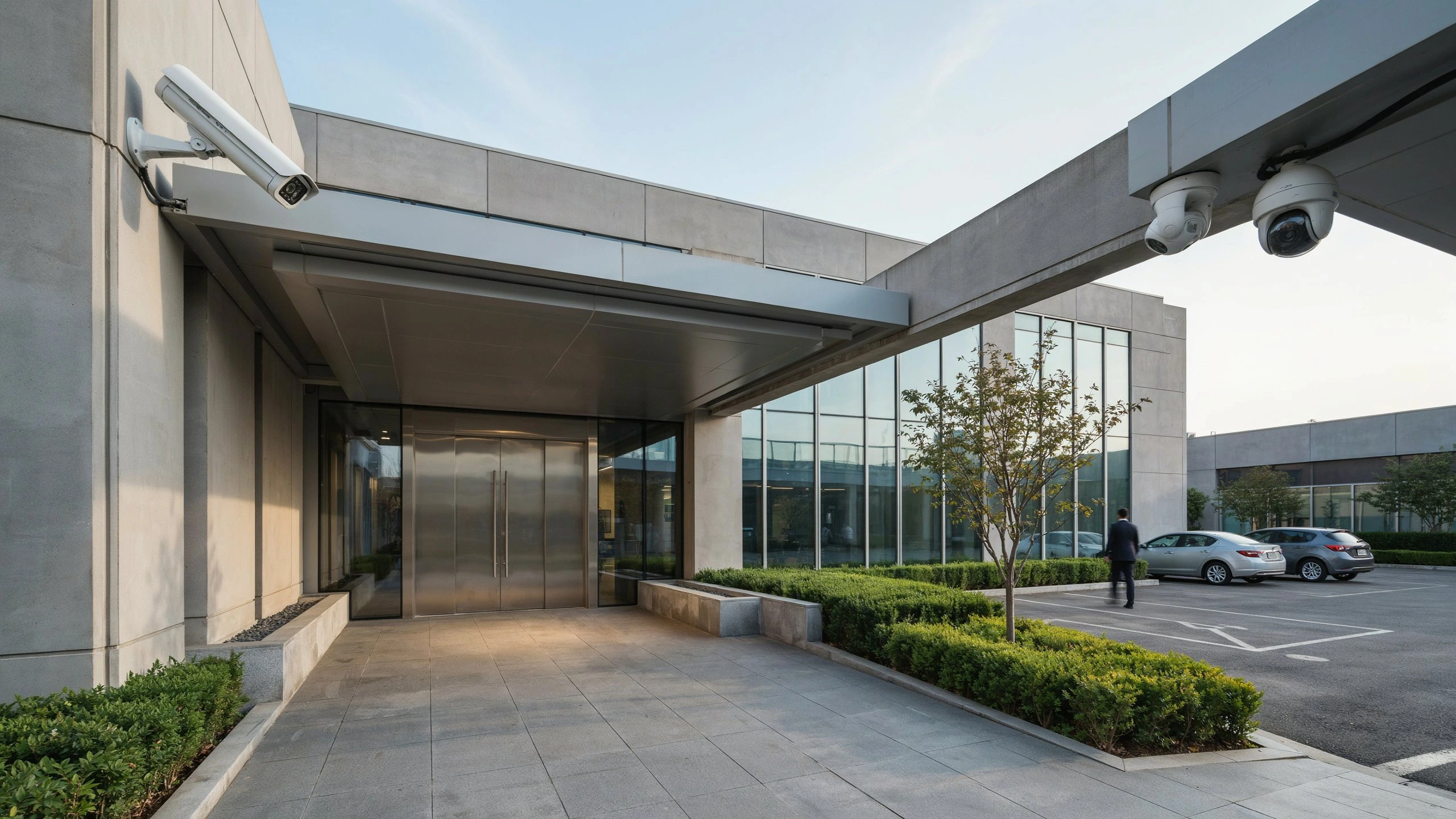
This is most important when people are looking at security cameras. 1080p, 4K, 8MP: that number is often the first thing people see before the camera itself. But a high number only tells you how clear the image is. It has no bearing on the field of view of a camera, or the distance it covers.
That’s the reason why CCTV camera angles matter more than the resolution of the camera in 9 out of 10 real-world installations. A crisp, high-resolution video of the incorrect part of the scene makes for dead footage. Knowing how angle, field of view, and positioning all interact will guide you to a system that captures the right footage.
Camera angle is more important than resolution because it determines what the camera shoots at and whether the recording is valuable or not. Resolution captures detail on what’s already in front of the lens. Resolution only adds detail to the scene already in frame. If you have to choose between a camera that’s spot-on but at medium resolution or one that’s very high resolution but poorly placed, at a low and wrong angle, or too far away and in the sun, the latter will rarely give you useful evidence. It is better to start with the right placement, angle, and field of view and add resolution as a secondary concern.
What Does Camera Resolution Actually Do?

Resolution is the number of pixels in the picture. The more pixels in the picture, the more details there are in the image. And the more details there are, the better you’ll be able to zoom in on recorded footage, read a number plate, or decipher a logo.
What resolution is unable to do:
- Add areas the lens does not cover.
- Fix an angle that hides faces.
- Remove glare, backlight, or obstructions.
- Replace proper lighting at night.
Simply put, resolution enhances how good what you can see is. It doesn’t determine what you’re able to see.
What Does Camera Angle Do?
An angle is the direction and height from which a camera takes a shot. It has the following effects:
- Whether faces or just head tops
- Whether the person walks towards the lens or diagonally across it
- Is there a degree of openness in an entry point, path, or room?
- Whether sunlight, headlights, or reflections interfere
A camera that takes a picture at a doorway, even at moderate resolution, will generally generate more usable footage than one with a higher-resolution camera that only captures the roofline.
What Are CCTV Camera Coverage Blind Spots?
CCTV camera system. These are usually overlooked until an incident happens there.
Root causes include:
- Cameras placed high up forming a dead zone under them
- Covering one part and leaving another exposed.
- Trees, signs, pillars, vehicles, or stored items.
- Corners, side walls, and tight spaces beyond any lens.
- A broad sweep of an area, with no detail of its entry point.
Blind spots tend to form around side doors, back lots, loading areas, and poorly lit corners, which are the same places that need coverage most. Anyone who learns where a gap is can use it.
What Is Security Camera Field of View?
The security camera’s field of view is how wide a scene the lens can capture, usually measured in degrees. It is a trade-off between coverage and detail.
| Field of view | Best for | Trade-off |
| Wide | Parking lots, lobbies, yards, open floors | Less detail on distant subjects |
| Medium | General rooms, hallways, storefronts | Balanced coverage and detail |
| Narrow | Gates, doorways, cash counters, license plates | Smaller area covered |
Getting it wrong on the field of view can either result in too much coverage or too little detail, irrespective of resolution. Even a 4K camera with a wide lens will be telling those pixels to cover a lot of ground, so people far away will be tiny.
What Is the Best Viewing Angle for Security Cameras?
We can’t tell you the perfect angle for your property. There are, however, some commonly agreed-upon angles across most properties.
Capture Faces at Entrances
A camera near doors will capture better footage if it has a natural eye-level view of the face. Too high and you’re only recording hats and shoulders.
Keep Subjects Moving Toward the Lens
It’s easier to track someone walking toward a camera than it is to track someone walking across it.
Avoid Glare and Backlight
Pointing a camera at a bright window, direct sun, or headlights can wash out the image. A small change in angle often fixes this.
Balance Height and Reach
Set it higher to make it more difficult to reach, but not so high that you flatten out the view and obscure the faces. You want something easy to scale, but with a reasonable angle of view.
Cover the Approach, Not Just the Door
A shot of the access road gives you some earlier context and where the events are taking place.
The best angle for a security camera can also be worked out by walking your grounds and testing live views throughout the day.
CCTV Camera Placement and Positioning: Where Should Cameras Go?
When it comes to the ideal CCTV cam offering and positioning, it all begins with your threats, not the product specs.
Common priority areas include:
- Front, rear, and side entrances
- Garage doors and loading docks
- Parking lots and driveways
- Cash handling points and counters
- Storage rooms, stockrooms, and server closets
- Hallways and stairwells that connect areas
- Fencing around the perimeter and gates
Prioritize what you need for each camera before deciding on the best lens, height, and angle. General awareness, identification, or deterrence.
How to Plan CCTV Camera Placement Step by Step
Map Your Entry Points
List every door, gate, and accessible window.
Identify High-Value Areas
Mark where cash, equipment, inventory, or sensitive information is kept.
Walk the Perimeter
Check for areas of darkness, cracks, blind spots, or other obstructions that may interfere with your viewing of the game.
Match the Lens to the Job
Use wider lenses for area and narrower lenses for identification points.
Check Lighting
Make sure each camera has usable light or infrared coverage at night.
Overlap Strategically
Allow neighboring cameras to overlap their edges so a gap cannot appear.
Test Before Finalizing
Test motion and any other live footage at various times of the day and before the installation is finalized.
When Does Camera Resolution Matter?
Resolution is still valuable in the right situations:
- Magnified viewing of playback footage
- Covering a large area with fewer cameras
- Intelligently detecting distant license plates
- Supporting digital zoom and cropping during review
The bottom line: order of things. Once angle, field of view, and placement are right, resolution just makes a good setup better. It cannot save a poor one.
Signs Your Camera Angles Need Adjustment
Review your system if you notice:
- And faces are difficult to discern even in daytime footage
- The video shows rooftops, roofs, or the tops of the heads.
- Shaded areas are overexposed, and glare or sun flare washes out parts of the image
- Things outside of the frame always happen with an entrance or an aisle.
- The view is now blocked by a tree, a sign, or something new.
- Cameras have replaced wind, vibration, or tampering
- Something in the camera view changed. A new scene or addition to the room.
Common CCTV Placement Mistakes to Avoid
Spending the Budget on Resolution Alone
Forgoing a site survey to upgrade to higher-resolution cameras can result in coverage gaps.
Placing Cameras Where Wiring Is Easiest
Coverage over convenience leads to coverage gaps.
Pointing Cameras at Bright Light
Reflections from the windows, house lights, and headlights can ruin a decent image.
Using Wide Lenses for Identification
A wide-angle view encompasses more area but has limited visibility of the faces when looked at closely.
Never Reviewing Footage After Installation
You might not realize you used a bad angle until you go to review the recordings.
Forgetting to Recheck After Changes
New signs, moved trees, and rearranged spaces can quietly change what a camera is able to see.
When Should You Contact a Security Professional?
Professional help makes sense when:
- You are designing a new system for a house, business, or an estate of several buildings
- Your property features multiple complex layouts, large perimeters, or entry points
- You are not sure which lens or field of view is appropriate for each location
- Cameras on the market today have blind spots you can’t overcome by aiming them differently.
- Lighting ruins nighttime shots
- You want a system that accounts for your real risks
A site assessment can identify coverage gaps before installation, making them easier and less costly to fix. Explore how security camera installation Indianapolis from Cam Security Surveillance can help create a camera layout that covers the areas that matter most.
Key Takeaways
- More detail with resolution. How you angle, where you hold, and how wide.
- A camera at too high a resolution but facing the wrong way will also record bad footage.
- CCTV cameras most often occur on side entrances, rear sites, and dark corners.
- Broader views encompass larger areas; narrower views focus on detail at particular points.
- The ideal viewing angle for security cameras is to see faces, reduce glare, and see people coming.
- Distribution: Plan the placement and orientation of CCTV cameras near access points and high-value areas and areas that are specific to your risks.
- Test and review footage after installation. Revisit angles following changes to the property.
Conclusion
So, why do CCTV camera angles matter more than camera resolution? Because footage is only valuable if it shows what you need to see. Resolution makes a picture sharper, but angle, field of view, and placement decide whether the right people, places, and moments are in the picture at all.
If you are planning or upgrading a system, start with the layout. Determine your entry points and high-risk locations, select the correct lens for each job, eliminate blind spots, and check your coverage before completing. Then leverage resolution to enhance a well-configured system.
To create coverage tailored around your property, Cam Security Surveillance can advise you on how you will take camera placements into the real environment instead of just the spec sheet. Contact us today.
Frequently Asked Questions
Why do CCTV camera angles matter more than camera resolution?
Angle is about what the camera can see, and is it; about capturing faces, entrances, and capturing motion. Resolution is of no use if there is nothing in frame; so if you have a bad angle, a high-resolution camera will not help.
What are CCTV camera coverage blind spots?
They are locations that no camera in your system can view. Usually created by bad placement, obstructions, mounting height, or spaces between camera views.
What is the security camera field of view?
In general, field of view refers to the extent of the scene that can be captured through the camera lens. It is most often defined in degrees.
What is the best viewing angle for security cameras?
Angle controls what the camera will see and whether faces, entry points, and movement can be seen. Resolution only increases the detail of what is already in the frame. So a bad angle can negate the value of a high-resolution camera.
How high should a security camera be mounted?
These are places that no camera in your system can see. These often are the result of bad placement, obstacles, height of the mount, and blind spots between cameras.
Where should CCTV cameras be placed?
The extent of the scene visible through a camera lens, usually measured in degrees from side to side. A wide field of view displays a larger area, and a narrow field of view displays more detail.
Can a wide-angle camera identify faces?
Depending on where, a good universal guideline is to shoot faces entering, encourage people’s direction of travel moving toward the camera, and hide glare and backlight. Mount height is a compromise between being resistant to person-pilfering and a usable image.
Does higher resolution fix blind spots?
No. Higher resolution only adds finer details in the size of the camera’s image frame, not more field of view. Gaps are solved with smarter positions, more cameras, or moving existing cameras.
How often should I check my camera angles?
Check the camera after installation, following a change to the layout or due to a renovation, then regularly thereafter. The camera may move, as trees grow or other objects block the view.
Should I choose resolution or placement first?
First placement. Figure out where cameras are to be placed, how they will be used, how much area they need to cover, and what is to be recorded. Then select a resolution that will accommodate your needs.