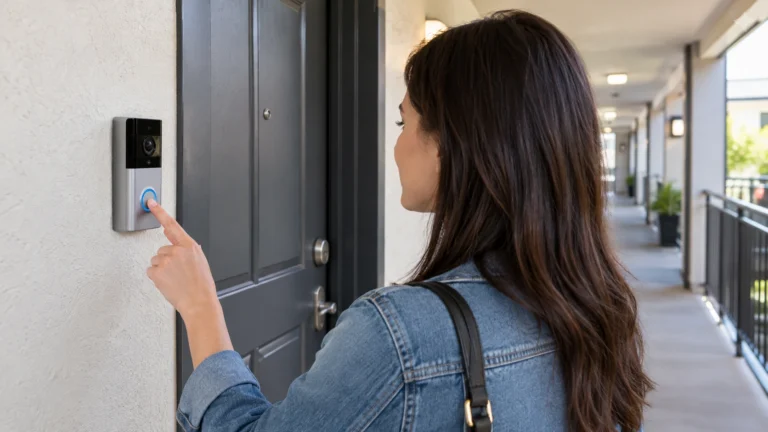
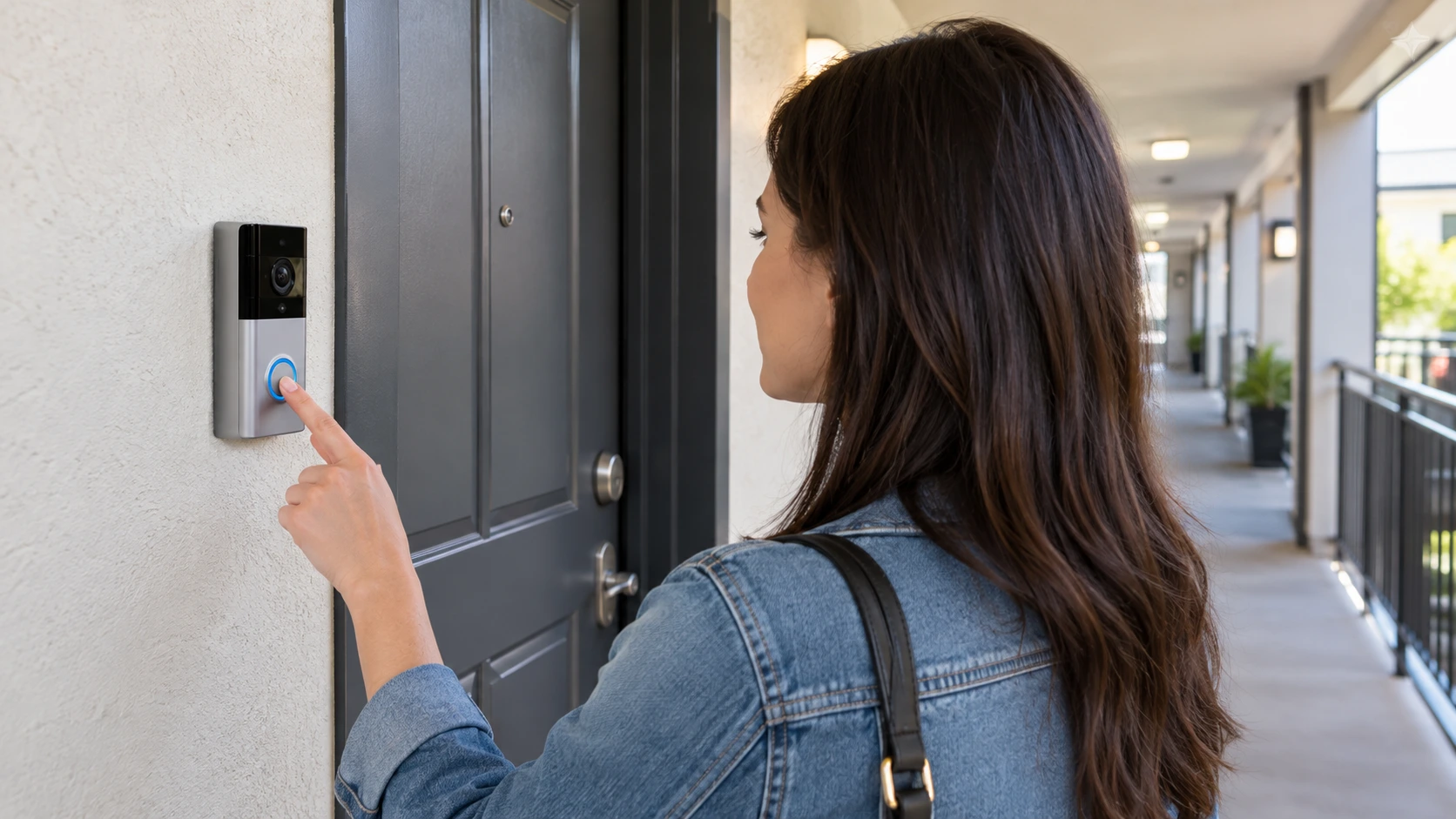
Can I have a doorbell camera in an apartment? For most cases, tenants are allowed to have a doorbell camera. It all really depends on the lease agreement, camera placement, building rules, and privacy legislation of the region where you lease an apartment. An installed doorbell camera facing your own door may be a different matter than one that captures the hallways, adjacent doors, or common spaces.
Before you install one, double-check your lease or ask your property owner or manager the regulations in your building. Think about where the camera records footage or sound, where the footage is stored and if any other visitors or tenants may be captured.
Are Doorbell Cameras Allowed in Apartments?
Every apartment and every location is different, and there are no rules that are one-size-fits-all.
Apartment doorbell camera rules might derive from a number of sources, such as:
- Your lease or rental agreement
- Building or homeowners’ association rules
- State, provincial, or local privacy laws
- Rules concerning audio recording
- How to use doors or the communal areas Share with others Rules relating to changing doors or the downstairs area
- Building security policies
A tenant might be allowed to have a camera, but restricted on where you can place or record it.
The UK Government’s current guidance, for example, states that doorbells with cameras for the home are part of domestic CCTV and that the data-protection laws may apply to cameras that get pictures of people outside the boundary of a private home – even if those people are in a communal or public space.
What Should You Check Before Installing a Doorbell Camera?
Review Your Lease
Get your rental agreement. Find a subsection that reads as follows:
- Security devices
- Cameras and surveillance
- Alterations to the apartment
- Door modifications
- Exterior fixtures
- Common-area use
- Privacy and recording
Even if the lease agreements don’t address doorbell cameras, the building can have separate written policies.
Ask the Property Manager
If you are unsure, getting written permission can prevent disagreements later.
Ask whether you can:
- Keep a camera on your apartment door or near it.
- Der er ingen broer og ødelægger ikke ejendommen permanent.
- Record the hallway or other common areas.
- Record audio.
- Store footage in a cloud service.
…and particularly in the buildings where the hall, doorframe or outer wall is classed as common property.
What Are Apartment Doorbell Camera Rules Usually Concerned With?
Most restrictions are not simply about whether a camera exists. They may concern where the camera points, what it records, how long footage is retained, and whether audio is captured.
A building may allow a doorbell camera but require that it:
- Face the tenant’s doorway rather than a neighbor’s door.
- Avoid unnecessary recording of shared areas.
- Not interfere with other residents’ privacy.
- Be installed without damaging the building.
- Follow building appearance or mounting requirements.
The exact requirements vary by location and property.
Doorbell Camera Privacy Laws and What They Mean
Privacy laws and doorbell cameras can vary widely by state. Privacy and data-protection rules may come into play if a camera captures footage of people outside the scope of your personal property.
A camera can potentially capture:
- Neighbors
- Visitors
- Delivery workers
- Maintenance staff
- People walking through a hallway
- Children or other residents
- Conversations and other sounds
For instance, when a CCTV installed at home, or a smart doorbell, records someone else’s property, a shared area, or a public space, then data-protection rules could come into play, the UK’s Information Commissioners’ Office notes.
This is an example of why a doorbell camera doesn’t automatically mean all types of recordings are allowed.
Can a Doorbell Camera Record a Shared Hallway?
This is one of the most important questions for apartment residents.
A camera may naturally capture some of the hallway when someone approaches your door. However, deliberately positioning it to monitor a large section of a communal area or another resident’s doorway can create additional privacy concerns.
Before installing the camera, ask:
- Does it mainly capture my own doorway?
- Can I adjust the viewing angle?
- Can privacy zones block unnecessary areas?
- Can motion detection be limited?
- Does the camera record audio?
- How long are recordings stored?
Using available privacy settings can help reduce unnecessary recording.
Are Audio Recordings Different From Video?
They can be. Audio may create additional legal concerns because conversations can be subject to different consent and recording rules depending on the jurisdiction.
If you do not need audio for your security purposes, consider whether your camera allows you to disable or limit audio recording.
Do not assume that because video recording is permitted, audio recording is automatically permitted as well.
What About Security Cameras in Apartments?
Security cameras in apartments can take several forms, including:
- Doorbell cameras
- Indoor security cameras
- Balcony cameras
- Peephole cameras
- Hallway cameras operated by building management
- Building entrance surveillance
A tenant-installed doorbell camera is different from a security system operated by the landlord or property management company.
Building-operated cameras may have their own policies concerning notice, access to recordings, retention, and who can view footage.
Can a Landlord Ban a Doorbell Camera?
A landlord or property manager might require you to follow some reasonable property rules related to the installation or use of cameras. This is especially true when common property, the building exterior, or other residents’ privacy is impacted.
If this specific restriction can be forced legally can depend on the lease agreement and the local rules.
If permission is refused, get this in writing and see whether there is any restriction in your tenancy agreement or in a tenant’s handbook. Some rights or obligations vary depending on the location.
Apartment Camera Recording Laws and Privacy
Apartment camera recording laws can address different aspects of surveillance, including:
Video Recording
Recording video of people in areas where they have a reasonable expectation of privacy can create serious legal issues. A hallway outside an apartment door is different from a bathroom or private bedroom.
Audio Recording
Audio can be more legally sensitive than video because recording conversations may be regulated separately.
Storage of Footage
Cloud-connected cameras may automatically store recordings on a company’s servers. Check the manufacturer’s privacy policy and your camera settings to understand how footage is stored and accessed.
Sharing Recordings
Be cautious about posting recordings or sending them to outsiders. A security recording may include personal information about residents or visitors.
How to Install a Doorbell Camera More Privacy-Consciously
If your lease and local rules allow a doorbell camera, careful installation can reduce unnecessary privacy concerns.
Point the Camera Toward Your Door
Adjust the viewing angle so that your doorway and immediate entrance are the main areas being monitored.
Use Privacy Zones
Some cameras allow you to block selected parts of the image. This can help prevent unnecessary recording of neighboring doors or other areas.
Limit Audio When Appropriate
If audio is not necessary, consider disabling it if your camera provides that option.
Choose Motion Zones Carefully
Instead of detecting movement across an entire hallway, use available settings to focus alerts on the area around your entrance.
Avoid Permanent Modifications Without Permission
If installation requires drilling into a door, wall, frame, or other building property, obtain the appropriate permission first.
What If Your Apartment Doesn’t Allow Doorbell Cameras?
What if a permanent doorbell camera isn’t permitted? There are other types of security systems that you might be able to implement, depending on your lease and building rules.
Possible alternatives include:
- A removable peephole camera
- A camera placed on the inside of your apartment, aimed toward the front door.
- A non-permanent security device
- A door alarm
- A security system approved by the building
- A landlord-approved camera installation
Always make sure the alternative follows your lease and applicable law.
Questions to Ask Your Landlord Before Installing One
If you want a clear answer before purchasing a camera, ask your landlord or property manager:
- Are tenants allowed to install doorbell cameras?
- Are the cameras approved in writing?
- Is it possible to fit the new lock to the current door or framing?
- Can it record the hallway?
- Are audio recordings permitted?
- Are there restrictions on cloud recording?
- Are there specific building privacy rules?
- Can the camera be installed without drilling?
Having the answer in writing is helpful if the building has certain security measures. .
How Cam Security Surveillance Can Help
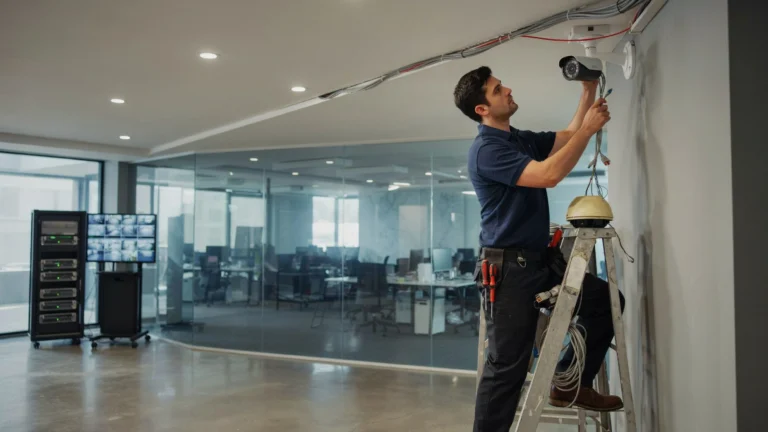
When choosing a doorbell camera for your apartment, the installation must address security and privacy. Cam Security Surveillance can help you decide where to place your camera, to what angle it should be set, and how you use a doorbell security system.
Hopefully, the objective is to keep your space protected while ensuring you can monitor the area without unnecessarily recording five apartments or entire common areas. For professional apartment security camera installation, be sure to verify the rules and privacy requirements that apply to your specific environment.
Final Thoughts
So, is a doorbell camera legal in an apartment? It could be, but there’s not a clear yes or no. Your lease, rules for the apartment complex, camera positioning, video recording capabilities, and privacy laws in your area can make a difference.
The best course of action is to consult your rental agreement, get approval in writing (if necessary), install the camera appropriately, and remember to follow all privacy and recording guidelines. If you’re unsure how to choose and install an apartment security camera, Cam Security Surveillance can assist you with planning the perfect system for your needs.
Need help with apartment security camera installation? Contact us today and our team will help you choose, place, and set up a doorbell camera that keeps your space secure while respecting your building’s privacy rules.
Frequently Asked Questions
Is it legal to have a doorbell camera in a rented apartment?
It may be legal, but tenants should check their lease, building rules, and applicable local laws before installation. Requirements vary by location and property.
Can my landlord stop me from installing a doorbell camera?
A landlord or property manager may have rules concerning alterations, exterior fixtures, common areas, or privacy. Whether a restriction is legally enforceable depends on the lease and applicable law.
Can I record my apartment hallway with a doorbell camera?
Your door camera might record a portion of the hallway when someone approaches the door, but deliberately viewing a common area more widely or other doors nearby can create even more privacy issues. Consult your building policy and law.
Do doorbell camera privacy laws apply to audio?
Yes. Audio recording may be subject to laws distinct from those relating to video recording in your area. If audio isn’t required, try to switch it off where feasible.
Can I install a doorbell camera without drilling?
Some cameras are able to be installed with mounting options that do not cause any permanent changes, though you should verify whether your landlord or property owner allows the installation.
Are security cameras in apartments allowed?
Although apartment security cameras are permitted, the rules vary by ownership of the camera, location of the camera, and what information the camera captures along with lease and privacy conditions.
Do apartment camera recording laws apply to cloud storage?
Maybe. Cloud-based cameras will save recordings with a service provider, so residents should consider how they will be stored, viewed, retained, and shared.
Should I ask my landlord before installing a doorbell camera?
Does this mean I need permission? Yes. Local regulations might permit the use of the camera, but your lease or building’s regulations may require permission too. To prevent disputes with neighbors or landlords, a written grant of approval is recommended.