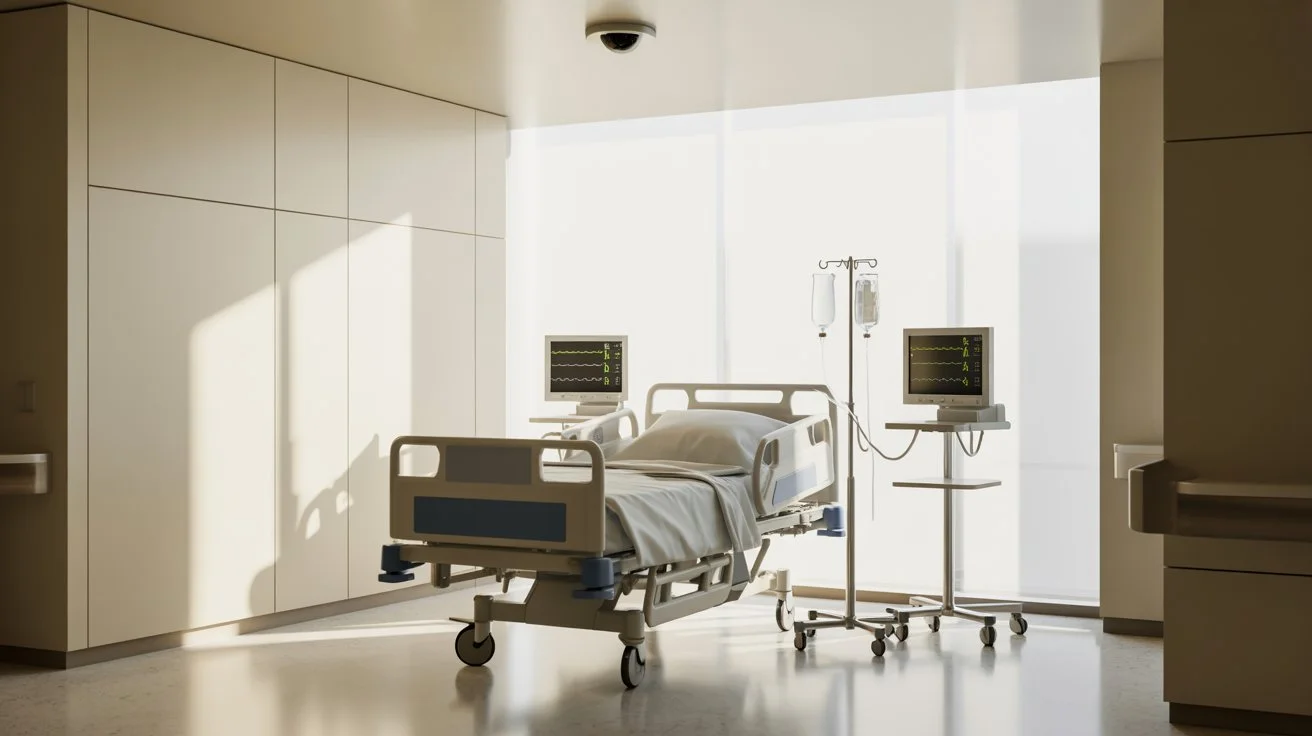
Hospitals have cameras in places but it does not mean every single patient room has one. The use of cameras varies depending on the hospital the type of room the needs of the patient and the rules, in the area. Some cameras help keep patients safe while other cameras help protect the staff, the visitors and the hospital property. A camera may also provide live video without storing every moment. Privacy matters more inside a patient room than in a public hallway. If you notice a camera, near your bed it is reasonable to ask why a camera is there whether a camera records and who can view a camera.
Do Hospital Rooms Have Cameras?
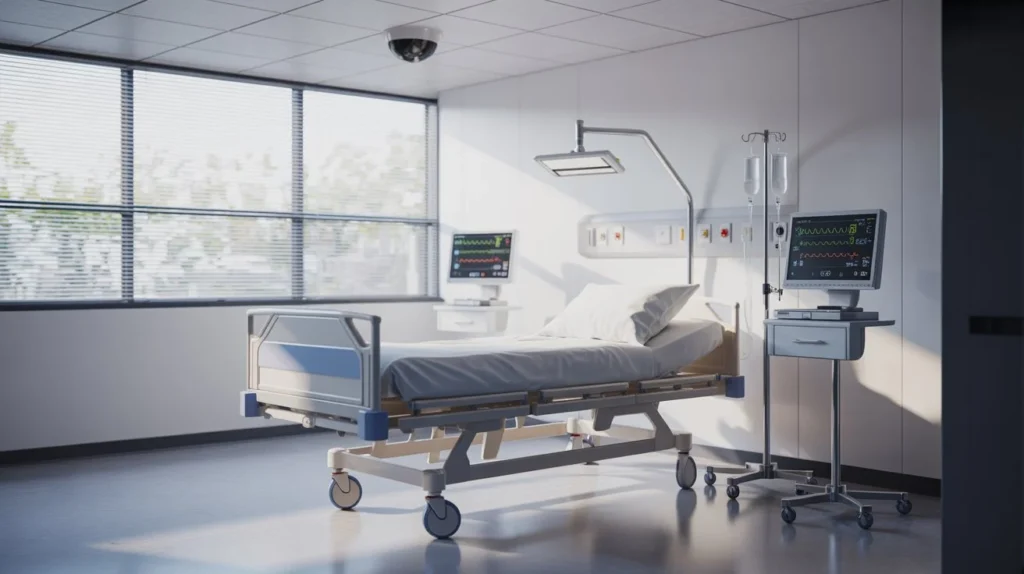
Yes some hospital rooms have cameras. These cameras are not found in every single room. Hospitals might use video monitoring when a patient needs observation. This can include patients who’re, at risk of falling patients who tend to wander or patients who might remove medical equipment. Some intensive care and special-care areas may also use cameras as part of patient monitoring.
The answer to “do hospital rooms have cameras” depends on the hospital and the reason for using one. A standard patient room may not have a camera at all. Another room may have a camera because the patient needs extra observation.
There is also an important difference between a security camera and a patient monitoring camera. A security camera is mainly used to protect people and property. A patient monitoring camera is used to help staff observe a patient.
Why Would a Hospital Put a Camera in a Patient Room?
A hospital may use a camera when staff need to observe a patient without being physically inside the room at all times.
Common reasons include:
- Watching patients who have a high fall risk
- Checking on patients who may become confused
- Reducing the need for constant bedside checks
- Watching patients who may remove medical devices
- Supporting remote patient observation
- Protecting staff during difficult situations
- Investigating safety or security events
- Monitoring certain high-risk care areas
For example, imagine an older patient who is recovering from surgery. The patient may try to get out of bed without help. A monitoring camera can allow trained staff to notice movement and respond sooner. This does not mean the camera replaces nurses or other medical staff. It is one tool that may support patient care.
Some hospitals also use cameras with alert systems. A critical alert hospital camera may be part of a broader setup that sends an alert when a patient needs attention. The exact features depend on the system and hospital policy.
Are Cameras Always Recording in Hospital Rooms?
No. A camera can provide a live view without continuously recording video. This distinction is important because people often assume that a visible camera stores everything it sees. That is not always true. A hospital camera may operate in several ways:
Live monitoring: Staff can view the patient in real time, but the system may not save all video.
Recorded monitoring: The system stores video for a set period based on its purpose and policy.
Event-based recording: Video may be saved when a particular event or alert occurs.
Privacy mode: Some systems can limit or disable the camera view under certain conditions.
Storage also matters. Recorded video may be kept on a local system, a secure server, or another approved platform. Access should be limited according to the hospital’s policies and applicable requirements. If you are concerned about recording, ask three simple questions: Is the camera recording? Does it record sound? How long is the footage kept?
Can Hospitals Put Cameras in Patient Rooms?
Hospitals can use cameras in patient-care settings, but the reason for the camera and the way it is used matter. A camera pointed at a hallway is different from one pointed at a patient’s bed. The second situation involves a much higher level of privacy. Hospitals should consider whether video monitoring is needed for a valid purpose and whether the camera captures more information than necessary. Camera placement should also reduce unnecessary views of private activities.
For example, a camera may be positioned to observe a patient’s bed and nearby area without showing a bathroom or other highly private space. Privacy is also important when video can reveal health information.The U.S. Department of Health and Human Services says that health care providers who are required to follow the rules must use ways to keep patient details safe and make sure only the right people can see them.
Are Hospital Room Cameras Legal?
The answer about whether they’re legal changes based on where you are why the camera is there what kind of video is being recorded and the rules, from both the federal government and the state. There is not one rule that says all hospital cameras are legal or not. In the United States HIPAA matters because it keeps some health information safe when it is handled by health care providers who must follow the rules. HHS says hospitals must have privacy procedures, train staff, and protect patient information from people who do not need access.
HIPAA should not be treated as a simple “hospital cameras are legal” rule. Video surveillance can involve other privacy laws and state requirements, especially when audio is recorded. For that reason, patients with concerns should ask the hospital’s privacy office or patient advocate about the specific camera.
Can Hospital Cameras Record Audio?
Some cameras can record audio, but a camera does not automatically mean that sound is being recorded. Audio can raise different privacy concerns because conversations between patients, doctors, nurses, and visitors may contain private information. A hospital should know what its equipment captures and who can access that information. If you see a camera and are unsure about its audio features, ask directly.
A useful question is: “Does this camera record sound, or does it only provide video?”
Do not assume that a microphone is active just because the camera has one built into its hardware.
Where Are Hospital Security Cameras Usually Installed?
Hospitals often place security cameras in areas where many people move through the building or where security risks are higher.
Common locations include:
- Main entrances
- Emergency department entrances
- Hallways
- Parking areas
- Elevators
- Waiting areas
- Reception desks
- Stairwell entrances
- Loading areas
- Restricted-access doors
- Pharmacy or supply areas
These locations are different from private patient spaces. A hallway camera may mainly watch people entering and leaving an area. A patient-room camera can capture much more private activity.
For hospitals planning a new surveillance system, working with a qualified security camera installation business can help with camera placement, coverage, recording equipment, network planning, and access controls. A professional installer should also understand that healthcare sites need careful camera placement because privacy is a major concern.
Cam Security Surveillance provides professional security camera installation services for properties that need properly planned video coverage.
Who Can View Hospital Room Camera Footage?
Access should not be open to every hospital employee. The people who can view video may depend on why the camera exists. For example, patient monitoring footage may be available to authorized care staff, while security footage may be handled by security personnel.
Hospitals can use access controls to limit who can see stored video. They can also use passwords, user permissions, secure networks, and audit records to reduce unauthorized access. HHS states that covered health care providers must take reasonable steps to limit access to protected health information to people who need it.
This is why a camera system should not only focus on image quality. Access control and secure storage are also important parts of a hospital surveillance system.
Do Hospital Cameras Protect Patient Privacy?
They can, but privacy depends on how the system is designed and managed. A hospital can reduce privacy risks through careful camera placement, limited access, secure storage, and clear rules for using footage.
For example, a camera can be aimed so it does not capture a bathroom doorway or unnecessary parts of the room. Access can also be limited to staff who need the video for their job. Privacy is not only about where a camera points. It also includes what happens to the footage after it is captured.
A responsible system should answer basic questions:
- Who can view the footage?
- Is video stored?
- Is audio stored?
- How long is footage retained?
- Why is the footage collected?
- When can footage be shared?
- How is stored footage protected?
These questions help patients understand how surveillance affects their privacy.
Can Family Members Request Hospital Camera Footage?
A family member cannot automatically get hospital camera footage just because a relative is in it. The answer can change depending on the kind of footage who’s in it the hospitals rules and the privacy laws that apply. A video might show patients people visiting or workers which can bring up more privacy issues.
If a patient wants to ask about footage the first thing to do is usually to reach out, to the hospitals privacy office the medical records department, a patient advocate or another department that the hospital has listed. Do not think that asking for records automatically means someone can see all the security videos. Different kinds of records can have rules.
What Should You Do If You Find a Camera in a Hospital Room?
If you notice a camera and do not know why it is there, you do not need to guess. Start by asking the nurse or hospital staff member caring for you.
Ask:
- Why is the camera installed?
- Is it used for patient monitoring or security?
- Does it record video?
- Does it record audio?
- Who can view the camera?
- Is the footage stored?
- How long is it retained?
- Can the camera be placed in a privacy mode?
If you are still concerned, ask to speak with the hospital’s privacy officer or patient advocate. You should also avoid covering, unplugging, moving, or damaging hospital equipment. If you believe a camera is being used improperly, raise the concern through the hospital’s formal process.
Hospital Room Cameras vs. General Hospital Security Cameras
Not every hospital camera serves the same purpose.
| Camera location | Main purpose | Privacy concern |
| Main entrance | Security and access | Lower |
| Parking area | Property and personal safety | Lower |
| Hallway | Security and safety | Moderate |
| Waiting room | General security | Moderate |
| Patient room | Patient observation | Higher |
| ICU or special-care area | Patient monitoring | Higher |
The closer a camera is to private patient activity, the more important careful placement and access controls become. This is also why a hospital should not treat every camera location as a standard security installation. Patient areas require a different level of planning.
How Hospitals Can Use Cameras Responsibly
A good hospital camera system should balance safety with patient privacy.
Hospitals can take several practical steps:
Use a clear purpose.
Every camera should have a reason for being installed. Avoid cameras that collect information without a clear need.
Choose the right camera angle.
The camera should capture the area needed for safety or monitoring without showing unnecessary private areas.
Limit access.
Only authorized users should be able to view stored footage.
Protect stored video.
Hospitals should use appropriate security controls for video storage and transmission.
Review camera placement.
A camera that was useful when installed may need adjustment after a room or care area changes.
Train staff.
Employees should understand who can access footage and how privacy rules apply.
Explain the system to patients.
Simple information can reduce confusion and help patients understand why monitoring is being used.
The goal is not to place cameras everywhere. The goal is to use them where they serve a clear safety or security purpose while respecting patient privacy.
Conclusion
So do hospital rooms have cameras? Some do,. Cameras are not automatically placed in every patient room. Hospitals might use them for monitoring for safety for security or for special care needs. The important questions are why the camera is there what it records whether it captures sound who can see it and how the video is kept safe.
If you see a camera in a hospital room ask hospital staff for an explanation. Privacy rules can be different depending on where you’re what is happening so the hospitals privacy office can give the best answer, for that particular situation.
For hospitals and healthcare facilities that want to set up video surveillance, Cam Security Surveillance can help with security camera installation and system planning based on the property’s needs. Contact us today to discuss your security camera needs and get started with a professional installation.
FAQs
Do all hospital rooms have cameras?
No. Camera use varies by hospital, room type, patient needs, and the purpose of monitoring.
Do ICU rooms have cameras?
Some ICU or special-care rooms may use cameras for patient monitoring, but this is not true for every ICU. Hospital policies and patient needs determine whether cameras are used.
Is there cameras in hospital rooms?
Yes, some hospital rooms may have cameras. They can be used for patient observation, safety, or security. Many rooms do not have them.
Can hospital room cameras record audio?
Some systems can record audio, while others only provide video. Patients can ask hospital staff whether a particular camera records sound.
Can a hospital camera watch a patient all day?
A camera may provide continuous live monitoring, but that does not mean the hospital records and stores every moment. The system’s settings and hospital policy determine how monitoring works.
Can family members watch a hospital room camera remotely?
Not necessarily. Access depends on the hospital’s system, patient privacy rules, and who is authorized to view the camera.
Are hospital hallway cameras different from patient room cameras?
Yes. Hallway cameras are generally used for security and safety, while patient-room cameras may be used for patient observation. Patient rooms involve greater privacy concerns.