Airports handle thousands of people every single day. That level of traffic creates real security risks, from theft and smuggling to serious threats that affect public safety. Managing all of that requires more than security guards and checkpoints. You need eyes everywhere, at all times, without gaps.
That’s exactly what Airport Security Cameras are built to do. They give security teams full visibility across every zone in a facility. This guide covers everything you need to know about airport camera systems, where they go, what they do, and why getting them right matters.
Why Airport Security Cameras Are Essential
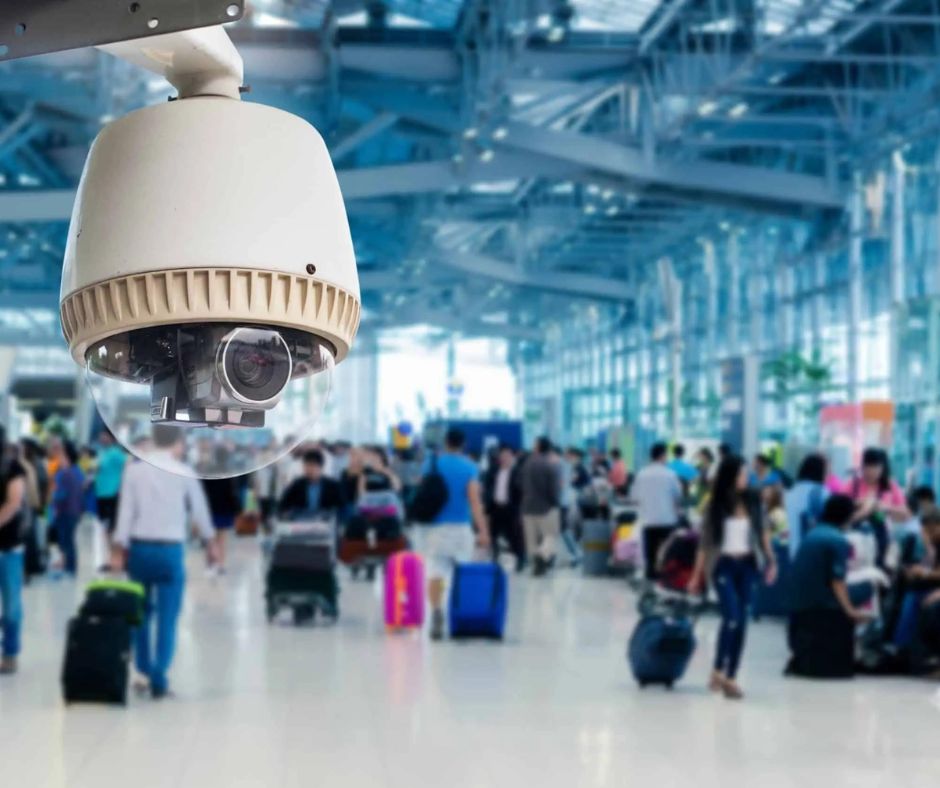
Airports are high-risk environments by nature. Large crowds, valuable cargo, international travel, and restricted zones all create security challenges that no other type of facility faces at the same scale. A single security breach at an airport can have massive consequences. Without proper surveillance, threats go undetected until it’s too late. Incidents that could have been stopped early become full emergencies.
Airport security cameras are not optional equipment. They are a core part of keeping passengers, staff, and aircraft safe. Regulatory bodies like the TSA in the United States and equivalent agencies worldwide require airports to maintain surveillance systems that meet specific standards. Beyond compliance, cameras help airports respond faster. When an incident occurs, security teams can pull up live footage immediately. Response time drops. Outcomes improve.
What Are Airport Security Cameras?
Airport security cameras are professional-grade surveillance cameras installed throughout airport facilities to monitor passenger activity, restricted areas, cargo zones, runways, and entry points. These are not the same cameras you’d find in a small retail shop. Airport cameras are built for high-traffic, high-stakes environments. They need to handle large crowds, operate 24/7, perform in low-light conditions, and integrate with broader security systems.
An airport security camera system typically includes multiple camera types across different locations, all connected to a central management platform. Security personnel monitor feeds in real time from a control room. Footage is stored for review and used as evidence when needed.
How Airport Security Cameras Protect Passengers
The protection starts before a passenger even enters the building. Cameras at entry points capture every vehicle and person arriving at the terminal. This data helps security teams spot suspicious behavior early.
Inside the terminal, cameras monitor check-in counters, security screening lanes, gate areas, and baggage claim. Any unusual activity triggers a response from nearby security staff.
Here’s how the protection works in practice:
- Threat detection: Cameras identify suspicious packages, unattended bags, or unusual behavior in real time
- Crowd monitoring: Security teams track crowd density and flow to prevent dangerous overcrowding
- Incident response: When something happens, staff can locate the exact zone instantly using live feeds
- Evidence collection: Footage from airport CCTV systems is used in investigations after incidents occur
- Deterrence: Visible cameras discourage theft, assault, and other crimes before they happen
Passengers may not notice the cameras, but the cameras notice everything.
Key Areas That Require Airport Surveillance
Every part of an airport has its own security demands. Here are the critical zones that require dedicated coverage:
Terminal entrances and exits: The first and last line of detection. Every person entering or leaving is captured on camera.
Security screening checkpoints: High-pressure zones where crowds concentrate. Cameras here help monitor queue behavior and catch attempts to bypass screening.
Departure and arrival gates: Gate areas require close monitoring for unauthorized access, especially near aircraft boarding bridges.
Baggage claim areas: High rates of theft occur in baggage claim. Cameras protect both passengers and their belongings.
Restricted access zones: Server rooms, operations centers, fuel storage, and airside areas require strict access control backed by camera surveillance.
Runways and taxiways: Aircraft movement areas need constant visual monitoring. Any unauthorized access to the airside is a critical security event.
Parking structures: Often overlooked, parking areas see high rates of vehicle theft and assault. Bullet cameras with long-range night vision work well here.
Cargo and freight facilities: High-value cargo moves through these zones. Surveillance reduces theft and supports chain-of-custody documentation.
Types of Security Cameras Used in Airports
Airports don’t rely on a single camera type. An airport surveillance camera system uses multiple camera styles, each suited to a specific environment and task.
PTZ cameras (Pan-Tilt-Zoom): Used in open terminal areas and outdoor zones. Security operators can control the direction and zoom remotely to track a person or vehicle across a wide area.
Dome cameras: Installed in ceilings throughout terminals, gates, and hallways. Their discreet design gives wide-angle coverage without drawing attention.
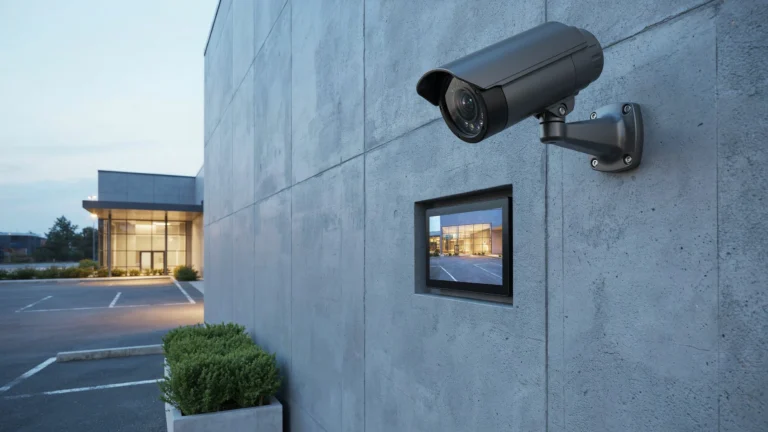
Bullet cameras: Common in outdoor locations like parking lots, perimeter fences, and runway edges. They offer long-range coverage and strong night vision.
Fisheye cameras: Provide 360-degree coverage from a single mount point. One fisheye camera can cover an entire lobby or baggage claim area.
Thermal cameras: Used in perimeter monitoring and restricted zones. They detect heat signatures, which means they work in complete darkness and aren’t fooled by camouflage or shadows.
License plate recognition (LPR) cameras: Installed at vehicle entry and exit points. They automatically capture and log every plate entering the facility.
Body-worn cameras: Used by airport security personnel for incident documentation and accountability during patrols.
Advanced Features of Modern Airport Security Cameras
Modern airport CCTV systems do far more than record video. Today’s systems use built-in intelligence to help security teams work faster and smarter.
AI-powered video analytics: Cameras detect unusual behavior automatically. A person loitering near a restricted door, an unattended bag, or a crowd forming suddenly will trigger an alert without a human watching the screen.
Facial recognition: High-end systems compare faces against watchlists in real time. If a flagged individual enters the terminal, security is notified immediately.
Object detection: Cameras can identify specific items like weapons or prohibited objects and alert staff before screening even begins.
License plate recognition: Automated systems log and cross-reference every vehicle entering or leaving airport property.
Integration with access control: Camera systems link to electronic door locks. If a breach is detected, doors can be locked remotely without manual intervention.
Cloud storage and remote access: Security managers can monitor live feeds and review recorded footage from anywhere, on any device.
High-resolution imaging: Modern cameras capture 4K or higher resolution. This is critical for identifying individuals in crowded terminals and reading signage from a distance.
Benefits of Airport Security Camera Systems
Investing in a proper airport surveillance system delivers benefits beyond basic safety.
Reduced security incidents: Visible cameras deter criminal activity. Airports with strong surveillance programs report fewer thefts, assaults, and unauthorized access events.
Faster emergency response: Security teams locate incidents in seconds using live camera feeds instead of relying on radio calls alone.
Operational efficiency: Camera footage helps airport management study passenger flow, identify bottlenecks at checkpoints, and improve queue management.
Legal protection: Documented footage protects the airport from false claims and provides clear evidence in legal proceedings.
Insurance benefits: Many insurers offer lower premiums to airports with documented, comprehensive surveillance systems.
Regulatory compliance: Aviation security regulations require surveillance systems that meet specific standards. A proper camera setup keeps the airport compliant and avoids costly fines.
How Airport Security Cameras Support Airport Operations
Security isn’t the only department that benefits from camera systems. Operations teams use footage for a wide range of practical purposes.
Gate management teams monitor boarding areas to manage crowd flow and identify delays. Facilities teams use cameras to track maintenance issues across the terminal. Retail and concession managers monitor foot traffic and customer behavior in commercial zones.
During emergencies, operations centers pull up camera feeds to assess the situation, coordinate staff response, and communicate with first responders. The cameras become a real-time command tool.
Aircraft ground operations teams also rely on airside cameras to monitor vehicle movement on taxiways and aprons. Any unauthorized vehicle near an aircraft is detected immediately.
Common Challenges Airports Face Without Surveillance Systems
Airports that operate with outdated or insufficient camera coverage face serious problems.
Blind spots: Without full coverage, criminal activity moves to unmonitored zones. Thieves and smugglers learn where the cameras are not.
Slow incident response: Without live camera access, security teams rely on witnesses and radio reports. Response times increase. Outcomes worsen.
Evidence gaps: When incidents are not recorded, prosecutions fail and false claims go unchallenged. The airport bears the cost.
Compliance failures: Regulatory bodies audit airport security systems. Missing or non-functional cameras result in violations, fines, and operational restrictions.
Operational blind spots: Without cameras, management has no visibility into bottlenecks, overcrowding, or unauthorized staff behavior.
A single camera system failure can expose the entire facility to risk. Regular maintenance and system audits are not optional.
Best Practices for Airport Security Camera Installation
A well-designed installation makes the difference between a system that works and one that creates a false sense of security. These are the practices that professional installers follow.
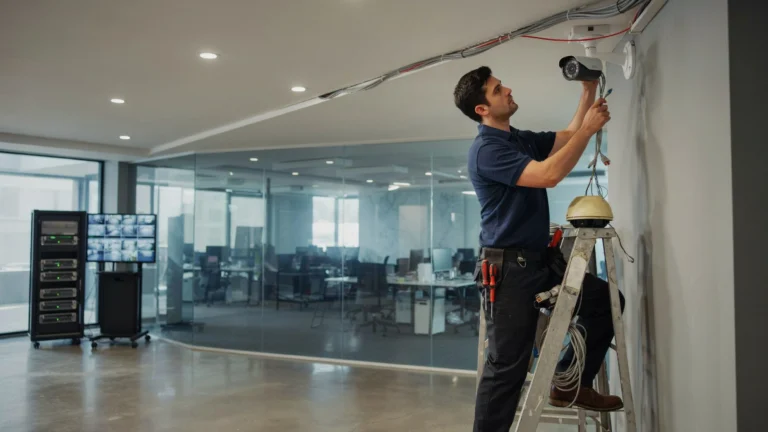
Start with a full site assessment. Map every zone, identify high-risk areas, and document coverage requirements before choosing equipment. This is the most important step and the one most often skipped.
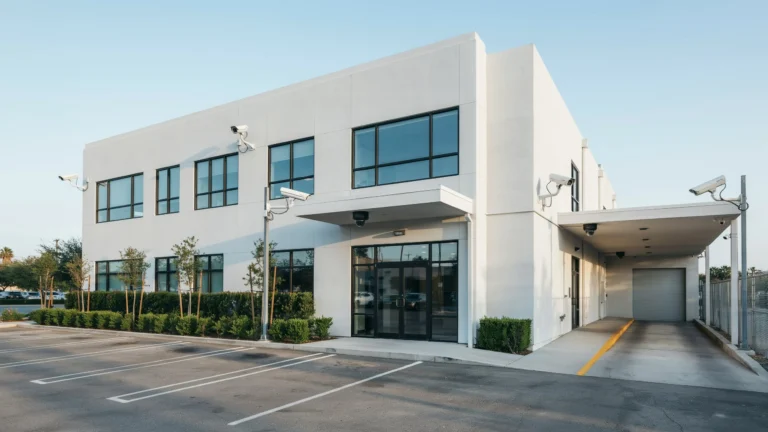
Eliminate blind spots by design. Overlap camera coverage zones so there are no gaps. Every exit, every corner, every hallway should be visible from at least one camera.
Use the right camera type for each zone. PTZ cameras for open areas, dome cameras for indoor coverage, bullet cameras for outdoor perimeters, thermal cameras for restricted zones.
Plan cable runs and power supply early. Poor cable management degrades signal quality and creates maintenance problems. Plan infrastructure before installation begins.
Integrate with existing security systems. Cameras should connect to access control, alarm systems, and the airport’s central security management platform from day one.
Test every camera after installation. Verify field of view, night vision performance, and resolution before signing off. Adjust angles where needed.
If you’re planning a business security camera system installation for an airport or large commercial facility, Cam Security Surveillance provides professional assessment, installation, and commissioning services built around your specific coverage needs.
Future Trends in Airport Surveillance Technology
Airport surveillance is advancing fast. Here’s what’s already being deployed at major airports and what’s coming next.
AI-driven behavioral analysis: Systems that detect threatening behavior patterns across hundreds of camera feeds simultaneously, flagging only what needs human attention.
Drone surveillance: Unmanned aerial cameras patrol perimeters and remote areas where fixed cameras can’t reach.
Biometric integration: Full integration of facial recognition, iris scanning, and gait analysis into the surveillance platform for frictionless passenger verification.
Predictive analytics: Systems that use historical data to predict where and when security incidents are likely to occur, allowing proactive staffing decisions.
Edge computing: Processing video analytics directly in the camera rather than sending data to a central server. This reduces latency and allows faster real-time alerts.
5G connectivity: High-speed wireless networks enable mobile cameras, body-worn devices, and drone feeds to integrate into the main surveillance system without cabling.
Why Professional Airport Security Camera Installation Matters
Airport environments are complex. Installing cameras incorrectly leads to blind spots, poor image quality, system failures, and compliance violations. Professional installers bring more than technical skills. They understand aviation security regulations, they know how to work within an active airport environment without disrupting operations, and they design systems that will perform reliably for years.
Cam Security Surveillance has experience designing and installing large-scale surveillance systems for high-security commercial environments. Our team conducts thorough site assessments, selects the right equipment for each zone, and handles full installation and testing.
We don’t just put cameras on walls. We build systems that give your security team real visibility and your passengers real protection.
Conclusion
Airports are some of the most complex and high-risk environments on the planet. Keeping passengers safe requires full surveillance coverage across every terminal, gate, cargo zone, and perimeter.
Airport security cameras are the foundation of that coverage. From detecting threats early to supporting operations and meeting regulatory requirements, a proper camera system does more than record footage. It actively keeps people safer.
Whether you’re upgrading an existing system or building from the ground up, camera type, placement, and professional installation all matter. Cam Security Surveillance is ready to help you design a system that actually works. Contact us today to schedule a consultation and find the right security camera solution for your facility.
FAQs
What are airport security cameras used for?
They monitor passenger activity, restricted zones, cargo areas, runways, and entry points. They help security teams detect threats, respond to incidents, and collect evidence.
What types of cameras are used in airports?
Airports use PTZ cameras, dome cameras, bullet cameras, fisheye cameras, thermal cameras, and license plate recognition cameras depending on the zone and coverage requirements.
How many cameras does an airport need?
It depends on the size of the facility. A small regional airport may need a few hundred cameras. A large international terminal may need thousands. A professional site assessment determines the right number.
Do airport cameras use AI?
Yes. Modern airport CCTV systems use AI-powered video analytics to detect unusual behavior, identify unattended bags, recognize faces, and trigger automated alerts.
Are airport cameras monitored 24/7?
Yes. Airport surveillance systems are monitored around the clock from a central security control room. Footage is also recorded and stored for review.
What happens to airport camera footage?
Footage is stored for a set period, typically 30 to 90 days, and used for investigations, compliance audits, and legal proceedings when needed.
Why should I use a professional installer for airport cameras?
Incorrect installation creates blind spots, poor image quality, and compliance failures. Professional installers design coverage properly, run cables correctly, and test everything before handover.